
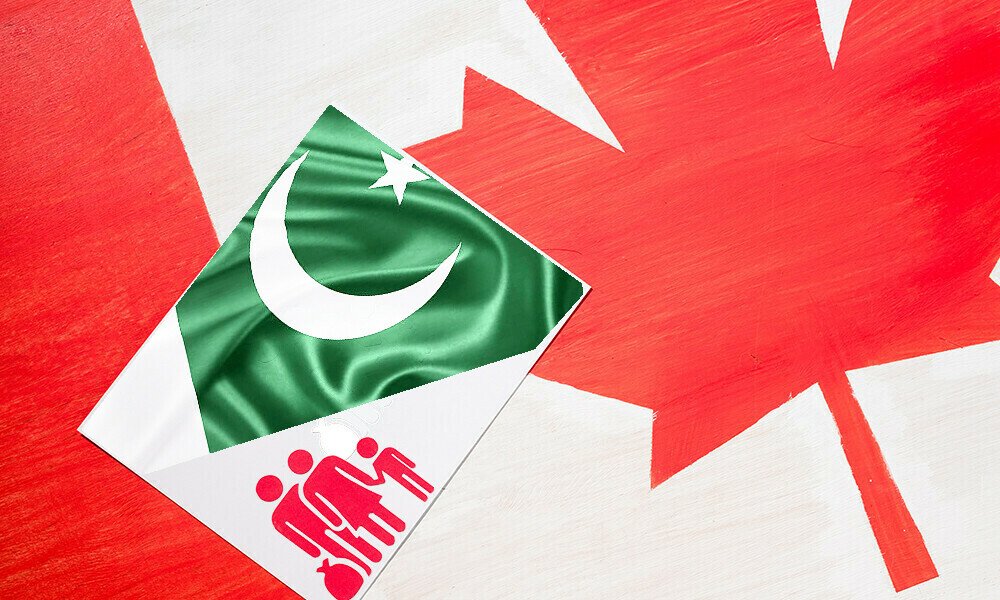
Pakistan–Canada trade centers on textiles/apparel exports, with imports of canola, pulses, machinery. Both countries pursue deeper integration (WTO/GSP; possible FTA). Diaspora networks and value-added exports promise new growth opportunities amid enduring tariff/logistic barriers.
Key Insights:
- Export Sectors: Pakistan’s exports to Canada are dominated by textiles and apparel (bedlinen, knitwear, cotton garments) and leather products. (Rice and other agricultural goods also feature.)
- Import Sectors: Canada’s exports to Pakistan are led by canola (oilseeds) – along with pulses (lentils, chickpeas), wood/paper products and machinery.
- Agreements/Frameworks: Trade operates under WTO rules. Canada’s old GSP program expired in 2020 (Canada is planning a new GPT+ system). No bilateral FTA currently exists.
- Diplomatic Signals: Pakistan’s leadership (e.g. DPM Ishaq Dar) and Canada’s officials have expressed commitment to “strengthen economic and trade relations”, holding dialogues to upscale ties.
- Growth Opportunities: There is scope to diversify into value-added exports (textile processing, leather goods, agro-processing, IT and renewable energy products) and attract Canadian investment (in mining, canola processing, tech). The large Pakistani diaspora in Canada (via CPBC initiatives) creates networks for new partnerships.
- Challenges: Key obstacles include remaining tariff barriers, high logistics costs and regulatory mismatches. Expired preferences and non-tariff issues (certifications, standards) also constrain trade growth.
Bilateral Trade Overview
Pakistan’s trade with Canada has grown modestly in recent years. According to Pakistan’s Ministry of Commerce, annual trade totaled about US$858 million in FY2022–23 (exports $366M; imports $492M) but fell to $525 million in FY2023–24 (exports $392M; imports $133M) (Table 1 below.) The 2023–24 dip was driven by a steep drop in reported imports from Canada. Overall, trade remains a small share of Pakistan’s total (US$27–30B exports FY23) and Canada’s exports ($600B), indicating room for growth.
Fiscal Year | Pakistan’s Exports (US$ M) | Pakistan’s Imports (US$ M) | Total Trade (US$ M) |
FY2022–2023 | 366.0 | 492.1 | 858.1 |
FY2023–2024 | 392.0 | 133.0 | 525.0 |
Source: Ministry of Commerce, Pakistan.
Sectoral Composition
Pakistani Exports. The trade composition heavily favors textiles and apparel. In 2018, Pakistan’s largest exports to Canada were bedlinen of cotton ($20M), cotton knit pullovers ($16.8M), and women’s and men’s cotton trousers ($22M each). Leather apparel (e.g. gloves and mittens) was also significant ($26M). Other textile-related exports include kitchen/terry linen and hosiery. Minor exports include processed rice (around $10M) and metal products (e.g. welded steel pipes). In sum, over half of exports (2018 data) were clothing and home textiles.
Canadian Exports. Canada’s shipments to Pakistan are led by agricultural commodities and basic goods. In 2018, canola seeds (rapeseed) dominated at $215M (46% of imports) – used for edible oil and animal feed. Dried pulses (lentils $35.6M and chickpeas $18.6M) were next. Other imports included softwood lumber, wood pulp, newsprint ($7–20M each) and industrial machinery/aircraft ($51.8M in light planes). Together, agro-commodities (oilseeds, pulses) and forestry products account for the bulk of Canada’s exports. (Used clothing and medical supplies appear in smaller value categories.)
Recent years’ trends show textile exports rising modestly: FY2023–24 exports ($392M) were 7% above FY2022–23. However, first-half FY2024–25 exports were flat (roughly $294M, nearly unchanged year-on-year). By contrast, imports from Canada have been erratic (plunging in FY23–24 after 2020). Overall, Pakistan typically runs a deficit in goods trade with Canada (importing more in value), though the FY23–24 figures temporarily show a surplus due to the import drop.
Trade Agreements & Policy Framework
Both Pakistan and Canada are WTO members, so trade is largely on Most-Favored-Nation (MFN) terms. Pakistan’s exports had enjoyed concessional access under Canada’s General Preferential Tariff (GPT) program, but that scheme expired end-2020 (Canada is reportedly devising a new “GPT+” program to replace it). In practice, most Pakistani goods now face standard Canadian duties (textiles and apparel face 17–18% tariffs, whereas allied competitors like Bangladesh enjoy preferential rates). Canada and Pakistan do not have a bilateral free trade agreement (FTA). Both sides have discussed enhanced economic cooperation (e.g. a proposed Foreign Investment Protection and Promotion Agreement), but formal FTA/PTA negotiations have not been launched.
Recent Dialogue and Diplomatic Signals
Bilateral ties have gained attention at high levels. In July 2025, Pakistan’s Deputy PM Ishaq Dar met Canadian FM Anita Anand and “agreed to upscale and strengthen economic and trade relations”. This public commitment echoes earlier comments by Pakistani trade envoys. For example, Faisal Kakar (Pakistani Deputy High Commissioner-designate to Canada) told Islamabad’s business leaders that “Canada is an import-oriented country and … the private sector of Pakistan has a good opportunity to tap this potential market”. While no concrete FTA or PTA is on the table yet, officials have signaled mutual interest in launching a trade dialogue or a limited Preferential Trade Agreement. Both countries are also coordinating via WTO and common platforms and Canada included Pakistan in its Indo-Pacific trade strategy dialogues.
Growth Opportunities
Experts identify significant untapped potential. Pakistani industry can expand value-added exports to Canada: examples include finished home textiles (blended fibers, designer garments), leather apparel (shoes, bags), pharmaceuticals, engineering goods, IT and halal food products. Similarly, Canada’s investment in areas like mining (e.g. gold, copper exploration) and agro-processing (canola oil refining, pulses milling) could be shared ventures. The large Pakistani diaspora in Canada (over 200,000 strong) is a bridge: business councils like the Canadian-Pakistan Business Council (CPBC) leverage diaspora networks to open new supply chains. As one community leader put it, such councils “harness the power of the Pakistani diaspora in Canada to form mutually beneficial relationships and enhance … prosperity”. Targeted trade missions (e.g. textile shows, tech expos) and educational exchanges are further expanding ties.
Canada’s interest in renewable energy (wind turbines) and Pakistan’s textile modernization (tech upgrades) also offer collaboration fields. Market analysts note that Pakistan’s GSP+ or duty-free access to other markets can be parlayed into joint ventures aimed at export markets including Canada. For example, if Canada granted better access for Pakistani surgical instruments or auto parts, those sectors could quickly grow. Conversely, Pakistani demand for Canadian canola meal, pulses remains steady, so reducing logistic costs (bulk shipping) could benefit both sides.
Challenges and Gaps
Despite opportunities, several hurdles remain. The loss of Canada’s preferential tariffs has made Pakistani goods less competitive compared to other suppliers. Pakistani exporters also face high freight and financing costs to serve Canada, as well as strict sanitary and technical standards that require upgrades. On Canada’s side, inefficiencies like delays in document clearance and a lack of direct shipping lines add to costs. Regulatory divergence (different labeling, quality regimes) and limited information about each other’s markets have also hampered growth.
Politically, neither government has made trade liberalization a top priority: Pakistan’s domestic reforms are still a struggle, while Canada focuses on larger partners. Any future FTA would have to navigate sensitive issues (agriculture, textiles and intellectual property). For now, both sides rely on WTO discipline and ad hoc G2G measures (like a reactivated Comprehensive and Progressive Agreement for Trans-Pacific Partnership – CPTPP discussion to potentially include Pakistan, or Canadian technical assistance). Overcoming these challenges will require sustained dialogue and business-government cooperation.
Role of Diaspora and Community
The Pakistani-Canadian community plays an outsized role in trade promotion. Diaspora entrepreneurs invest in both markets (e.g. food companies, tech startups) and run trade councils that lobby for easier access. At a Toronto awards gala in 2023, community leaders highlighted how the Canadian Pakistan Business Council “has shown Canadians what great opportunities there are in Pakistan. It has strengthened trade relations”. Pakistani business owners in Canada serve as importers of Pakistani textiles and agri-goods, while Canadian firms (from Vancouver to Toronto) have set up sourcing offices mainly in Karachi and Lahore. These personal and institutional ties build trust, offsetting distance. Policymakers cite the diaspora whenever discussing future partnerships, noting that joint ventures (e.g. Pakistani-run apparel mills in Canada or Canadian tech firms in Pakistan) can be launched through diaspora channels.
Conclusion
Looking ahead, Pakistan – Canada trade has substantial room to grow. Both governments’ stated intent to “strengthen economic and trade relations” should translate into concrete measures: resuming a tariff preference scheme, improving logistics links and organizing joint trade missions. Emphasizing value-added exports (modern textiles, processed foods, IT services) and strategic imports (critical minerals, green energy equipment) will diversify the commercial base. By leveraging the Pakistani-Canadian community and aligning with global supply chains, the two countries can build a more balanced partnership. With continued dialogue under WTO-plus frameworks and focused industry cooperation, Pakistan–Canada ties can become a model of North-South economic engagement in the Indo-Pacific era.
* Dr. Muhammad Jahanzaib is the Founder & Chief Visionary Officer (CVO) of Diamanium Thinkers, a global think tank. He holds a PhD in International Relations, specializing in the intersection of politics and economics in Pakistan’s foreign and domestic policy. A double gold medalist and published scholar, he writes on economic intelligence, economic diplomacy, political economy, AI, and regional cooperation in South Asia and beyond. He can be reached at jahanzaibdgc@gmail.com
References:
- YEAR BOOK 2023-24 | Ministry of Commerce, Government of Pakistan (Trade data, April 2023) – https://www.commerce.gov.pk/wp-content/uploads/2025/01/Year-Book-2023-24.pdf
- Exports to North America rise (Dawn, May 2025) – https://www.dawn.com/news/1910902
- Business community asked to tap opportunities for bilateral trade with Canada (Pakistan Today, Nov 2022) – https://www.pakistantoday.com.pk/2022/11/20/business-community-asked-to-tap-opportunities-for-bilateral-trade-with-canada-islamabad-nov-20/
- Pakistan, Canada agree to strengthen economic, trade ties (Radio Pakistan, Jul 2025) – https://www.radio.gov.pk/10-07-2025/pakistan-canada-agree-to-strengthen-economic-trade-ties
- Doing business in Pakistan (Trade Commissioner Service, Government of Canada) – https://www.tradecommissioner.gc.ca/en/market-industry-info/search-country-region/country/canada-pakistan-export.html
- Business, community and government leaders celebrate achievement in the Canadian Pakistani community (Diversity Institute, Toronto Metropolitan University, Oct 2023) – https://www.torontomu.ca/diversity/news-events/2023/10/business-community-and-government-leaders-celebrate-achievement-in-the-canadian-pakistani-community/