
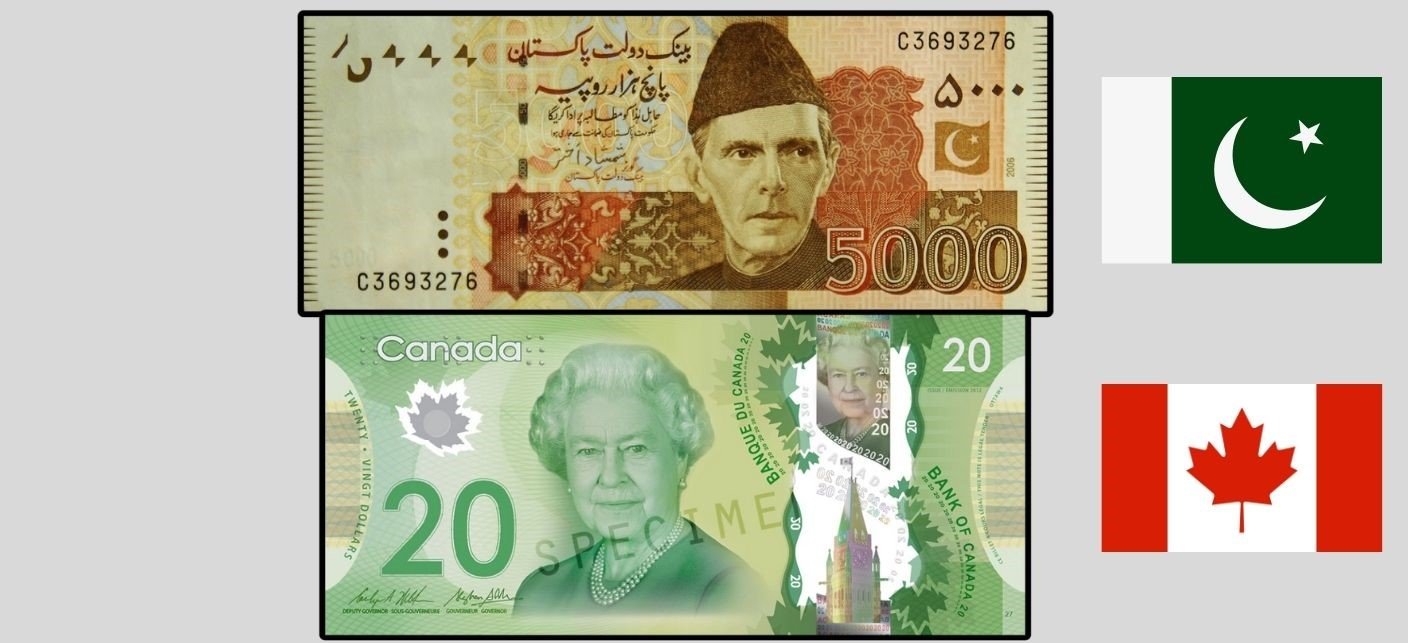
 Dynamic Canada–Pakistan linkages stem from Canada’s sizeable Pakistani diaspora (~303,000 strong) which remits heavily (~US$505M in FY2023–24). These flows boost Pakistan’s economy and strengthen Canada’s multicultural and trade and labor vitality, forming a foundation for mutual prosperity.
 Key Points:
Source: Statistics Canada, 2021 census[1]. These numbers highlight Ontario as the hub (≈70% of the diaspora) with significant communities in Alberta and B.C., where Pakistani-Canadians have built businesses and filled key roles in IT, healthcare and public service. For investors, this means strong networks in the Canadian market: diaspora entrepreneurs often co-invest in projects in Pakistan, while bringing Pakistani suppliers or clients into Canada. Canada’s Pakistani community is youthful and professional. Many arrived as skilled migrants or international students. High educational attainment enables them to innovate: for instance, dozens of tech startups in Toronto and Vancouver have Pakistani-Canadian founders or co-founders, sometimes partnering with firms in Lahore or Islamabad. This helps knowledge transfer and spurs joint ventures in sectors like software development, financial services (many work in Toronto’s banking sector) and engineering.
“Other regions” includes Balochistan, Islamabad, Federally Administered Tribal Areas, etc.[5]. Remittances sent back tend to fuel real estate growth, small industries and consumer spending. For example, many families in Sialkot (Punjab) – a city famous for sports-goods manufacturing – have relatives in Canada; remittance income there has funded business expansions and education. From a Canadian policy perspective, recognizing these regional ties can guide trade and development cooperation: partnering with provincial governments (as Ontario did with Punjab) can target resources to diaspora-linked sectors. Provincial credit/loan schemes or export assistance for businesses in Punjab, KPK or Sindh – facilitated by Pakistani consulates and Canada’s trade offices – maximize diaspora-led investments.
This illustrates the leap in Canadian remittances and the overall growth of Pakistan’s remittance economy. (Note: figures from Government of Pakistan data and SBP reports[2][6].)
- Vibrant Pakistani-Canadian community: Over 300K people (2021 census) living mainly in Ontario, Alberta, B.C. and Quebec[1]. They work in finance, tech, healthcare, education and business, driving innovation and building strong people-to-people ties.
- Remittances: Canadians of Pakistani origin sent an estimated $504.8M to Pakistan in 2023–24[2]. Digital tools like Pakistan’s Roshan Digital Account (RDA) make transfers easier – RDA now counts 735K accounts globally and has channeled $8.9B[2]. These funds stabilize Pakistan’s foreign exchange reserves and support families and entrepreneurship.
- Trade & investment links: Though bilateral trade is modest; diaspora networks are expanding opportunities. For example, Ontario and Punjab (Pakistan’s largest province) signed a trade/investment MOU, calling themselves “sister provinces,” to leverage Canada’s strengths in dairy, renewable energy, IT and education[3][4]. Such partnerships, often championed by the Canada–Pakistan Business Council, open new markets and joint ventures.
- Policy & institutions: Both governments encourage diaspora ties. Canada’s visa policies for skilled Pakistanis and Pakistan’s incentive programs (like RDA tax benefits) make migration and investment smoother. Joint business councils and conferences keep policymakers and investors engaged, ensuring diaspora voices help shape mutual economic strategy.
- Regional synergies: Over half of Pakistani emigrants originate in Punjab province (55%) and Khyber Pakhtunkhwa (27%)[5], reflecting strong outflows from these regions. In Canada, most Pakistani-Canadians live in Ontario (≈212,650)[1], aligning with Ontario’s ties to Punjab. These regional links amplify local development: e.g. Ontario’s tech and education sectors now serve many students and businesses from Punjab and KPK, while Ontario agriculture expertise helps Pakistani farmers.
Canadian Diaspora (Provinces & Profile)
Canada’s Pakistani-Canadian community has surged over two decades. The 2021 census counted 303,260 Canadians of Pakistani origin[1]. They are concentrated in a few provinces:| Province | Pakistani-Canadian Population (2021) |
| Ontario | 212,650 |
| Alberta | 39,535 |
| British Columbia | 19,050 |
| Quebec | 16,645 |
| Other provinces | ~15,380 |
Diaspora Origins & Provincial Impact in Pakistan
The Canadian diaspora’s roots lie mostly in Pakistan’s heartland. Labor migration statistics (2019–2021) show Punjab sent 54.7% of emigrant workers and Khyber Pakhtunkhwa (KPK) sent 26.6%[5]. Sindh, Azad Kashmir, and other regions make up the rest. This distribution matters:| Pakistani Province/Region | Share of Migrant Workers (2021)[5] |
| Punjab | 54.7% |
| Khyber Pakhtunkhwa (KPK) | 26.6% |
| Sindh | 7.4% |
| Azad Jammu & Kashmir | 3.7% |
| Other regions* | 7.6% |
Remittances: Fuel for Pakistan’s Economy
Remittances from abroad are a lifeline for Pakistan’s economy, providing foreign exchange stability and consumer spending power. In FY2023–24 Pakistan received over $30.2 billion in worker remittances[2]. Notably, Canada’s diaspora alone contributed $504.8 million in that year[2]. This is a six-fold increase from roughly $236M reported in 2017[6], reflecting both diaspora growth and improved digital transfer channels. These inflows have multiple benefits for Pakistan:- Foreign exchange boost: Stable remittance inflows help Pakistan meet import costs and strengthen its currency. The $0.5B from Canada is about 1.7% of Pakistan’s total remittances, which is significant given Canada’s smaller migrant base versus Gulf countries[2].
- Household welfare: Most remittances go to families for health, education and small businesses. Economists note that households receiving remittances often invest in property or new enterprises back home. For example, Punjabi farmers use transfers to buy equipment and crops, while Balochistan families (though a small share) rely on these funds for daily needs.
- Financial inclusion: Programs like Roshan Digital Account (RDA) tap into diaspora capital. RDA lets overseas Pakistanis open rupee accounts remotely, offering investment opportunities in Pakistan’s stock market and real estate. Over 735,000 RDA accounts have been opened globally, channeling $8.9B in remittances[2]. Canadian Pakistani investors have used RDA extensively – one panelist noted many tech professionals in Toronto and Vancouver leverage RDA to invest in Pakistan’s growing IT sector.
| Year | Remittances from Canada (USD M) | Pakistan’s Total Remittances (USD M) |
| 2017 | 236[6] | ~20,000 (approx.) |
| 2024 | 505[2] | 30,200[2] |
Trade, Investment and Economic Partnerships
Beyond cash transfers, diaspora ties fuel bilateral trade and investment. Though Canada–Pakistan trade is still modest (roughly US$0.2–0.3B annually), it’s growing. Pakistani-Canadian entrepreneurs and business councils are key: they connect Canadian technology, education and service sectors with Pakistani markets and vice versa. For instance:- Education & Skills: Many Pakistani students study in Canada, paying tuition and later sending knowledge home. In return, Canadian universities establish campuses or partnerships in Pakistan. The Ontario-Punjab delegation actively pursued expanding Canadian colleges into Pakistan[7].
- Technology & Startups: Canadian firms and diaspora-led startups are exploring opportunities in Pakistan’s IT hubs. Some Canadian investment funds now target Pakistani tech ventures, attracted by young talent and lower costs.
- Agriculture & Industry: In 2016, Ontario’s leadership signed a Memorandum of Understanding with Punjab’s Board of Investment & Trade. The MOU promoted collaboration in sectors like dairy, poultry and technology transfer[8]. Ontario sent experts in green energy and modern farming to train Punjab producers[3]. This “sister province” model encourages Canadian agro-tech companies to pilot in Pakistan.
Benefits for Canada: Skills, Diversity and Markets
The Canadian economy gains from this partnership. The Pakistani diaspora enriches Canada’s multicultural mosaic and drives growth in several ways: skilled migration fills labor needs (in STEM and healthcare), entrepreneurial newcomers start businesses (creating jobs) and cultural bridges promote Canada in South Asia. Moreover, Canadian companies see Pakistan as a vast market (240M consumers). Diaspora networks help Canadian exporters navigate Pakistan’s market regulations. For example, Canadian financial tech firms are now targeting Pakistan’s underbanked segments, aided by advice from community members. Educational institutions benefit too: Pakistan was among the top 5 countries sending international students to Canada before recent caps. These students bring tuition revenue and eventually some join Canada’s skilled workforce. Policymakers on both sides highlight this win-win: Canada fulfills its immigration and diversity goals, while gaining new trade partners; Pakistan diversifies its foreign currency sources and taps global expertise. Continued promotion of diaspora engagement (through consular outreach, investment forums, and cultural exchange) is a shared priority.Conclusion
The Canada–Pakistan relationship is empowered by its people. A large and growing Pakistani-Canadian diaspora creates a constant channel of investment, ideas and cultural understanding. By 2024, Pakistani Canadians were sending hundreds of millions of dollars home each year and forging business links across continents. This synergy helps stabilize Pakistan’s economy (through remittances and inbound investment) while invigorating Canada’s innovation and markets. For policymakers and investors, the message is clear: supporting diaspora networks, simplifying remittance and trade channels and strengthening provincial partnerships (like those between Ontario and Punjab) can multiply mutual gains. The data and trends show a rising trajectory – one that academics can study as a model of diasporic economics and that communities can celebrate as shared success. Building on these foundations will deepen bilateral prosperity in the years ahead. * Dr. Muhammad Jahanzaib is the Founder & Chief Visionary Officer (CVO) of Diamanium Thinkers, a global think tank. He holds a PhD in International Relations, specializing in the intersection of politics and economics in Pakistan’s foreign and domestic policy. A double gold medalist and published scholar, he writes on economic intelligence, economic diplomacy, political economy, AI, and regional cooperation in South Asia and beyond. He can be reached at jahanzaibdgc@gmail.com. References: [1] Pakistani Canadians – Wikipedia https://en.wikipedia.org/wiki/Pakistani_Canadians [2] Webinar on ‘Roshan Digital Account’ for Pakistani diaspora in Canada – Pakistan – Business Recorder https://www.brecorder.com/news/40334115/webinar-on-roshan-digital-account-for-pakistani-diaspora-in-canada [3] [4] [7] [8] cpbconline | Canada Pakistan Business Council — promoting trade between Canada, Pakistan and beyond. | Page 4 https://cpbconline.wordpress.com/page/4/ [5] gids.org.pk https://www.gids.org.pk/wp-content/uploads/2022/12/Pakistan-Migration-Report-202216941.pdf [6] Study on International Money Transfers from Canada https://www150.statcan.gc.ca/n1/pub/89-657-x/89-657-x2019007-eng.htm