
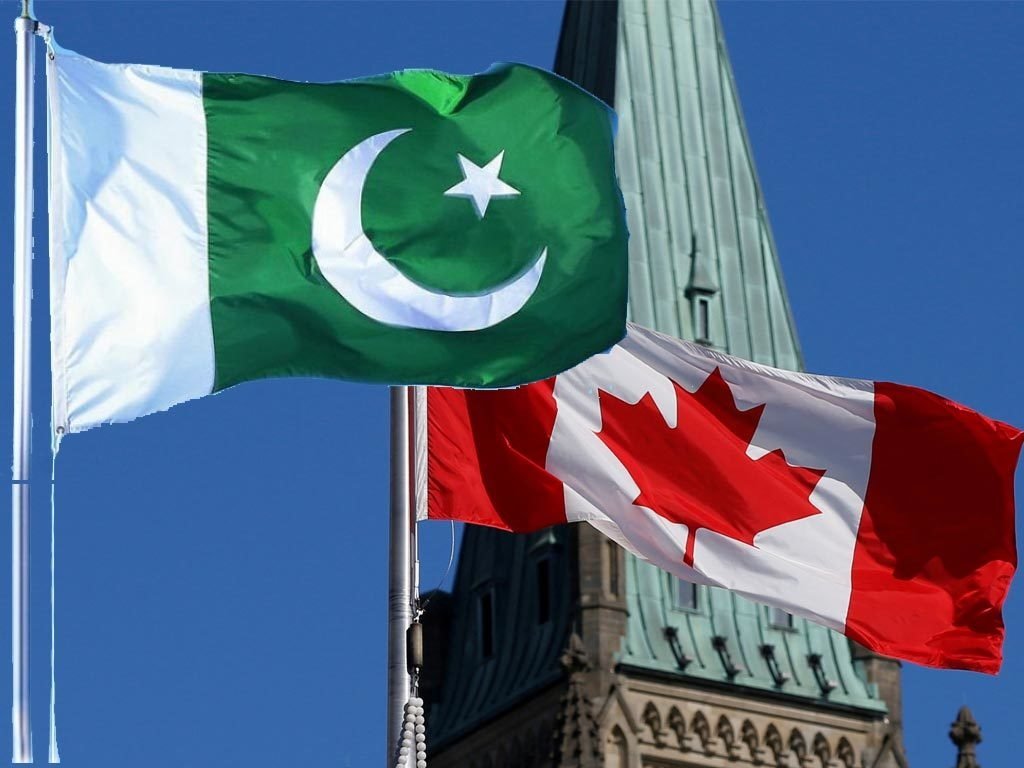
- Common Heritage & Governance: Both nations emerged from the British Empire, inheriting Westminster parliaments, federations of provinces and rule-of-law institutions[1]. They honor this legacy in the Commonwealth.
- Peace and Diplomacy: Canada and Pakistan have long supported UN peacekeeping and peaceful dispute resolution. Canada deployed peacekeepers in Kashmir (1949) and has urged dialogue on Indo–Pakistan issues, reflecting a shared commitment to security[3].
- Diaspora & People-to-People Links: A vibrant Pakistani community in Canada (200k+ people[4]) and thousands of Canadians in Pakistan create cultural and business bridges. Academic and high student mobility further cement ties.
- Economic & Trade Opportunities: Bilateral trade, while modest, is growing. Sectors like clean energy, mining, agriculture and tech are hot prospects. In a May 2025 meeting, Pakistan invited Canadian firms into its oil/gas exploration and mineral sectors[6]. Canada’s expertise and ADB-funded projects in Pakistan (ADB committed $1.8B there in 2023[7]) offer pathways for joint ventures.
- Innovation & Development: Joint research in climate resilience (glaciers to Arctic), water management and clean tech plays to Canada’s and Pakistan’s strengths. Canada’s development programs (e.g. local‐initiatives funding) and Pakistan’s reforms create an enabling environment.
- Win–Win Vision: By leveraging historical bonds and complementary advantages (Canada’s high-tech industries and capital; Pakistan’s youthful market and natural resources), both governments can craft policies (e.g. trade facilitation, FDI incentives, education partnerships) that boost prosperity.
Historical Parallels
Canada and Pakistan’s journeys share remarkable parallels. Both were prized British colonies – Canada since the 1600s and the regions of modern Pakistan as part of British India – and later evolved parliamentary democracies. As Gupta notes, “Canada and India [and by extension Pakistan] continue to have prime-ministerial systems of government that follow the British Westminster model. Both are federations, with provinces (called “states” in India) and territories as administrative units, along with two-chambered legislatures at the centre”[1]. Founding leaders of both countries made similar sacrifices; for example, troops from both lands fought for the Empire in World Wars. Independence came via constitutional processes (Canada’s confederation in 1867) and struggle (Pakistan’s freedom in 1947). These deep-rooted commonalities – legal systems, language, public institutions – lay a strong foundation for mutual understanding.Diplomatic and Security Cooperation
Diplomatic ties date to 1947, soon after Pakistan’s independence[2]. Both countries are Commonwealth members and they cooperate in multilateral forums. Canada was one of the first to advocate UN peacekeepers in Kashmir (1949), reflecting its desire for peaceful South Asian stability[3]. Over decades Canada has consistently called for dialogue between Pakistan and India. In recent years, Canada has recognized Pakistan as a key partner in global counter-terrorism efforts[8]. Regular political consultations (Ambassador meetings, parliamentary delegations) now emphasize economic and educational collaboration over conflict. This diplomatic goodwill benefits both: it opens Pakistan to Canadian investment and provides Canada a reliable partner in Asia.Trade and Economic Ties
Economically, the two nations are complementary. Canada’s economy (≈US$2.14 trillion, ~39.3 million people in 2023[9]) is about six times larger than Pakistan’s (≈US$338 billion, ~247.5 million people[10]) but Pakistan’s population offers a vast market. Per-capita income in Canada is ~$54.5k vs ~$1.37k in Pakistan[9][10], highlighting mutual benefits; Canadian exporters gain in Asia, Pakistani producers get access to high-value markets. Canada exports pulses, machinery; Pakistan exports textiles, rice. Importantly, both sides see growth potential. In May 2025, Pakistani ministers told Canadian envoys that sectors like oil/gas exploration and mining are “huge potential” areas and that Pakistan “has keen interest in leveraging Canadian expertise and investment”[11]. Canadian trade commissioners note that private sector cooperation can focus on agri-foods, infrastructure and clean energy technology (for example, joint participation in Canada’s Global Energy Show). Policymakers on both sides are discussing ways to reduce trade barriers and possibly an investment protection treaty. The Asian Development Bank (ADB) exemplifies economic cooperation; Canada is a founding member of ADB and Canada-based firms have won transport, education and energy contracts in Asian projects[12]. In 2023 the ADB disbursed $1.8 billion in Pakistan[7], highlighting Pakistan’s development needs. Canadian contractors and consultants regularly engage in these projects, bringing Canadian technology to Pakistani roads, schools and power grids. Investors can tap this synergy: for example, renewable-energy projects (solar, hydropower) are co-financed by Canadian green funds and ADB. Data in Table 1 below underscores the economic gap and potential scale of engagement in both countries.| Indicator | Canada[9] | Pakistan[10] |
| Population (2023) | 39.3 million | 247.5 million |
| Nominal GDP (2023) | US$2.14 trillion | US$337.9 billion |
| GDP per capita (2023) | US$54,517 | US$1,365 |
| GDP growth (2023) | +1.25% | –0.04% |
| World GDP rank (nominal) | 10th | 45th |
Education, Culture and Innovation
Historically two-way educational exchange is growing. Canadian universities attract hundreds of Pakistani students each year (over 11,000 new study permits in 2023[13]). These students often return with Canadian degrees, boosting Pakistan’s workforce. Conversely, Canadian institutions like Algoma University actively engage Pakistani academia – for example, IBA Karachi signed a research-and-exchange MoU with Algoma University[5]. The Pakistan-Canada Business Council and cultural associations foster English-medium instruction and tech transfer programs. Both nations prize STEM and entrepreneurship: initiatives like scholarships for women in STEM, or tech incubators (drawing on Canada’s innovation ecosystems) benefit students and industry alike. These academic and people-to-people links reinforce mutual goodwill and create business networks for future investors.Joint Challenges: Climate and Development
Canada and Pakistan face some parallel challenges – climate resilience and sustainable development rank high. Pakistan’s melting glaciers and flooding underscore adaptation needs, while Canada’s Arctic sees warming three times the global rate. Both countries send delegations to global climate forums (e.g. Arctic Council Observers, COP conferences). Canadian NGOs and Pakistani partners can collaborate on water management, disaster relief, and clean energy. In Pakistan, Canadian-supported projects (e.g. clean cookstoves, solar mini-grids) reach communities, aligning with Canada’s Feminist International Assistance Policy. This cooperation not only spurs innovation but also deepens strategic ties; it shows that both democracies value green technology and human security.Conclusion
Canada and Pakistan are linked by more than shared history – they share a forward-looking partnership. Their colonial past and Commonwealth bond have evolved into a relationship of equals in diplomacy and commerce. By continuing to build on these parallels, policymakers can craft policies (like expanding trade missions or streamlined visa processes) that help businesses and academia flourish. Investors see an untapped market in Pakistan’s economy and a supply of competitive services; in turn, Pakistan benefits from Canadian capital, technology and governance know-how. The large Pakistani community in Canada and friendly bilateral attitudes ensure broad support for joint projects. In sum, a constructive Canada–Pakistan partnership yields mutual benefits; stable investment climates, enriched societies through multicultural exchange, and strengthened global cooperation – a shared root in history and aimed at the future. * Dr. Muhammad Jahanzaib is the Founder & Chief Visionary Officer (CVO) of Diamanium Thinkers, a global think tank. He holds a PhD in International Relations, specializing in the intersection of politics and economics in Pakistan’s foreign and domestic policy. A double gold medalist and published scholar, he writes on economic intelligence, economic diplomacy, political economy, AI, and regional cooperation in South Asia and beyond. He can be reached at jahanzaibdgc@gmail.com. References: [1] Bonds of Empire – Canada’s History https://www.canadashistory.ca/explore/politics-law/bonds-of-empire [2] [3] [4] [8] Canada–Pakistan relations – Wikipedia https://en.wikipedia.org/wiki/Canada%E2%80%93Pakistan_relations [5] IBA Karachi and Algoma University sign an MoU for academic collaboration https://www.iba.edu.pk/iba-karachi-algoma-university-sign-mou-academic-collaboration.php [6] [11] Pakistan, Canada agree to boost bilateral economic ties https://www.radio.gov.pk/07-05-2025/pakistan-canada-agree-to-maintain-regular-communication-to-foster-mutual-understanding [7] [12] Asian Development Bank – Tradecommissioner.gc.ca https://www.tradecommissioner.gc.ca/en/our-solutions/international-procurement/international-financial-institutions-united-nations-bilateral-aid-agencies-procurement/get-know-ifis-un-aid-agencies/asian-development-bank.html [9] [10] GDP by Country – Worldometer https://www.worldometers.info/gdp/gdp-by-country/ [13] How Pakistani Students Will Help Reshape Global Student Mobility https://www.applyboard.com/applyinsights-article/how-pakistani-students-will-shape-the-next-wave-of-global-student-mobility