
- Canada-Pakistan ties (60+ years) now emphasize climate change; Canada has funded flood relief and resilience in Pakistan[1][2].
- Investment opportunities emerge in adaptation projects: water management, smart agriculture, green infrastructure and nature-based solutions (parks, forestry).
- Academic and technical partnerships (glaciology, mountain ecosystems, flood modelling) draw on each country’s expertise and diaspora networks.
- Shared risks: Both countries face severe conditions – Pakistan had record 2022 floods (33M affected, US$30B losses)[2][3]; Canada endures wildfires and floods (~$1.8B insured losses in 2024)[4].
- Collaborative benefits include knowledge exchange (disaster response, early warning), joint R&D in climate science, and enhanced trade in clean-tech and environmental services.
Shared Climate Challenges and Context
Canada and Pakistan have maintained broad bilateral cooperation and climate change has become an explicit priority[1]. Pakistan is highly climate-vulnerable – ranked the most affected country by extreme weather in 2022[3] – suffering devastating floods (July–Aug 2022: >1,700 deaths, 33 million impacted)[2]. Canada’s climate exposure is also growing: in 2024 Toronto floods and BC wildfires alone caused ~$1.8 billion (CAD) in insured damages, reflecting a long-term trend of climate-driven loss[4]. The two countries’ adaptive capacity contrasts sharply. The Notre Dame ND-GAIN index scores Canada with high readiness (score 68.5, rank 11) and low vulnerability (0.282)[5], whereas Pakistan scores lower (37.9, rank 152, vulnerability 0.515)[6]. Comparative data illustrate these differences:| Metric | Pakistan (2023) | Canada (2023) |
| ND-GAIN score (vulnerability / readiness) | 37.9 (vuln. 0.515) – Rank 152[6] | 68.5 (vuln. 0.282) – Rank 11[5] |
| Population | 247 million[7] | 40 million[8] |
| 2030 GHG reduction target (Paris NDC) | 50% of projected emissions (15% unconditional, 35% conditional)[9] | 40–45% below 2005 levels[10] |
Bilateral Climate Finance and Aid
In response to Pakistan’s 2022 floods, Canada’s government significantly ramped up aid and climate resilience funding. In late 2022, Canada announced $5 million for immediate humanitarian relief (food, shelter, clean water)[11]. In September 2022 Prime Minister Trudeau pledged a $25 million fund to support longer-term recovery and resilience projects (water systems, schools, infrastructure) and agreed to match up to $3 million in public donations[12]. By January 2023, Canada committed an additional $25 million for Pakistan’s resilient reconstruction[13], matching Pakistan’s own Resilient Recovery, Rehabilitation and Reconstruction Framework. This raised Canada’s contribution to about $58 million (CAD) for flood response and climate adaptation[14]. Funds have supported projects on water supply, sanitation and rebuilding livelihood infrastructure, aligning with Pakistan’s national strategies. Canadian agencies also deployed Red Cross experts and emergency supplies. These high-level commitments (news releases, parliamentary support) underscore a shared policy goal: helping Pakistan adapt to worsening climate impacts[15][11]. Beyond emergency aid, Canada channels climate finance through multilateral channels in the region. For example, Canada pledged a $360-million repayable contribution to an Asian Development Bank fund for climate/nature projects in Asia[16]. Canada’s $5.3-billion (2021–26) International Climate Finance program is designed to boost adaptation and nature-based solutions globally[17], and Pakistan is one eligible partner. Such funding can support Pakistan’s initiatives like the Billion Tree Tsunami afforestation program (10B trees) and recharge of water basins[18]. In sum, Ottawa’s climate diplomacy combines grants, matched funding and co-financing via UN and multilateral agencies to multiply impact.Investment and Economic Opportunities
Climate cooperation also opens economic opportunities for investors and businesses in both countries. Canada and Pakistan maintain active trade [19]). Growth sectors include clean-technology, water management, climate-resilient agriculture and eco-industrial infrastructure. Pakistani projects – such as flood barriers, solar-powered irrigation, or waste-to-energy plants – offer new markets for Canadian expertise in design, engineering and financing. Canada’s experience in greenhouse gas reduction (carbon pricing, methane capture, forestry carbon credits) and Pakistan’s NDC commitments (50% GHG reduction by 2030, conditional) create space for joint ventures. For instance, Pakistan’s updated NDC explicitly mentions shifting to 60% clean energy and banning imported coal by 2030[9]. While the focus here is on energy, this shift spurs demand for climate finance, grid modernization and sustainable transportation – areas where Canadian firms and investors are active. Similarly, Pakistan’s effort to improve water security and crop resilience (through climate-smart agriculture) aligns with Canadian agricultural technology expertise. Multi-stakeholder carbon market pilots in Pakistan (e.g. landfill methane capture) could engage Canadian carbon-credit buyers or technical consultants. In short, joint investment in adaptation and green growth can yield returns and support both countries’ climate goals.Knowledge and Academic Exchange
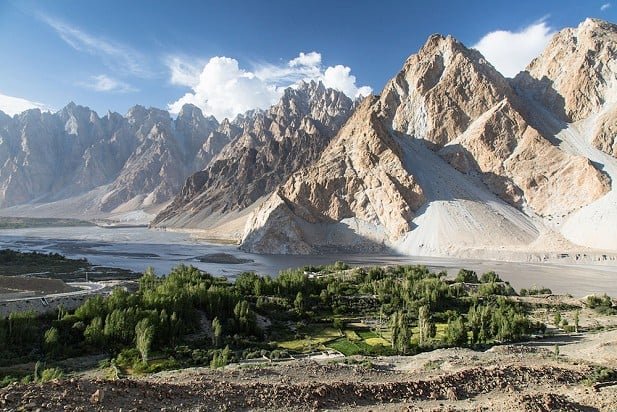
Academia and civil society in both countries can leverage each other’s knowledge. Both Canada and Pakistan are home to major mountain ranges (Rockies and HinduKush–Himalayas-Karakoram). Collaborative research on glaciers, permafrost and mountain hydrology is mutually beneficial: Pakistan’s glaciers feed the Indus but are rapidly retreating, while Canadian scientists study similar phenomena in the Rockies and Arctic. For example, Canadian universities have expertise in glacier hazards that could be shared with Pakistani counterparts (Gilgit’s Karakoram International University has Integrated Mountain Areas Research Center including a Center for Glaciology). Likewise, Pakistani researchers’ field experience in Himalayan climates can inform global climate models. Education exchanges and training programs (e.g. climate science fellowships) are growing. Pakistani and Canadian NGOs also partner in community resilience projects – from rainwater harvesting in rural Pakistan to flood preparedness in Indigenous Canadian communities – exchanging best practices on adaptation. Digital collaboration (webinars, joint publications) on topics like public health and climate, women’s leadership in adaptation or biodiversity conservation can create a lasting people-to-people climate network.Conclusion
Canada and Pakistan face dramatically different climate exposures, but both stand to gain from working together. The partnership is grounded in current events (massive floods, rebuilding) and framed by long-term goals (Paris Accord NDCs, sustainable development). For policymakers, this alliance means pooling resources; Canada leverages its climate finance pledges and technology to support Pakistan’s resilience, fulfilling global responsibility. Investors see new avenues in a large market needing climate solutions. Academics and civil society find rich ground for joint research and knowledge transfer. Ultimately, by uniting Canada’s adaptation capacity with Pakistan’s urgent needs, both countries benefit – Pakistan becomes more resilient and prosperous, while Canada strengthens global stability, supports human development, and also learns from innovative practices abroad. This synergy exemplifies how climate cooperation can transform vulnerability into opportunity on a global scale. * Dr. Muhammad Jahanzaib is the Founder & Chief Visionary Officer (CVO) of Diamanium Thinkers, a global think tank. He holds a PhD in International Relations, specializing in the intersection of politics and economics in Pakistan’s foreign and domestic policy. A double gold medalist and published scholar, he writes on economic intelligence, economic diplomacy, political economy, AI, and regional cooperation in South Asia and beyond. He can be reached at jahanzaibdgc@gmail.com. References: [1] [19] [20] Canada-Pakistan relations https://www.international.gc.ca/country-pays/pakistan/relations.aspx?lang=eng [2] [13] [14] [15] Canada announces additional funding to help with flood recovery and climate resilience in Pakistan – Canada.ca https://www.canada.ca/en/global-affairs/news/2023/01/canada-announces-additional-funding-to-help-with-flood-recovery-and-climate-resilience-in-pakistan.html [3] Climate Risk Index 2025 | Germanwatch e.V. https://www.germanwatch.org/en/cri [4] This summer’s climate-fuelled disasters have cost Canadians billions https://climateinstitute.ca/news/climate-fuelled-disasters-cost-canadians-billions/ [5] [8] Canada | ND-GAIN Index https://gain-new.crc.nd.edu/country/canada [6] [7] Pakistan | ND-GAIN Index https://gain-new.crc.nd.edu/country/pakistan [9] [18] Design sample Pakistan Updated Nationally Determined Contributions (8).pdf https://unfccc.int/sites/default/files/NDC/2022-06/Pakistan%20Updated%20NDC%202021.pdf [10] Canada | Climate Action Tracker https://climateactiontracker.org/countries/canada/ [11] Canada announces $5 million in funding for humanitarian assistance in response to flooding in Pakistan – Canada.ca https://www.canada.ca/en/global-affairs/news/2022/08/canada-announces-5-million-in-funding-for-humanitarian-assistance-in-response-to-flooding-in-pakistan.html [12] Canada announces matching fund and additional international assistance for Pakistan – Canada.ca https://www.canada.ca/en/global-affairs/news/2022/09/canada-announces-matching-fund-and-additional-international-assistance-for-pakistan.html [16] Canada’s Indo-Pacific Strategy 2023-2024 Implementation Update https://www.international.gc.ca/transparency-transparence/indo-pacific-indo-pacifique/2023-2024.aspx?lang=eng [17] Canada’s climate finance for developing countries https://www.international.gc.ca/world-monde/funding-financement/climate-developing-countries-climatique-pays-developpement.aspx?lang=eng