
The Hamas-led attack on Israel on October 7, 2023, has dramatically altered the geopolitical landscape of the Middle East and beyond. While the attack was initially seen through the lens of brutality, loss of life, and the ensuing Israeli military campaign in Gaza, its long-term strategic consequences are gradually becoming more visible. In retrospect, this event could be understood not merely as an outbreak of violence but as a turning point in the regional and international order, undermining frameworks such as the Abraham Accords, elevating Palestinian statehood on the global agenda, weakening Israel’s external interdependence, and signaling the gradual decline of U.S. hegemony.
The Abraham Accords, once hailed as a diplomatic breakthrough that normalized relations between Israel, the United Arab Emirates, Bahrain, Morocco, and Sudan, now face deep challenges. The agreements were constructed on the assumption that the Palestinian issue had become secondary to Arab states’ national interests, particularly in economic and security domains. Yet, the violence triggered on October 7 forced Arab governments to respond to public outrage over Gaza, revealing that the Palestinian cause continues to resonate across the Arab world. Saudi Arabia, which was in advanced negotiations with the United States over normalization with Israel, suspended the process indefinitely (Al Jazeera, 2023). This setback underscores the fragility of normalization efforts that overlook unresolved historical grievances. Hamas’s attack, therefore, unintentionally or not, undermined the regional shift toward normalization and ensured that Palestine cannot be sidelined from Middle Eastern diplomacy.
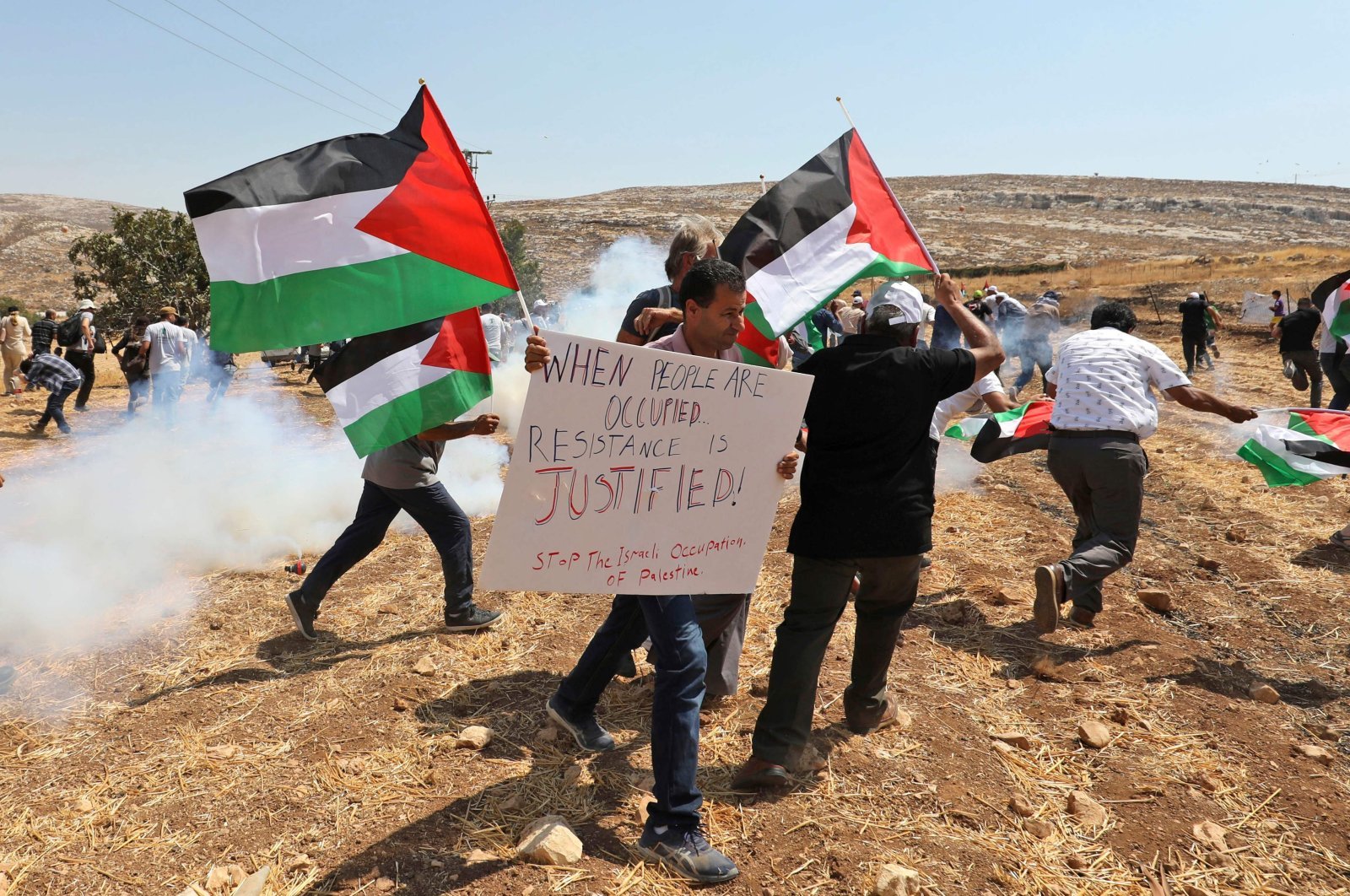
More strikingly, the war in Gaza has revived the debate on Palestinian statehood. For years, the notion of a two-state solution had receded into diplomatic platitudes, with little tangible movement on the ground. However, in the aftermath of October 7 and Israel’s devastating response, calls for recognizing Palestine as a sovereign state have gained momentum at the United Nations and among European countries. Spain, Ireland, and Norway formally recognized Palestinian statehood in 2024, with discussions ongoing in other capitals (The Guardian, 2024). The symbolic weight of such recognitions lies in reasserting that the Palestinian question remains central to international legitimacy. Hamas’s strategy, whether deliberate or not, has shifted the narrative back to sovereignty rather than mere humanitarian assistance. This dynamic strengthens the political identity of Palestine and erodes Israel’s long-standing argument that negotiations alone should determine the contours of statehood.
The attack has also had ripple effects on Israel’s global interdependence. Israel’s economy, heavily reliant on global supply chains, foreign investment, and technology partnerships, has suffered due to prolonged instability. Tourism plummeted, investment slowed, and major global corporations reassessed their operations in the country (Financial Times, 2023). Moreover, diplomatic ties have frayed. South Africa filed a genocide case against Israel at the International Court of Justice, supported by several Global South states (Reuters, 2024). Mass protests erupted in Western capitals, not only among Muslim communities but also among broader civil society groups. The result is a growing isolation of Israel, where even its traditional partners are pressured by domestic and international opinion to reconsider unconditional support. Thus, Hamas’s actions indirectly contributed to weakening Israel’s external bonds and reshaping the discourse from Israel’s security to Israel’s accountability.
Perhaps the most profound consequence lies in the weakening of U.S. influence. Washington has historically positioned itself as Israel’s staunchest ally, but its credibility has eroded due to its near-unconditional backing of Israeli military operations in Gaza despite widespread civilian casualties. This position alienated not only Arab states but also U.S. allies in Europe and the Global South. For instance, the Biden administration’s repeated vetoes of ceasefire resolutions at the UN Security Council highlighted its selective application of international law, undermining its moral authority (BBC News, 2023). The perception of double standards, supporting Ukraine’s sovereignty while overlooking Palestinian suffering, has deepened resentment in the Global South. Countries such as Brazil, South Africa, and Turkey openly criticized Washington, indicating that the U.S. risks losing critical partners as it faces competition from China and Russia in the international order. In this sense, Hamas’s attack indirectly exposed and accelerated the erosion of American hegemony.
Critics may argue that Hamas’s attack brought overwhelming devastation to Gaza and cannot be framed as a strategic success. Indeed, the humanitarian toll is catastrophic, with tens of thousands killed, millions displaced, and infrastructure obliterated. Yet, strategy in international politics often transcends immediate costs to encompass long-term structural changes. By reigniting the centrality of Palestine in global diplomacy, undermining Israel’s normalization, shattering its global partnerships, and exposing U.S. double standards, Hamas inadvertently shifted the balance of narratives and alliances. These shifts will continue to reverberate far beyond the immediate conflict, shaping Middle Eastern geopolitics for decades.
The October 7 attack, therefore, must be seen not only as an eruption of violence but also as a catalyst of systemic transformation. It revived the Palestinian issue at a moment when it was being sidelined, weakened Israel’s position internationally, and accelerated the decline of U.S. credibility in the world order. While it is premature to declare this a “strategic victory” for Hamas, the structural consequences suggest that its long-term impact aligns with many of the group’s broader objectives. In a world where legitimacy and perception increasingly shape outcomes, Hamas’s actions on that day may have achieved what decades of negotiations and resistance could not, ensuring that Palestine remains an unavoidable question in international relations.
—
References
Al Jazeera (2023). Saudi Arabia halts normalization talks with Israel. Available at: https://www.aljazeera.com
BBC News (2023). US vetoes UN resolution calling for ceasefire in Gaza. Available at: https://www.bbc.com
Financial Times (2023). Israel’s economy reels from Gaza war impact. Available at: https://www.ft.com
Reuters (2024). South Africa files genocide case against Israel at the ICJ. Available at: https://www.reuters.com
The Guardian (2024). Spain, Ireland, Norway recognize Palestinian statehood. Available at: https://www.theguardian.com