
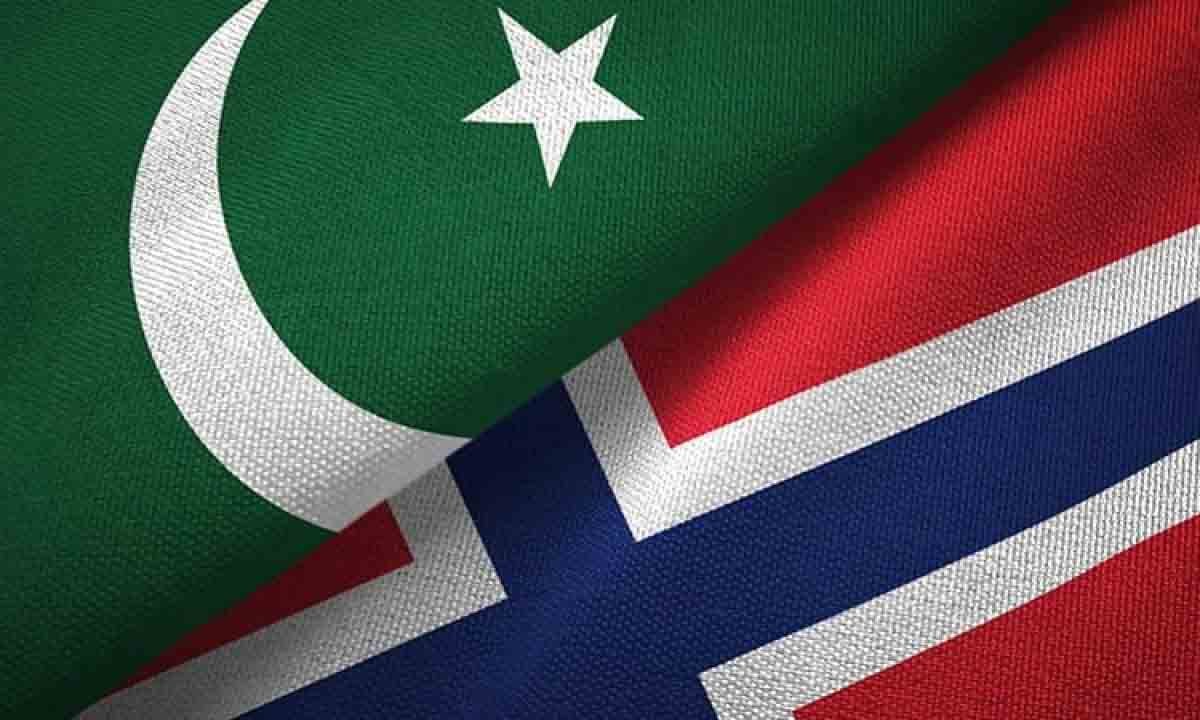
Norway and Pakistan are forging a dynamic geo-economic bond through expanding trade, green investments, and sectoral synergies. This collaboration unlocks mutual prosperity in energy, IT, and climate resilience, empowering policymakers, investors, academics, and the public.
Key Points
- Diplomatic Advancements: 13th Bilateral Political Consultations in December 2024 emphasized renewable energy, IT, fisheries, and maritime cooperation.
- Trade Expansion: Bilateral trade neared $188 million in 2024, with Pakistan’s exports dominating textiles and apparel; growth potential via EFTA-Pakistan FTA feasibility.
- Investment Surge: Norwegian firms like Scatec and Jotun invest in solar and manufacturing; opportunities in renewables could attract $200 million.
- Sectoral Complementarities: Norway’s hydropower expertise aligns with Pakistan’s 60,000 MW hydro potential; IT collaboration leverages Pakistan’s 80,000 annual graduates.
- Climate and Aid Focus: Norway’s NOK 130 million aid in 2022 supports flood resilience; 2025 EV expertise sharing aids Pakistan’s green transition.
- Evergreen Ties: Shared UN commitments and diaspora links foster enduring socio-economic bonds.
Norway and Pakistan are poised to transform their partnership into a beacon of mutual benefit in the evolving geo-economic landscape. Policymakers can draw on robust diplomatic frameworks, such as the annual Bilateral Political Consultations revived in 2024, to craft policies enhancing trade and sustainability. The 13th round in Oslo, December 2024, highlighted opportunities in renewable energy, IT, fisheries, and maritime sectors, building on Norway’s removal of Pakistan from its threat list in April 2024 for improved security perceptions. Investors stand to gain from high-yield ventures, with Norwegian FDI leading Western Europe inflows until 2023, exemplified by Scatec’s $111 million solar projects. Academics will appreciate the rational analysis of complementary economies: Norway’s innovation-driven model, with a $1.6 trillion sovereign wealth fund, synergizes with Pakistan’s resource-rich, youthful market. The general public benefits through job creation, cultural exchanges, and enhanced resilience against global challenges like climate change.
Contemporary data underscores this momentum. Bilateral trade in 2024 totaled approximately $187.53 million, with Pakistan exporting $131.99 million to Norway and importing $55.54 million. This follows a 2023 volume of $198 million, indicating steady engagement despite global volatility. Pakistan’s GSP status with Norway provides tariff reductions of 10-100%, facilitating exports, while ongoing EFTA-Pakistan FTA feasibility studies promise deeper integration. In January 2025, Norway pledged support for Pakistan’s green energy shift, sharing EV expertise to combat climate impacts—a timely move given Pakistan’s vulnerability to floods, which Norway aided with humanitarian support in 2022.
To understand trade dynamics, consider the top products exchanged in 2024:
Direction | Top Products (2024 Values in USD Millions) | Key Sectors |
Pakistan to Norway | Apparel non-knit (37.83), Textile articles (37.64), Apparel knit (22.57) | Textiles and Apparel |
Norway to Pakistan | Iron/steel (32.18), Commodities ns (8.11), Aluminum (6.89) | Metals and Machinery |
This table reveals a balanced complementarity: Pakistan’s labor-intensive textiles meet Norway’s demand for consumer goods, while Norway’s advanced materials bolster Pakistan’s infrastructure. Growth trends show Pakistan’s exports to Norway rising 4.58% annually over five years, though monthly data indicates a 12.2% dip in November 2025 due to seasonal factors. Evergreen elements, such as the 2012 Joint Declaration on Cooperation, provide a stable foundation for enduring ties, immune to short-term fluctuations.
Investment potentials shine brightly for investors. Norwegian companies have invested over $3.5 billion via Telenor (operations sold in 2023 but legacy endures), creating thousands of jobs. Jotun’s PKR 1 billion factory expansion in Lahore, 2022, highlights manufacturing appeal. Emerging opportunities in renewable energy align Norway’s hydropower prowess—producing 88% of its electricity renewably—with Pakistan’s untapped 60,000 MW hydro and 340,000 MW wind potentials. A projected $200 million in Norwegian investments could catalyze Pakistan’s energy sector, reducing import dependencies and fostering green jobs. IT collaboration is another gem: Pakistan’s 80,000 annual IT graduates complement Norway’s digital innovation, as seen in Pakistani firms’ participation in Oslo Innovation Week 2023, sparking business deals.
For academics, this partnership offers fertile ground for cooperative analysis. Shared commitments to UN peacekeeping and sustainable development goals enable interdisciplinary studies on climate diplomacy. Norway’s co-chairing of a 2022 UN roundtable with Pakistan on vulnerable communities exemplifies soft power synergies. The diaspora—over 40,000 Norwegian-Pakistanis—strengthens people-to-people links, promoting cultural diplomacy and remittances. Analysis suggests addressing challenges like regulatory barriers through dialogues, as in the June 2023 agreement focusing on green energy and higher education.
Recent milestones, like Senator Irfan Siddiqui’s August 2025 visit emphasizing positive trajectories, and September 2025 calls for rules-based cooperation, signal upward momentum. For the public, this translates to tangible gains: enhanced food security via Norwegian aid, educational scholarships, and tourism boosts from shared environmental initiatives.
Conclusion
Norway and Pakistan’s geo-economic alliance epitomizes collaborative prosperity, merging Nordic innovation with South Asian dynamism. Policymakers should advance FTA negotiations and energy pacts; investors, target renewables and IT for lucrative returns; academics, explore sustainability models; and the public, enjoy job growth and cultural enrichment. With trade eyeing $400 million by 2030 and investments fueling green transitions, this partnership navigates global uncertainties. By deepening ties, both nations can achieve resilient, inclusive development, setting a model for North-South cooperation that benefits generations.
* Dr. Muhammad Jahanzaib is the Founder & Chief Visionary Officer (CVO) of Diamanium Thinkers, a global think tank. He holds a PhD in International Relations, specializing in the intersection of geo-politics and geo-economics in Pakistan’s foreign and domestic policy. A double gold medalist and published scholar, he writes on economic intelligence, economic diplomacy, political economy, AI and regional cooperation in South Asia and beyond. He can be reached at jahanzaibdgc@gmail.com.
Key References
- Bilateral Relations – Pakistan Embassy in Norway – https://www.pakistanembassy.no/bilateral-relations/
- Norway stresses rules-based order, calls for stronger ties with Pakistan – https://www.app.com.pk/national/norway-stresses-rules-based-order-calls-for-stronger-ties-with-pakistan/
- Norway and Pakistan Strengthen Bilateral Relations – https://gopakistan.no/blogs/norway-and-pakistan-strengthen-bilateral-relations
- 13th Round of Pakistan-Norway Bilateral Political Consultations in … – https://mofa.gov.pk/press-releases/13th-round-of-pakistan-norway-bilateral-political-consultations-in-oslo
- Pakistan-Norway bilateral political consultations held, cooperation … – https://www.nation.com.pk/17-Dec-2024/pakistan-norway-bilateral-political-consultations-held-cooperation-discussed
- Pakistan, Norway vow to boost bilateral cooperation – https://www.radio.gov.pk/17-12-2024/pakistan-norway-to-increase-momentum-in-bilateral-cooperation
- Norway’s Recognition of Pakistan’s Security Progress – https://issi.org.pk/issue-brief-on-redefining-partnership-norways-recognition-of-pakistans-security-progress/
- Norway Exports to Pakistan – https://tradingeconomics.com/norway/exports/pakistan
- Norway Imports from Pakistan – https://tradingeconomics.com/norway/imports/pakistan
- Pakistan (PAK) and Norway (NOR) Trade – https://oec.world/en/profile/bilateral-country/pak/partner/nor
- Norway (NOR) and Pakistan (PAK) Trade – https://oec.world/en/profile/bilateral-country/nor/partner/pak
- 75 years of partnership between Norway and Pakistan – https://www.regjeringen.no/en/whats-new/75-years-of-partnership-between-norway-and-pakistan/id3019215/
- Norway to support Pakistan’s green energy shift with EV expertise – https://mettisglobal.news/norway-to-support-pakistans-green-energy-shift-with-ev-expertise
- Pakistan, Norway agree to boost relations with focus on green energy – https://www.aa.com.tr/en/environment/pakistan-norway-agree-to-boost-relations-with-focus-on-green-energy/2916691
- Country comparison Norway vs Pakistan 2025 – https://countryeconomy.com/countries/compare/norway/pakistan