
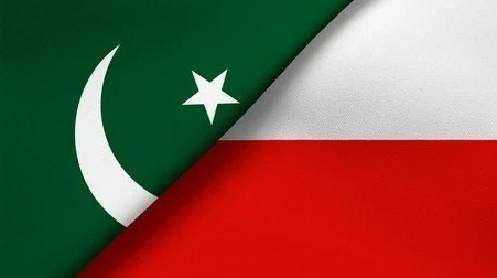
Poland and Pakistan are amplifying geo-economic ties through booming trade, strategic investments, and sectoral synergies. This partnership fosters mutual growth in energy, IT, and agriculture, benefiting policymakers, investors, academics, and the public in a connected world.
Key Points
- Diplomatic Surge: October 2025 visit by Polish FM Sikorski led to MoUs on economic and academic cooperation, aiming to expand $1 billion trade.
- Trade Milestone: Bilateral trade hit $1.2 billion in FY 2024-25, with Pakistan’s exports crossing $1 billion, driven by textiles and apparel.
- Investment Momentum: Polish investments near $500 million, mainly in energy via ORLEN, with plans to double over the next decade.
- Sectoral Opportunities: Complementary potentials in renewable energy, IT, mining, and agriculture promise high returns and innovation.
- Evergreen Foundations: Shared EU GSP+ access and historical ties in UN forums support enduring economic collaboration.
- Future Projections: Trade could reach $2 billion by 2030 through joint ventures, enhancing job creation and sustainability.
In the dynamic arena of geo-economics, Poland and Pakistan are crafting a partnership that harnesses mutual strengths for shared prosperity. Policymakers can leverage this alliance to design frameworks that integrate Poland’s advanced manufacturing and EU market access with Pakistan’s strategic location and abundant resources. The October 2025 high-level visit by Polish Deputy Prime Minister Radosław Sikorski to Islamabad marked a pivotal moment, resulting in MoUs on political consultations and academic exchanges, underscoring commitments to deepen ties across trade, energy, defense, and technology. This builds on the 9th Bilateral Political Consultations in July 2025, where both nations explored enhanced cooperation, reflecting a proactive diplomatic momentum.
Contemporary data highlights robust growth. Bilateral trade surged to $1.2 billion in FY 2024-25, with Pakistan’s exports to Poland exceeding $1 billion – a landmark achievement fueled by GSP+ status granting duty-free access to the EU market. In 2023, total trade stood at $922 million, with Pakistan exporting $794 million and importing $128 million, indicating a positive trajectory. Poland’s investments in Pakistan approach $500 million, predominantly through ORLEN in oil and gas exploration, with announcements in September 2025 to double this over the next decade. Such infusions not only bolster Pakistan’s energy security but also position Polish firms to tap into emerging markets, creating win-win scenarios.
For investors, the allure lies in high-potential sectors. Poland’s expertise in renewable energy complements Pakistan’s vast solar and wind resources, estimated at over 2.9 million MW potential. Joint ventures could attract $200 million in fresh capital, fostering green transitions amid global climate goals. In IT, Pakistan’s 80,000 annual graduates offer cost-effective talent for Polish tech hubs, while agriculture synergies—highlighted in September 2025 discussions—focus on cold storage and food processing to enhance value chains. Mining and defense also emerge as frontiers, with Poland’s advanced technologies aiding Pakistan’s resource extraction.
A snapshot of traded goods illustrates this complementarity:
Direction | Top Products (2024 Values in USD Millions) | Key Sectors |
Pakistan to Poland | Apparel (non-knit) (318), Apparel (knit) (294), Textiles (167) | Apparel and Textiles |
Poland to Pakistan | Scrap Iron (69), Coke (29), Scrap Vessels (7) | Energy and Materials |
This table, drawn from recent trade databases, shows Pakistan’s labor-intensive exports balancing Poland’s resource-based shipments, promoting equitable growth. Growth rates affirm potential: Pakistan’s exports to Poland rose 25% annually in recent years, outpacing global averages.
Evergreen elements provide a resilient backbone. Both nations share colonial legacies and commitments to UN peacekeeping, fostering trust that transcends economic cycles. Poland’s EU membership amplifies market access for Pakistani goods, while Pakistan’s Belt and Road Initiative integration offers Polish firms gateways to Asia. Rational cooperative analysis reveals untapped synergies: Poland’s innovation ecosystem, with a 12% R&D spend in GDP terms, can uplift Pakistan’s youthful workforce, projected to drive 4% annual growth through 2030. Academics can probe these dynamics, analyzing how cultural diplomacy – via scholarships and joint research – enhances soft power and human capital development.
Recent milestones reinforce this promotional outlook. In October 2025, President Asif Ali Zardari urged deeper partnerships in renewable energy, IT, and agriculture, echoing Prime Minister Shehbaz Sharif’s invitation for Polish investments in mining and tech. These align with Poland’s readiness to share development expertise, as stated by Sikorski, positioning the alliance as a model for North-South cooperation. Challenges like regulatory alignments are addressable through ongoing dialogues, ensuring sustainable progress.
For the general public, this translates to job opportunities—over 10,000 from current Polish ventures—and cultural enrichments, such as joint events celebrating shared histories.
Overall, this geo-economic axis promotes resilience, with projections of $2 billion trade by 2030 through policy incentives like SEZs and double taxation avoidance pacts.
Conclusion
Poland and Pakistan’s geo-economic partnership exemplifies synergistic progress, blending Polish innovation with Pakistani potential. Policymakers should advance MoUs into actionable trade pacts; investors, capitalize on energy and IT for robust returns; academics, investigate sustainable models; and the public, reap benefits from employment and exchanges. With trade surging beyond $1 billion and investments doubling, this alliance navigates global challenges, driving green growth and prosperity. By fortifying these bonds, both nations can achieve enduring economic resilience, setting a benchmark for collaborative success.
* Dr. Muhammad Jahanzaib is the Founder & Chief Visionary Officer (CVO) of Diamanium Thinkers, a global think tank. He holds a PhD in International Relations, specializing in the intersection of geo-politics and geo-economics in Pakistan’s foreign and domestic policy. A double gold medalist and published scholar, he writes on economic intelligence, economic diplomacy, political economy, AI and regional cooperation in South Asia and beyond. He can be reached at jahanzaibdgc@gmail.com.
Key References
- Pakistan Seeks Deeper Political, Economic Partnership with Poland – https://thediplomaticinsight.com/pakistan-political-economic-partnership-poland-zardari/
- Pakistan, Poland Strengthen Bilateral Ties Across Key Sectors – https://thedailycpec.com/pakistan-poland-strengthen-bilateral-ties-across-key-sectors/
- Joint Statement After the Meeting between Deputy Prime Minister … – https://mofa.gov.pk/press-releases/joint-statement-after-the-meeting-between-deputy-prime-ministerforeign-minister-of-the-islamic-republic-of-pakistan-and-the-deputy-prime-ministerforeign-minister-of-the-republic-of-poland
- Pakistan, Poland agree to deepen economic relations – https://www.dawn.com/news/1950904
- Pakistan, Poland seek to expand $1 billion trade, sign MoUs to … – https://www.arabnews.com/node/2619956/pakistan
- Pakistan and Poland Eye Expanded Cooperation in Energy, Mining … – https://2025.minexeurasia.com/pakistan-and-poland-eye-expanded-cooperation-in-energy-mining-and-agriculture/
- Pakistan, Poland vow to forge stronger economic ties – https://www.brecorder.com/news/40382971/pakistan-poland-vow-to-forge-stronger-economic-ties
- Poland Ready to Share Development, Technology Expertise with … – https://thediplomaticinsight.com/poland-share-development-technology-pakistan-sikorski
- Pakistan, Poland agree to expand bilateral ties across diverse sectors – https://www.app.com.pk/national/pakistan-poland-agree-to-expand-bilateral-ties-across-diverse-sectors
- 9th Round of Bilateral Political Consultations (BPC) Between … – https://pakungeneva.pk/9th-round-of-bilateral-political-consultations-bpc-between-pakistan-and-the-republic-of-poland
- Poland (POL) and Pakistan (PAK) Trade – https://oec.world/en/profile/bilateral-country/pol/partner/pak
- Pakistan Exports to Poland – https://tradingeconomics.com/pakistan/exports/poland
- Pakistan’s exports to Poland reach USD 1 billion in FY 2024-25 … – https://www.linkedin.com/posts/tdapofficial_emergingpakistan-tdap-tradeachievement-activity-7384477624661737473-QWyo
- Poland Imports from Pakistan – https://tradingeconomics.com/poland/imports/pakistan
- Country comparison Poland vs Pakistan 2025 – https://countryeconomy.com/countries/compare/poland/pakistan
- Warsaw Pakistan-Poland Relations – https://mofa.gov.pk/warsaw-pakistan-poland-relations
- Poland eyes doubling $500m energy investment in Pakistan as … – https://profit.pakistantoday.com.pk/2025/09/24/poland-eyes-doubling-500m-energy-investment-in-pakistan-as-trade-talks-deepen/
- Pakistan, Poland Explore Enhanced Cooperation in Agriculture and … – https://mnfsr.gov.pk/Detail/MTY2YWM2ZGItMWE3MC00MjgzLWExNGItMDYwMmE2ZGRlMTNI
- PM Shehbaz Invites Polish Firms to Invest in Key Sectors – https://thediplomaticinsight.com/shehbaz-invites-polish-firms-invest-sectors/