
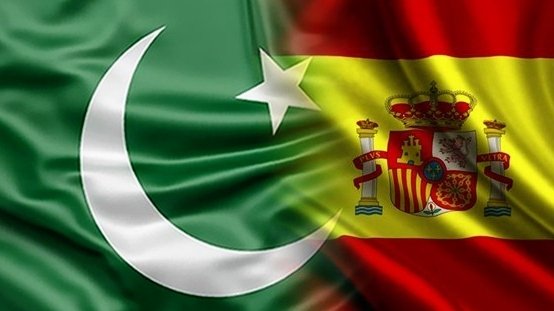
Spain and Pakistan are amplifying geo-economic ties through trade expansion, diplomatic engagements, and sectoral collaborations. This partnership leverages complementary strengths in textiles, renewables, and agriculture, fostering mutual prosperity for both countries.
Key Points
- Diplomatic Momentum: 2025 Pakistan-Spain Parliamentary Friendship Group meeting and 2024 Punjab-Spanish delegation talks emphasized trade, renewables, and parliamentary cooperation.
- Trade Surge: Bilateral volume reached $1.95 billion in 2024-2025, with Pakistan’s exports at $1.69 billion (textiles leading) and imports at $0.25 billion.
- Investment Horizons: Spanish interest in SEZs targets €200 million in agriculture, energy, and IT, promising job creation and technology transfer.
- Sectoral Complementarities: Potentials in mining, tourism, and food processing align Spain’s innovation with Pakistan’s resources for sustainable growth.
- EU Advantages: GSP+ status grants duty-free access, enhancing Pakistan’s EU exports and bilateral resilience.
- Future Projections: Trade could exceed $2.5 billion by 2030 through joint ventures, driving inclusive development.
Spain and Pakistan stand as emerging partners, blending Spain’s EU innovation hub with Pakistan’s strategic South Asian market. For policymakers, this alliance offers frameworks to integrate Spain’s advanced sectors like machinery and renewables with Pakistan’s abundant resources and youthful workforce of over 100 million under 30. The 2025 Pakistan-Spain Parliamentary Friendship Group meeting, held in January, underscored the need for enhanced economic ties, with discussions on trade diversification and investment opportunities. This follows the November 2024 Punjab Chief Minister’s engagement with Spanish senators, where Spain was hailed as Pakistan’s second-largest EU export partner, focusing on economy, climate change, and renewable energy. Evergreen diplomatic bonds, rooted in shared commitments to UN multilateralism and historical cultural exchanges, provide a resilient foundation for cooperation amid global uncertainties.
Contemporary data highlights robust trade dynamics. Bilateral volumes hit $1.95 billion in 2024-2025, with Pakistan exporting $1.69 billion to Spain and importing $0.25 billion, yielding a substantial surplus. In September 2025, Spain exported €15.5 million to Pakistan (down 20% year-on-year) while importing €159 million, reflecting Pakistan’s strong position. Pakistan’s exports to Spain grew to $1.47 billion in 2024, up from $1.425 billion in 2023, driven by GSP+ duty-free access since 2014.
The top traded products underscore complementary economies:
Direction | Top Products (2024 Values in USD Millions) | Key Sectors |
Pakistan to Spain | Men’s Ensembles of Cotton (292.1), Jerseys (95.5), Men’s Trousers of Cotton (73.3) | Textiles and Apparel |
Spain to Pakistan | Unwrought Zinc Alloys (11.9), Worn Clothing (8.3), Cotton (6.3) | Metals and Textiles |
This table illustrates synergies: Pakistan’s labor-intensive textiles fulfill Spanish demand, while Spain’s materials and machinery bolster Pakistan’s industries. Growth rates affirm potential; Pakistan’s EU exports rose 8.62% in FY2025’s first ten months. Evergreen elements include Spain’s role in EU-Pakistan dialogues, like the December 2025 Joint Commission, reviewing economic progress under the 2019 Strategic Engagement Plan.
For investors, opportunities abound in Special Economic Zones (SEZs), where Spanish firms can invest in renewables, agriculture, and mining with tax incentives. The Pakistan Embassy in Madrid promotes sectors like Diamer-Bhasha Dam and Ravi Riverfront for public-private partnerships. Estimates suggest €200 million in potential inflows, leveraging Spain’s expertise in sustainable energy to tap Pakistan’s 340,000 MW wind potential. IT and digitalization also shine, with Pakistan’s complementing Spain’s tech hubs for outsourcing. Academics can explore soft power dynamics, analyzing how GSP+ enhances sustainability and human rights linkages. The general public benefits from job creation—thousands via agro-processing ventures—and cultural exchanges, such as tourism packages post-Valencia flood cooperation.
A comparative economic snapshot reinforces collaborative advantages:
Indicator | Spain (2025) | Pakistan (2025) | Cooperative Potential |
GDP Growth (%) | 2.0 | 3.5 | Joint renewables could add 1% via tech transfer |
Exports (% of GDP) | 35 | 11 | GSP+ boosts Pakistan’s EU access |
FDI Inflows (USD Bn) | 30+ | 2.8 | Spanish investments in SEZs double inflows |
Key Strengths | Innovation, Renewables | Textiles, Youth | Synergies in agriculture and digital economy |
This data highlights Spain’s stability catalyzing Pakistan’s growth, addressing disparities through targeted pacts. Challenges like regulatory hurdles are addressable via ongoing consultations, ensuring inclusive progress. Overall, this geo-economic axis fosters resilience, with trade projected to surpass $2.5 billion by 2030.
Conclusion
Spain and Pakistan’s geo-economic partnership heralds shared success, combining Spanish innovation with Pakistani dynamism. Policymakers should advance trade pacts and SEZ collaborations; investors, seize renewables and IT opportunities; academics, research sustainable models; and the public, embrace job growth and cultural bonds. With trade nearing $2 billion and 2025 dialogues fueling momentum, this alliance navigates global challenges like climate change. By nurturing ties, both nations can achieve resilient, inclusive development, exemplifying EU-Asia cooperation.
* Dr. Muhammad Jahanzaib is the Founder & Chief Visionary Officer (CVO) of Diamanium Thinkers, a global think tank. He holds a PhD in International Relations, specializing in the intersection of geo-politics and geo-economics in Pakistan’s foreign and domestic policy. A double gold medalist and published scholar, he writes on economic intelligence, economic diplomacy, political economy, AI and regional cooperation in South Asia and beyond. He can be reached at jahanzaibdgc@gmail.com.
Key Citations:
- Pakistan, Spain Vow to Tackle Global Challenges Through … – https://thediplomaticinsight.com/pak-spain-vow-to-tackle-global-challenges/
- 15th Meeting of the EU–Pakistan Joint Commission | EEAS – https://www.eeas.europa.eu/eeas/15th-meeting-eu%25E2%2580%2593pakistan-joint-commission_en
- Pakistan’s Geo-Economic Approach Amidst Great Power Competition – https://www.wgi.world/pakistans-geo-economic-approach-amidst-great-power-competition/
- Trade, investment in focus as Pakistan, EU convene Strategic … – https://www.arabnews.com/node/2623543/pakistan
- Second Round of Annual Bilateral Consultations between Pakistan … – https://mofa.gov.pk/second-round-of-annual-bilateral-consultations-between-pakistan-and-spain
- Punjab, Spain explore enhanced trade ties – Pakistan – DAWN.COM – https://www.dawn.com/news/1873287
- Spain (ESP) and Pakistan (PAK) Trade – https://oec.world/en/profile/bilateral-country/esp/partner/pak
- Spain Imports from Pakistan – 2025 Data 2026 Forecast 1989-2024 … – https://tradingeconomics.com/spain/imports/pakistan
- Madrid Pakistan Spain Relations – Ministry of Foreign Affairs – https://mofa.gov.pk/madrid-pakistan-spain-relations
- Pakistan Exports to Spain – 2025 Data 2026 Forecast 2009-2024 … – https://tradingeconomics.com/pakistan/exports/spain
- Meeting of Pakistan-Spain Parliamentary Friendship Group with … – https://www.na.gov.pk/en/pressrelease_detail.php?id=6599
- Madrid Bilateral Trade Relations – Ministry of Foreign Affairs – https://mofa.gov.pk/madrid-bilateral-trade-relations
- [PDF] Pakistan’s Trade with The European Union (EU) and Its Member … – https://www.pbc.org.pk/wp-content/uploads/Pakistans-Trade-with-The-European-Union-EU-and-Its-Member-States.pdf
- Pakistan’s Export Goldmine: 10 Game-Changing Markets Where … – https://economy.com.pk/pakistans-export-goldmine-10-game-changing-markets-where-pakistani-businesses-are-winning-big-in-2025/
- Pakistan, Spain agree to expand cooperation in diverse fields – https://www.brecorder.com/news/40225025/pakistan-spain-agree-to-expand-cooperation-in-diverse-fields
- Madrid Invest in Pakistan – Ministry of Foreign Affairs – https://mofa.gov.pk/madrid-invest-in-pakistan
- Pakistan’s trade deficit ballooned to US$3.3 billion in September … – https://www.facebook.com/PWOA.ORG/posts/pakistans-trade-deficit-ballooned-to-us33-billion-in-september-2025-marking-a-sh/1260359086127534/
- [PDF] BILATERAL TRADE ANALYSIS OF Spain AND PAKISTAN – https://tdap.gov.pk/wp-content/uploads/2022/01/1.4-Country-Report-Spain.pdf
- #Pakistan has an untapped #export potential of $60B! Closing this … – https://www.facebook.com/WorldBankPakistan/posts/pakistan-has-an-untapped-export-potential-of-60b-closing-this-gap-could-double-e/1241418988021900/
- Punjab, Spain explore enhanced trade ties – https://www.dawn.com/news/1873287