
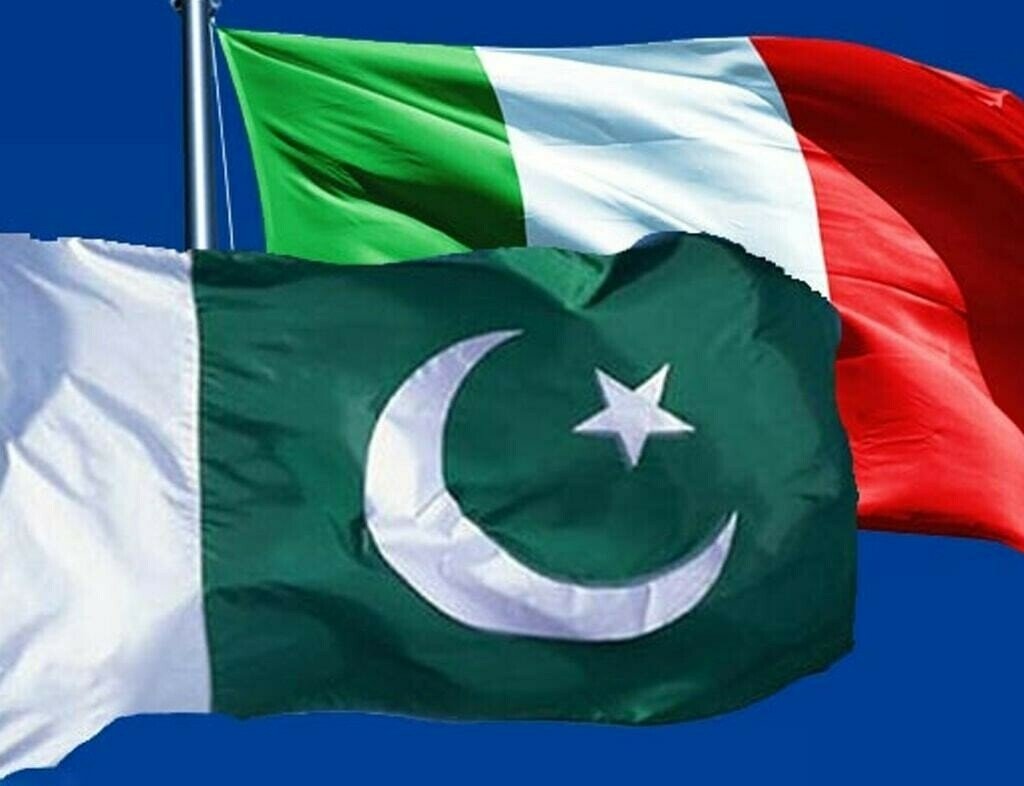
Italy and Pakistan are deepening geo-economic ties through trade surges, labor accords, and sectoral synergies. This alliance blends Italian innovation with Pakistani dynamism, unlocking potentials in marble, renewables, and IT for mutual prosperity across policymakers, investors, academics, and the public.
Key Points
- Diplomatic Milestones: February 2025 bilateral consultations reviewed economic ties; May 2025 MoU on Migration & Labour Mobility; December 2025 technical cooperation for marble industry.
- Trade Growth: Bilateral trade neared $2 billion in 2024-25, with Pakistan’s exports at $1.436 billion; Q2 2025 saw €234 million Pakistani exports to Italy.
- Investment Potentials: Opportunities for €200 million Italian inflows in SEZs, focusing on renewables and agriculture; Golden Visa facilitates reciprocal investments.
- Sectoral Synergies: Complementary strengths in Italian machinery/pharma and Pakistani textiles/marble promise sustainable, balanced cooperation.
- Labor and Diaspora Ties: Over 300,000 Pakistanis in Italy drive $1.121 billion remittances; new accords enhance workforce mobility.
- EU Context: GSP+ status boosts duty-free exports, amplifying economic leverage and resilience.
Italy and Pakistan are crafting a partnership that harnesses Italian technological prowess and EU market access with Pakistan’s abundant resources and strategic position. Policymakers can draw on robust frameworks like the 2013 Strategic Engagement Plan to advance dialogues on trade, investment, and sustainability. The February 2025 bilateral consultations in Rome, co-chaired by Italian Secretary General Ambassador Riccardo Guariglia and Pakistani Ambassador Amna Baloch, reviewed key areas including economic relations, development cooperation, and cultural exchanges. This paved the way for the May 2025 MoU on Migration & Labour Mobility, signed in Islamabad by Pakistan’s Minister Chaudhry Salik Hussain and Italy’s Minister Matteo Piantedosi, aiming to promote skilled Pakistani workforce integration into Europe while countering organized crime. December 2025 saw agreements on technical cooperation for Pakistan’s marble industry, with Italy providing expertise to modernize processing and boost exports.
Contemporary data underscores this momentum. Bilateral trade approached $2 billion in 2024-25, with Pakistan exporting $1.436 billion to Italy and maintaining a surplus. In the first four months of FY 2025-26 (July-October), exports rose 9.07% to $431.017 million, while imports fell 20.48% to $150.173 million, yielding a 36.14% surplus increase to $280.844 million. October 2025 exports grew 6.49% year-on-year to $104.718 million. Q2 2025 figures from OEC show Pakistan exporting €234 million to Italy (down 3.77% from Q2 2024), while Italy exported €103 million (up 27.3%). Pakistan’s GSP+ status, granting duty-free EU access, has been pivotal, elevating Italy as Pakistan’s second-largest EU export destination.
Top traded products highlight rational complementarities:
Direction | Top Products (2023-2025 Values in USD Millions) | Key Sectors |
Pakistan to Italy | House Linens (248), Rice (109), Non-Knit Men’s Suits (100) | Textiles and Agriculture |
Italy to Pakistan | Packaged Medicaments (34.1), Textile Machines (21.9), Washing Machines (18.5) | Pharmaceuticals and Machinery |
This table reveals evergreen synergies: Pakistan’s labor-intensive textiles and rice meet Italian consumer needs, while Italy’s high-value machinery and pharma enhance Pakistan’s industrial and health sectors. Over five years, trade has grown at 2.14% annually, resilient despite global challenges.
For investors, potentials are compelling. April 2025 statements set a $3 billion trade target, emphasizing energy, agriculture, and pharmaceuticals. Italian firms can invest in Pakistan’s SEZs with tax incentives, targeting €200 million in renewables—aligning Italy’s green expertise with Pakistan’s vast wind and solar resources. The marble accord invites Italian experts to assess and recommend advancements, unlocking value addition in Pakistan’s $2 billion marble sector. Reciprocally, Portugal’s Golden Visa model (adaptable to Italy) attracts Pakistani investments in real estate and other investment schemes, fostering bidirectional flows. September 2025 parliamentary diplomacy, hosted by Senator Sarmad Ali, reinforced these ties, with Ambassador Marilina Armellin highlighting the Pakistani diaspora’s role—nearly 300,000 in Italy, remitting $1.121 billion in 2024.
Academics can analyze soft power elements, such as how labor accords address rights and mobility, drawing on Italy’s trade union models. Shared histories, from joint K2 ascents to UN cooperation, provide evergreen rationales for enduring partnerships. Analysis shows addressing challenges like worker quotas (recent Italian limits) through dialogues ensures inclusive growth. Italy’s development aid in poverty reduction complements Pakistan’s reforms, mitigating disparities.
A comparative snapshot reinforces mutual benefits:
Indicator | Italy (2025) | Pakistan (2025) | Cooperative Potential |
GDP Growth (%) | 0.8 | 2.5 | Italian tech transfers could boost Pakistan’s growth via renewables/marble. |
Exports (% of GDP) | 35 | 10 | GSP+ amplifies Pakistan’s EU exports; Italy facilitates diversification. |
FDI Inflows (USD Bn) | 20+ | 2.5 (0.6% GDP) | Investments in SEZs could triple Pakistan’s inflows. |
Key Strengths | Innovation, Pharma | Textiles, Resources | Synergies in sustainable manufacturing and agriculture. |
This data illustrates Italy’s stability catalyzing Pakistan’s potential, with projections of $3 billion trade by 2030. For the public, this translates to jobs—thousands from labor mobility—and cultural enrichments, strengthening global connectivity.
Conclusion
Italy and Pakistan’s geo-economic alliance exemplifies collaborative promise, uniting Mediterranean expertise with South Asian vitality. Policymakers should prioritize SEZ integrations and marble pacts; investors, harness renewables and IT for high returns; academics, study green models; and the public, gain from employment and remittances. With trade nearing $2 billion and 2025 accords like labor mobility, this partnership drives sustainability amid challenges. By expanding bonds, both nations can achieve resilient, inclusive prosperity, modeling EU-Asia cooperation.
* Dr. Muhammad Jahanzaib is the Founder & Chief Visionary Officer (CVO) of Diamanium Thinkers, a global think tank. He holds a PhD in International Relations, specializing in the intersection of geo-politics and geo-economics in Pakistan’s foreign and domestic policy. A double gold medalist and published scholar, he writes on economic intelligence, economic diplomacy, political economy, AI and regional cooperation in South Asia and beyond. He can be reached at jahanzaibdgc@gmail.com.
Key References
- Italy (ITA) and Pakistan (PAK) Trade – https://oec.world/en/profile/bilateral-country/ita/partner/pak
- Pakistan (PAK) and Italy (ITA) Trade – https://oec.world/en/profile/bilateral-country/pak/partner/ita
- Pak-Italy trade witnesses over 36pc surplus in 4 months – https://www.nation.com.pk/03-Dec-2025/pak-italy-trade-witnesses-36pc-surplus-4-months
- Pakistan, Italy Agree on Technical Cooperation to Strengthen Marble Industry – https://thediplomaticinsight.com/pakistan-italy-strengthen-marble-industry/
- Pakistan, Italy strengthen relations through parliamentary diplomacy, trade – https://mettisglobal.news/Pakistan-Italy-strengthen-relations-through-parliamentary-diplomacy-trade-55497
- PAKISTAN – ITALY SIGN LABOR ACCORD – https://mofa.gov.pk/press-releases/pakistan-italy-sign-labor-accord?mission=rome
- Pakistan-Italy trade surpasses $1 billion: Information Minister – https://www.radio.gov.pk/02-06-2025/pakistan-italy-trade-surpasses-1-billion-information-minister
- Italy-Pakistan bilateral consultations – https://www.esteri.it/en/sala_stampa/archivionotizie/comunicati/2025/02/consultazioni-bilaterali-italia-pakistan/
- Pakistan, Italy target $3bn trade goal in coming years – https://mettisglobal.news/pakistan-italy-target-3bn-trade-goal-in-coming-years
- Economy of Italy vs Pakistan compared: GDP & Debt – https://georank.org/economy/italy/pakistan
- World Economic Outlook (October 2025) – Real GDP growth – https://www.imf.org/external/datamapper/index.php