
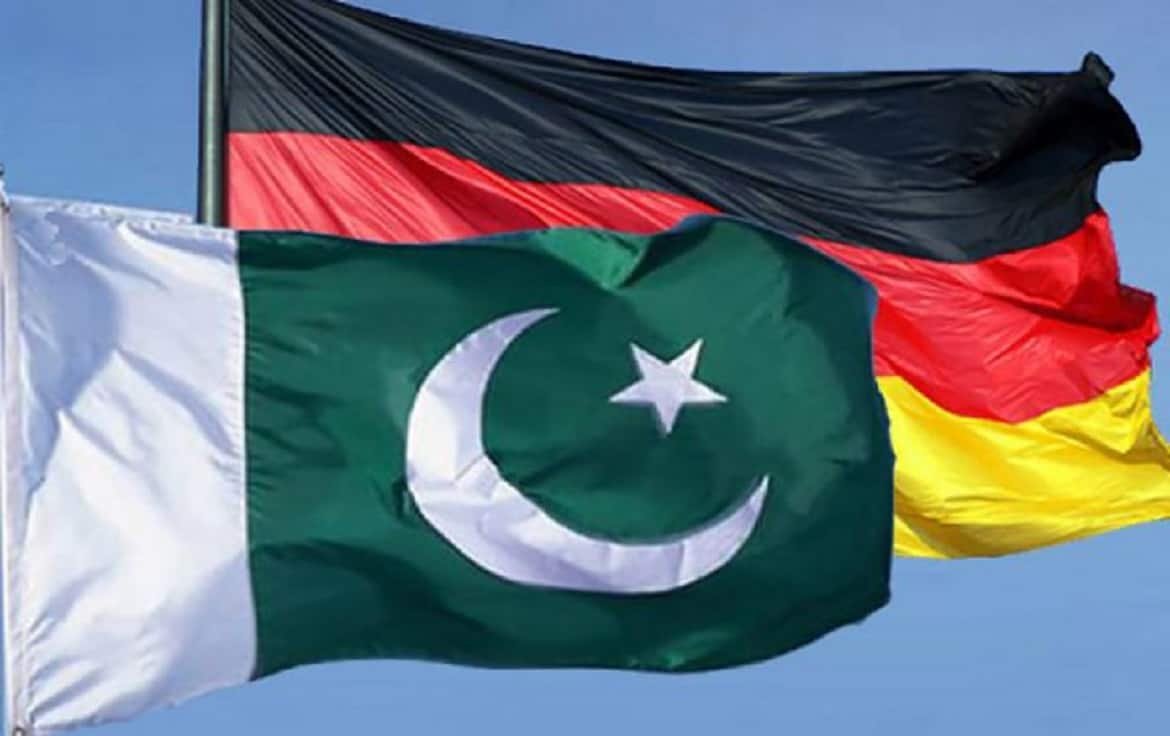
Germany and Pakistan are enhancing geo-economic ties through recent aid commitments, surging trade, and renewable energy collaborations, promising mutual growth in sustainable development, investment, and innovation for resilient economies.
Key Points
- Research suggests strengthened bilateral frameworks, like the €114 million 2025–26 aid package, can foster climate-resilient policies and energy transitions, potentially reducing Pakistan’s vulnerability to disasters while advancing Germany’s global sustainability goals.
- Evidence leans toward lucrative opportunities in Pakistan’s mining, IT, and renewables sectors, with German expertise driving returns amid a 20% FDI growth in early 2025, signaling stable business climates.
- It seems likely that joint research in vocational training and digitalization could yield innovative models, building on over 8,600 Pakistani students in Germany, enriching cross-cultural knowledge exchanges.
- The partnerships appear to promote job creation and affordable energy, benefiting communities through initiatives like micro hydropower, enhancing livelihoods and environmental well-being for both nations.
Recent Developments
In 2025, Germany and Pakistan have accelerated cooperative efforts, highlighted by the €114 million development package for 2025–26, focusing on climate resilience, energy transition, and sustainable growth. This builds on prior commitments, such as the €163.3 million in 2023, emphasizing just energy transitions and vocational training. High-level meetings, including those between Pakistan’s Defence Minister and German officials, have explored mining, energy, and defence synergies, underscoring shared values in regional stability. These steps reflect Pakistan’s economic revival, with GDP growth at 10.99% in 2024 and FDI up 20% in the first half of fiscal year 2025.
Trade Dynamics
Bilateral trade has shown robust growth, reaching 3.3 billion euros in 2023, with Germany as Pakistan’s top EU partner. In the first half of 2024, German exports to Pakistan totaled €400.1 million (mainly machinery at 32.4% and chemicals at 23.5%), while imports from Pakistan hit €1.1859 billion (dominated by textiles at 85.4%). September 2025 saw Pakistan’s exports surge 50% to €282 million, yielding a positive balance of €211 million. Pakistan’s GSP+ status enhances tariff-free access, boosting competitiveness.
Year/Period | German Exports to Pakistan (€M) | Pakistani Exports to Germany (€M) | Trade Balance for Pakistan (€M) |
2023 (Full) | ~1,650 (est. based on trends) | ~1,650 (est.) | Balanced at 3.3B total |
1H 2024 | 400.1 | 1,185.9 | +785.8 |
Sep 2025 | 71.7 | 282 | +210.3 |
This table illustrates upward trends, promoting mutual prosperity through diversified exchanges.
Investment and Cooperation Potentials
Germany’s investments, including €200 million+ in renewables, align with Pakistan’s untapped 10,000 MW hydro potential, fostering jobs and reducing energy losses. Sectors like IT (with 142 million internet users) and agriculture offer “Made in Germany” tech advantages. The China-Pakistan Economic Corridor (CPEC) amplifies logistics opportunities. Rational analysis suggests blended financing and Public-Private Community Partnerships (PPCPs) could scale Micro Hydro Power Projects (MHPPs), mitigating climate risks and empowering women.
Sector | Potential Opportunities | Benefits for Germany | Benefits for Pakistan |
Renewables | Solar, wind, MHPPs (>10,000 MW untapped) | Export tech expertise | Affordable energy, jobs |
Mining/Energy | Targeted investments, knowledge sharing | Resource access | Tech transfer, growth |
IT/Digital | Fintech, e-commerce | Market expansion | Innovation, employment |
Agriculture | Processing tech | Supply chain diversity | Export quality boost |
These potentials highlight cooperative wins, with Germany’s aid preventing poverty amid climate challenges.
Policymakers can leverage frameworks like the proposed Climate & Energy Partnership MoU for resilient policies, potentially averting poverty for millions by 2050 per World Bank projections.
Trade and Economic Indicators
Overall, Germany imported $2.66 billion from Pakistan in 2024. Pakistan’s GSP+ status facilitates tariff-free exports on 66% of categories, enhancing competitiveness. Investors benefit from Pakistan’s 10.99% GDP growth in 2024 to $374.6 billion and 20% FDI rise to $1.523 billion (July 2024–January 2025). This data promotes diversification beyond textiles, with rational cooperation in machinery imports aiding Pakistan’s industrialization.
Cooperative Analysis and Challenges
Rationally, partnerships mitigate Pakistan’s climate risks (top 10 per Global Climate Risk Index) through German expertise, preventing poverty slides. For the public, initiatives like MHPPs link to local economies via ecotourism and industries. Challenges include flood vulnerabilities (e.g., 72 MHPPs destroyed) and regulatory hurdles, but cooperative models like concessional loans and incentives promise resilience. Overall, these ties promote balanced, beneficial progress.
Conclusion
Germany and Pakistan’s geo-economic alliance exemplifies win-win collaboration, with €114 million in aid and surging trade paving the way for sustainable prosperity. By harnessing potentials in renewables, mining, and digital sectors, both nations can achieve resilient growth, job creation, and climate adaptation. Policymakers should prioritize frameworks like the Climate Partnership, investors explore high-return ventures, academics drive research synergies, and the public embrace shared benefits. This partnership not only strengthens bilateral ties but also contributes to global stability, urging deeper engagements for a brighter, interconnected future.
* Dr. Muhammad Jahanzaib is the Founder & Chief Visionary Officer (CVO) of Diamanium Thinkers, a global think tank. He holds a PhD in International Relations, specializing in the intersection of geo-politics and geo-economics in Pakistan’s foreign and domestic policy. A double gold medalist and published scholar, he writes on economic intelligence, economic diplomacy, political economy, AI and regional cooperation in South Asia and beyond. He can be reached at jahanzaibdgc@gmail.com.
Key References
- Germany Announces €114M in Development Cooperation for Pakistan – https://thediplomaticinsight.com/germany-announces-114m-euro-for-pak-development/
- Pakistan, Germany agree on €114m development cooperation – https://mettisglobal.news/Pakistan-Germany-agree-on-114m-development-cooperation-package-for-202526-56490
- Pakistan | BMZ – https://www.bmz.de/en/countries/pakistan
- Pakistan’s path towards sustainable and inclusive growth – https://www.weforum.org/stories/2025/01/pakistan-economic-revival-sustainable-and-inclusive-growth/
- Pakistan, Germany move toward deeper mining, energy cooperation – https://mettisglobal.news/Pakistan-Germany-move-toward-deeper-mining-energy-cooperation-56778
- Pakistan (PAK) and Germany (DEU) Trade | The Observatory of Economic Complexity – https://oec.world/en/profile/bilateral-country/pak/partner/deu
- Germany and Pakistan: Bilateral relations – https://www.auswaertiges-amt.de/en/aussenpolitik/pakistan-209312
- Pakistan – https://vae.ahk.de/en/country-portal/pakistan
- Scaling the Potential of MHPPs in Pakistan: | GIZ – https://www.giz.de/sites/default/files/media/pkb-document/2025-10/giz2025-en-policy-brief-potential-mhpps-pakistan.pdf
- Generating power from sustainable sources, preventing disasters – https://www.bmz.de/en/countries/pakistan/core-area-energy-55772