
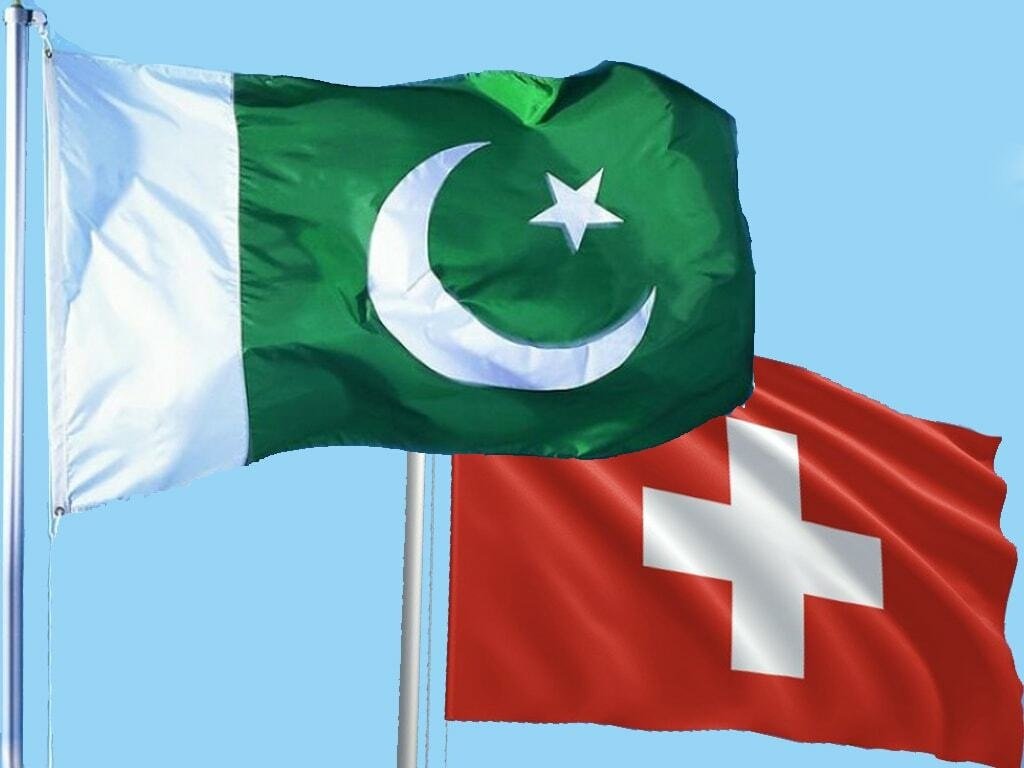
Switzerland and Pakistan are strengthening geo-economic bonds through trade growth, investments, and sectoral synergies. This partnership leverages Swiss expertise in tech and finance with Pakistan’s resources, fostering sustainable benefits for policymakers, investors, academics, and the public.
Key Points
- Diplomatic Advances: 2025 consultations and roadshows emphasized trade, renewables, and education; July 2023 MOU on cooperation enhanced bilateral frameworks.
- Trade Surge: Bilateral trade reached about USD 546 million in 2024, with Pakistan’s exports up 1.6% to about USD 299 million, driven by textiles and agriculture.
- Investment Momentum: Switzerland ranked 4th in FDI with USD 203.3 million in FY2025; potentials for €200 million in renewables and agriculture via SEZs.
- Sectoral Complementarities: Opportunities in tech (EVs, renewables), agriculture (seeds, mechanization), and services (hotels, hospitals) promise balanced growth.
- Evergreen Ties: Agreements on investment protection, double taxation, and AEOI since 2021 ensure enduring economic resilience.
- Future Outlook: Trade projected to exceed $800 million by 2030 through CPEC synergies and green initiatives, boosting jobs and innovation.
Switzerland and Pakistan are emerging as complementary partners, blending Switzerland’s innovation-driven economy with Pakistan’s resource-rich market. Policymakers can prioritize frameworks like the 2025 Pakistan Roadshow in Zurich, Geneva, and Bern, which attracted over 100 participants and sparked interest from 10 Swiss companies in trade relations. The July 2023 MOU was signed in Islamabad by Swiss FDFA head Ignazio Cassis, focusing on economic cooperation and development assistance. Such engagements build on bilateral agreements, including investment protection, debt consolidation, aviation, double taxation, and automatic exchange of financial information (AEOI) implemented in 2021, ensuring seamless cross-border flows amid global uncertainties.
Contemporary data highlights accelerating trade. Bilateral volumes hit about USD 546 million in 2024, with Switzerland exporting approximately USD 247 million (down 23.8% from 2023 due to global factors) and importing around USD 300 million (up 1.6%). Pakistan’s GSP+ status with the EU grants duty-free access, elevating textiles and agriculture as key drivers. In FY2024-25, Pakistan’s exports to Switzerland grew modestly, supported by incentives like competitive energy tariffs and import rationalization. Switzerland ranks as Pakistan’s 23rd largest trading partner, with a trade balance favoring Pakistan.
A snapshot of traded goods reveals rational synergies:
Direction | Top Products (2024 Values in USD Millions) | Key Sectors |
Switzerland → Pakistan | Pharmaceuticals (74.6), Machines (50.5), Dyeing Extracts (42.2) | Pharma and Machinery |
Pakistan → Switzerland | Textiles (245.0), Agricultural Products (29.0), Leather Articles (14.6) | Textiles and Agriculture |
This table shows Switzerland’s high-value exports complementing Pakistan’s labor-intensive goods, creating a balanced ecosystem. Growth in services trade—Switzerland exporting USD 187.3 million (up 12%) and Pakistan USD 158 million (up 20%)—further underscores potentials in IT and business services.
Investment horizons are promising for investors. Switzerland is Pakistan’s 4th largest FDI source with net inflows of USD 203.3 million in FY2025, up from USD 28.7 million in FY2023-24. The net inward equity position stands at USD 2.7 billion, with 28 Swiss multinationals operating in sectors like pharmaceuticals (growth 2.7%), energy (0.1%), and banking (15.8% asset growth in 2023). Major firms employ 15,000 people across 19 manufacturing facilities. Potentials include €200 million in renewables, aligning with Pakistan’s 30% renewable electricity target by 2030 and Switzerland’s cleantech strengths. The China-Pakistan Economic Corridor (CPEC) offers evergreen opportunities for Swiss firms in energy and construction, with Phase-II focusing on agriculture and industrial parks.
Sectoral complementarities offer cooperative analysis. In agriculture, Swiss opportunities lie in high-yielding seeds, pesticides, mechanization, and dairy—Pakistan’s livestock sector grew 3.9% in FY2023-24. The 2021 Climate and Energy Partnership exemplifies forward-looking ties, addressing Pakistan’s pollution challenges with Swiss solutions. Academics can explore soft power dynamics, as diaspora remittances and education cooperation enhance human capital. The general public benefits from job creation—thousands via Swiss ventures—and cultural exchanges, fostering global connectivity.
A comparative overview reinforces mutual advantages:
Indicator | Switzerland (2025) | Pakistan (2025) | Cooperative Potential |
GDP Growth (%) | 1.5 | 2.6 | Swiss tech transfers could boost Pakistan’s via renewables/agri. |
Exports (% of GDP) | 70 | 11 | GSP+ amplifies Pakistan’s EU exports. |
FDI Inflows (USD Bn) | 10+ | 2.5 | Swiss investments in SEZs could double inflows. |
Key Strengths | Innovation, Pharma | Resources, Workforce | Synergies in cleantech and manufacturing. |
This data highlights Switzerland’s stability catalyzing Pakistan’s growth, mitigating disparities through targeted pacts. Overall, this alliance promotes resilience, with trade poised for $800 million by 2030.
Conclusion
Switzerland and Pakistan’s geo-economic partnership embodies collaborative success, uniting Alpine precision with Himalayan potential. Policymakers should advance SEZ integrations and renewable pacts; investors, seize tech and agri opportunities for high yields; academics, probe green models; and the public, gain from employment and exchanges. By expanding bonds, both nations can navigate global shifts, fostering inclusive growth that endures.
* Dr. Muhammad Jahanzaib is the Founder & Chief Visionary Officer (CVO) of Diamanium Thinkers, a global think tank. He holds a PhD in International Relations, specializing in the intersection of geo-politics and geo-economics in Pakistan’s foreign and domestic policy. A double gold medalist and published scholar, he writes on economic intelligence, economic diplomacy, political economy, AI and regional cooperation in South Asia and beyond. He can be reached at jahanzaibdgc@gmail.com.
Key References
- Bilateral relations Switzerland–Pakistan – https://www.eda.admin.ch/countries/pakistan/en/home/switzerland-and/bilateral-relations.html
- Opportunities in Pakistan’s tech sector – https://www.s-ge.com/en/publication/fact-sheet/2024-e-mem-pakistan-ct6-tech-industry
- Economic Report 2025* PAKISTAN – https://swissbusinesscouncil.com.pk/wp-content/uploads/2025/11/Economic-Report-2025.pdf
- Economic Report 2024* PAKISTAN – https://swissbusinesscouncil.com.pk/wp-content/uploads/2025/01/Economic-Report-2024.pdf
- Pak-Swiss trade ties a top priority: envoy – https://tribune.com.pk/story/2497328/pak-swiss-trade-ties-a-top-priority-envoy
- Switzerland (CHE) and Pakistan (PAK) Trade – https://oec.world/en/profile/bilateral-country/che/partner/pak
- Switzerland Exports to Pakistan – https://tradingeconomics.com/switzerland/exports/pakistan
- Switzerland Imports from Pakistan – https://tradingeconomics.com/switzerland/imports/pakistan
- Bilateral Consultation between Pakistan and Switzerland – https://mofa.gov.pk/press-releases/bilateral-consultation-between-pakistan-and-switzerland
- News – https://www.eda.admin.ch/countries/pakistan/en/home/news/news.html