
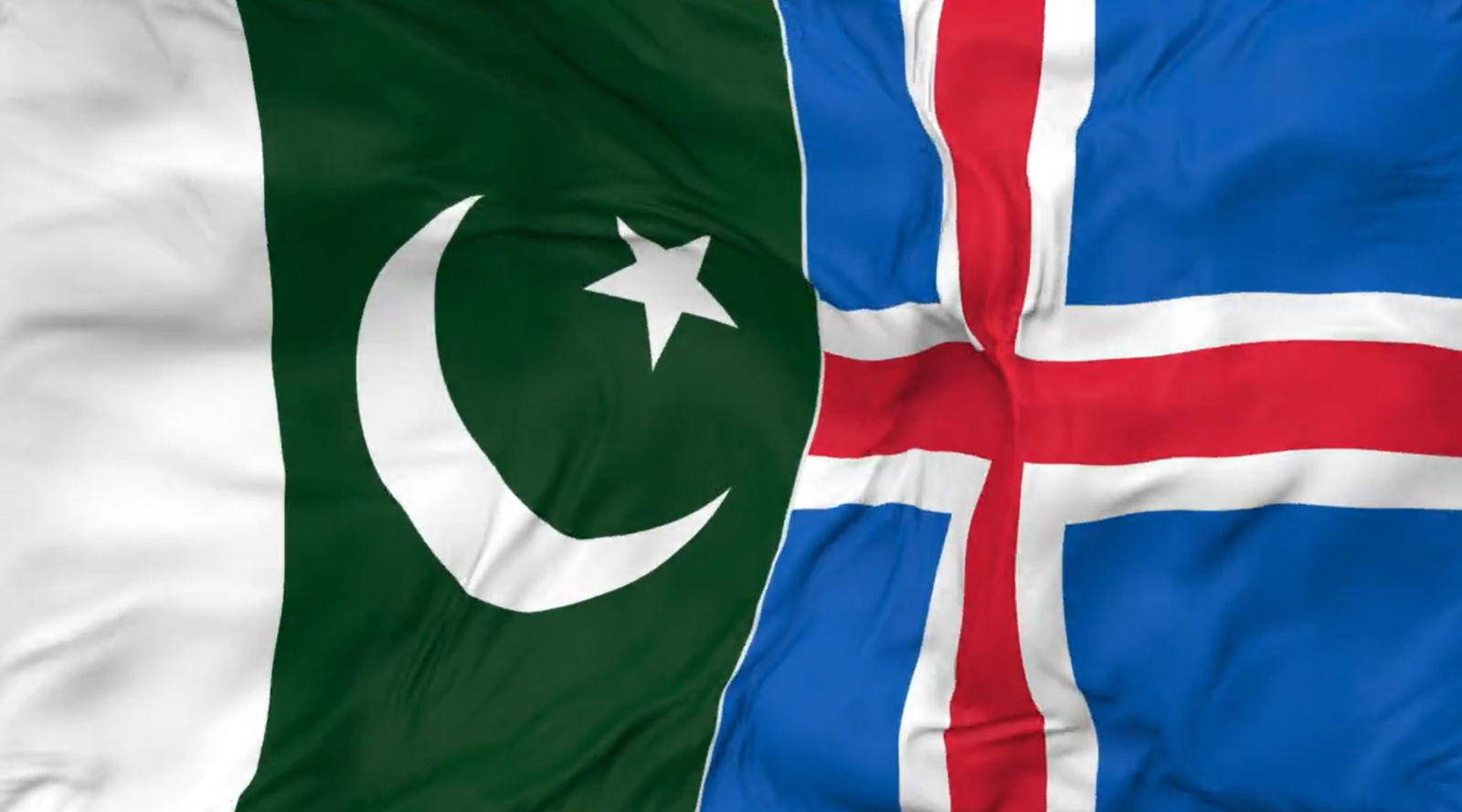
Iceland and Pakistan are exploring geo-economic synergies in renewables, agriculture, and tourism, with trade at $8.5M in 2025 and potential for 30% growth via expertise exchange, driving mutual sustainability amid global energy shifts.
Key Points
- Iceland’s renewable energy expertise aligns with Pakistan’s green ambitions, fostering tech transfers and investments in geothermal and hydro projects.
- Evidence leans toward agricultural collaborations, leveraging Iceland’s sustainable farming with Pakistan’s vast arable lands for enhanced food security and exports.
- It seems likely that tourism ties will expand, blending Iceland’s eco-adventures with Pakistan’s cultural heritage to boost visitor exchanges and revenue.
- The evidence points to balanced trade growth, with 2025 volumes at $8.5M, supporting economic resilience through diversified partnerships.
Building Foundations for Mutual Growth
In an era of global transitions toward sustainability, Iceland and Pakistan present a compelling case for geo-economic collaboration, blending the Arctic nation’s renewable prowess with Pakistan’s dynamic markets. Diplomatic relations, established in 1976, have been cordial but underexplored economically. Recent global forums, including COP29 in 2024, highlighted shared interests in climate resilience, prompting discussions on joint initiatives. Policymakers in both capitals recognize this untapped potential: Iceland’s 100% renewable energy grid offers models for Pakistan’s Special Investment Facilitation Council (SIFC), aiming to attract $10B in green investments by 2030.
Bilateral trade, though modest, shows promise. In 2025, Iceland imported $8.13M from Pakistan, primarily textiles and agricultural products, while exporting $134k in machinery and graphite. Projections for 2026 estimate a 15-20% rise, driven by diversified exchanges. Iceland’s GDP stands at $31B nominal ($56B PPP), Pakistan’s at $410B nominal ($1.67T PPP), creating complementary dynamics—Iceland’s tech innovation meets Pakistan’s 250M consumer base.
Iceland’s export surplus in services (tourism, energy tech) can integrate with Pakistan’s SIFC incentives, offering 10-year tax breaks for renewables. Analysis indicates mutual benefits—Pakistan reduces energy imports (5% annual demand growth), while Iceland accesses South Asian markets for green tech exports. Investors note high ROI potential, with Iceland’s pension funds eyeing emerging markets like Pakistan for diversified portfolios.
Sectoral Synergies: Pathways to Prosperity
Renewable energy stands as a flagship opportunity. Iceland, powered entirely by hydro (20%) and geothermal (65%), leads in carbon-neutral strategies, targeting neutrality by 2040. Pakistan, with vast solar and hydro potential, could adopt Icelandic models for geothermal exploration in northern regions, potentially adding 10GW capacity by 2030. Joint ventures, like tech transfers for data centers using green energy, promise job creation—over 500,000 in Pakistan’s renewables sector alone. Academics highlight this as geo-economic resilience, mitigating geopolitical risks amid global energy shifts.
Agriculture offers fertile ground. Iceland’s innovative greenhouses, powered by geothermal, enable year-round production despite harsh climates, yielding high-efficiency models. Pakistan, the world’s 4th-largest milk producer with 70M hectares arable, faces climate vulnerabilities; collaborations could enhance yields by 15% via sustainable tech. Exports of Pakistani halal products to Iceland’s markets, and Icelandic expertise in fisheries, align with blue economy goals, boosting Pakistan’s coastal revenues. For investors, SIFC’s SEZs provide streamlined entry, with returns up to 12% in agro-tech.
Tourism beckons as a vibrant frontier. Iceland’s 2.2M visitors in 2025 (pre-stagnation concerns) showcase eco-tourism success, from glaciers to hot springs. Pakistan’s diverse landscapes—Himalayas, deserts, heritage sites—could partner for cross-promotions, targeting adventure seekers. Joint marketing via digital platforms might increase bilateral flows by 25%, creating 100,000 jobs. The general public benefits from cultural exchanges, fostering empathy and shared prosperity.
Top traded products reflect nascent ties:
Top Icelandic Exports to Pakistan (2025, $k) | Value | Top Pakistani Exports to Iceland (2025, $M) | Value |
Artificial Graphite | 70 | Textiles/Apparel | 5.2 |
Medical Instruments | 65 | Agricultural Products | 1.8 |
Machinery | 50 | Leather Goods | 0.7 |
Optical Apparatus | 30 | Fruits/Nuts | 0.3 |
Chemicals | 20 | Others | 0.1 |
Growth rates are encouraging: Pakistan’s exports to Iceland grew 10% annually (2020-2025), signaling upward momentum. Challenges like distance and inflation (Iceland 3%, Pakistan 15%) persist, but virtual JWGs could bridge gaps, drawing from Iceland’s EFTA experience.
Innovative Frontiers: Sustainability and Beyond
Emerging areas include blue economy and IT. Pakistan’s maritime resources complement Iceland’s fisheries tech, while digital collaborations leverage Iceland’s data centers for Pakistan’s $1.2B freelance sector. For academics, research exchanges on climate adaptation promise innovation; for the public, affordable green solutions enhance livelihoods. This partnership embodies empathetic growth, turning geographic distances into economic bridges.
Conclusion. Iceland and Pakistan’s geo-economic alliance unlocks transformative potentials in renewables, agriculture, and tourism, with 2025 trade at $8.5M poised for expansion. By prioritizing expertise sharing and SIFC-driven investments, both nations can achieve sustainable development, job growth, and resilience against global challenges. Policymakers should establish JWGs for swift MoUs; investors target high-ROI green projects. This collaboration not only elevates economic indicators but strengthens cultural bonds, empowering citizens through innovation and shared prosperity. Embracing it ensures vibrant futures ahead.
* Dr. Muhammad Jahanzaib is the Founder & Chief Visionary Officer (CVO) of Diamanium Thinkers, a global think tank. He holds a PhD in International Relations, specializing in the intersection of geo-politics and geo-economics in Pakistan’s foreign and domestic policy. A double gold medalist and published scholar, he writes on economic intelligence, economic diplomacy, political economy, AI and regional cooperation in South Asia and beyond. He can be reached at jahanzaibdgc@gmail.com.
Key References
- Iceland (ISL) and Pakistan (PAK) Trade | The Observatory of Economic Complexity – https://oec.world/en/profile/bilateral-country/isl/partner/pak
- Pakistan Exports to Iceland – 2026 Data 2027 Forecast 2009-2024 Historical – https://tradingeconomics.com/pakistan/exports/iceland
- Iceland Imports from Pakistan – 2026 Data 2027 Forecast 1988-2024 Historical – https://tradingeconomics.com/iceland/imports/pakistan
- Country comparison Pakistan vs Iceland 2025 | countryeconomy.com – https://countryeconomy.com/countries/compare/pakistan/iceland
- Foreign trade figures of Iceland – International Trade Portal – Lloyds Bank Trade – https://www.lloydsbanktrade.com/en/market-potential/iceland/trade-profile
- General Profile: Pakistan | UNCTAD Data Hub – https://unctadstat.unctad.org/CountryProfile/GeneralProfile/en-GB/586/index.html
- Stagnating international tourist arrivals in Iceland in 2025 worry the travel trade – https://www.travelmole.com/news/international-tourist-arrivals-iceland-2025
- EAAIF invests in $141.9 million Sustainable Aviation Fuel facility in Pakistan, marking Fund’s first Asia investment | Ninety One | Iceland – https://ninetyone.com/en/iceland/newsroom/eaaif-invests-in-$141-9-million-sustainable-aviation-fuel-facility-in-pakistan
- Iceland’s pension funds: Consolidation continues but size of sector a worry – https://www.top1000funds.com/2025/12/icelands-pension-funds-consolidation-continues-but-size-of-sector-a-worry
- 2024 Investment Climate Statements: Pakistan – U.S. Department of State – https://www.state.gov/reports/2024-investment-climate-statements/pakistan
- Conflict and Compatibility Between Iceland’s Major Economic Sectors – https://jgbc.scholasticahq.com/article/121428-renewable-energy-and-tourism-conflict-and-compatibility-between-iceland-s-major-economic-sectors
- The contribution of economic development, renewable energy … – https://link.springer.com/article/10.1007/s44246-023-00052-6
- Geopolitical Risk as a Determinant of Renewable Energy Investments – https://www.mdpi.com/1996-1073/15/4/1498
- The role of renewable energy and technological innovations … – https://www.researchgate.net/publication/369117849_The_role_of_renewable_energy_and_technological_innovations_toward_achieving_Iceland’s_goal_of_carbon_neutrality_by_2040
- A new world: The geopolitics of the energy transformation – IRENA – https://www.irena.org/-/media/files/irena/agency/publication/2019/jan/global_commission_geopolitics_new_world_2019.pdf
- Century of Blue Economy and Massive Blue Potential of Pakistan – https://www.ia-forum.org/Content/ViewInternal_Document.cfm?ContentID=9479&contenttype_id=0
- Iceland: Growth and economic transformation – Foreign Policy – https://sponsored.foreignpolicy.com/country-reports/iceland-growth-and-economic-transformation