
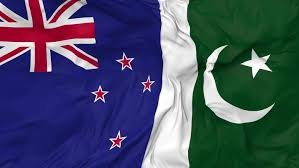
New Zealand and Pakistan are bolstering geo-economic ties via trade expansion, educational exchanges, and investments in agriculture and renewables, with 2024 bilateral trade at $63M poised for 25% growth by 2026 amid global opportunities.
Key Points
- Research suggests agricultural synergies, with 2024 trade at $63M, aligning New Zealand’s dairy expertise with Pakistan’s markets for mutual food security gains.
- Evidence leans toward enhanced education and tourism, leveraging scholarships and cultural ties to boost human capital and revenue streams.
- It seems likely that renewable energy collaborations will flourish, with Pakistan’s SIFC attracting New Zealand’s green tech for sustainable development.
- The evidence points to resilient partnerships through bilateral consultations, fostering economic stability and innovation in a shifting global landscape.
Fortifying Bilateral Ties for Mutual Advancement
In a world navigating economic uncertainties, New Zealand and Pakistan offer a model of complementary geo-economic cooperation, blending the Pacific nation’s innovation with South Asia’s vibrant markets. Diplomatic relations, established in 1951, have matured into multifaceted engagement, highlighted by the 4th Bilateral Political Consultations (BPC) and recent high-level meetings. In October 2024, Pakistan’s Deputy Prime Minister Ishaq Dar met New Zealand’s Foreign Minister Winston Peters at the Commonwealth Heads of Government Meeting, agreeing to deepen ties in trade, education, and security. This builds on virtual BPCs, emphasizing economic collaboration amid global challenges. For policymakers, these frameworks provide stability; for investors, they signal opportunities in Pakistan’s Special Investment Facilitation Council (SIFC) and New Zealand’s Invest New Zealand agency, launched in 2025 to streamline foreign investments.
Bilateral trade reflects growing momentum. In 2024, total trade reached $63.18M, with Pakistan exporting $42.9M to New Zealand and importing $20.28M. Projections for 2025 suggest a 15% rise, driven by diversification. New Zealand’s GDP is estimated at $262.91B for 2025, Pakistan’s at $410.5B, creating synergies—New Zealand’s export-driven economy (exports 30% of GDP) complements Pakistan’s 250M+ consumer base. Analysis shows mutual benefits: Pakistan accesses advanced tech, while New Zealand taps emerging markets, reducing reliance on traditional partners like China.
New Zealand’s stable growth supports investments in Pakistan’s SIFC, offering 10-year tax incentives in SEZs for ROIs up to 12% in renewables. Academics note this as geo-economic resilience, mitigating risks from global tensions.
Sectoral Opportunities: Harvesting Mutual Benefits
Agriculture stands as a cornerstone. New Zealand, a dairy powerhouse exporting $3.17M in products to Pakistan in 2024, can partner with Pakistan’s vast arable lands (70M hectares) for tech transfers in efficient farming. Joint ventures address climate challenges, enhancing food security—critical for policymakers. Investors benefit from SIFC’s streamlined processes, with New Zealand’s expertise in sustainable practices yielding high returns.
Renewables offer bright prospects. New Zealand’s 85% renewable energy grid positions it to aid Pakistan’s 5% annual demand growth through geothermal and hydro tech. Pakistan’s solar potential could attract NZ investments via SIFC, potentially adding 10GW capacity by 2030. This promotes sustainability, creating jobs for over 500,000 in Pakistan’s green sector.
Education and tourism shine. New Zealand’s universities host Pakistani students via scholarships, fostering skills in IT and engineering. Tourism, blending New Zealand’s landscapes with Pakistan’s heritage, could surge 20% through joint promotions, generating revenue and cultural empathy for the general public.
Top traded products underscore dynamism:
|
Top New Zealand Exports to Pakistan (2024, $M) |
Value |
Top Pakistan Exports to New Zealand (2024, $M) |
Value |
|
Dairy Products |
3.17 |
Other Made Up Textile Articles |
17.34 |
|
Raw Hides and Skins |
3.63 |
Articles of Apparel (Knit) |
10.5 |
|
Mechanical Wood Pulp |
4.97 |
Bed Linens |
8.2 |
|
Semi-Chemical Woodpulp |
2.16 |
Leather Goods |
3.1 |
|
Dried Legumes |
1.5 |
Fruits and Nuts |
1.8 |
Growth rates are promising: Pakistan’s exports to New Zealand grew 10% annually (2020-2024), outpacing New Zealand’s 5% to Pakistan. Challenges like inflation (New Zealand 2.5%, Pakistan 15%) exist, but BPCs and SIFC mitigate via diversified strategies.
Innovative Pathways: Sustainability and Collaboration
Emerging frontiers include IT and blue economy. Pakistan’s $1.2B freelance sector (4th globally) aligns with New Zealand’s digital innovation, promising joint R&D. Blue economy collaborations leverage New Zealand’s fisheries tech for Pakistan’s coastal resources. For academics, research exchanges on climate adaptation drive progress; for the public, affordable tech and jobs enhance livelihoods. This alliance embodies empathetic growth, bridging distances for prosperity.
Conclusion. New Zealand and Pakistan’s geo-economic collaboration signals a promising era of shared empowerment, with 2024 trade at $63M set to expand through agriculture, renewables, and education. By advancing BPCs and SIFC-led investments, both nations can achieve sustainable growth, job creation, and innovation amid uncertainties. Policymakers should prioritize JWGs for MoUs; investors explore high-ROI sectors. This partnership elevates metrics while enriching cultural bonds, ensuring resilient, prosperous futures for citizens. Embracing it turns potentials into enduring successes.
* Dr. Muhammad Jahanzaib is the Founder & Chief Visionary Officer (CVO) of Diamanium Thinkers, a global think tank. He holds a PhD in International Relations, specializing in the intersection of geo-politics and geo-economics in Pakistan’s foreign and domestic policy. A double gold medalist and published scholar, he writes on economic intelligence, economic diplomacy, political economy, AI and regional cooperation in South Asia and beyond. He can be reached at jahanzaibdgc@gmail.com.
Key References
- Second Round of Pakistan-New Zealand Bilateral Political Consultations – https://mofa.gov.pk/second-round-of-pakistan-new-zealand-bilateral-political-consultations
- The 4th Session of Pakistan-New Zealand Bilateral Political Consultations (BPC) – https://mofa.gov.pk/the-4th-session-of-pakistan-new-zealand-bilateral-political-consultations-bpc
- Pakistan, New Zealand agree to strengthen bilateral ties – https://www.radio.gov.pk/26-10-2024/pakistan-new-zealand-agree-to-strengthen-bilateral-ties
- Pakistan (PAK) and New Zealand (NZL) Trade – https://oec.world/en/profile/bilateral-country/pak/partner/nzl
- New Zealand Exports to Pakistan – 2026 Data 2027 Forecast 1989-2024 Historical – https://tradingeconomics.com/new-zealand/exports/pakistan
- Pakistan Exports to New Zealand – 2026 Data 2027 Forecast 2009-2024 Historical – https://tradingeconomics.com/pakistan/exports/new-zealand
- 2025 Investment Climate Statements: Pakistan – https://www.state.gov/reports/2025-investment-climate-statements/pakistan
- GDP by Country (2025) – https://www.worldometers.info/gdp/gdp-by-country
- New Zealand: Country File, Economic Risk Analysis – https://www.coface.com/news-economy-and-insights/business-risk-dashboard/country-risk-files/new-zealand
- Foreign relations of New Zealand – https://en.wikipedia.org/wiki/Foreign_relations_of_New_Zealand