
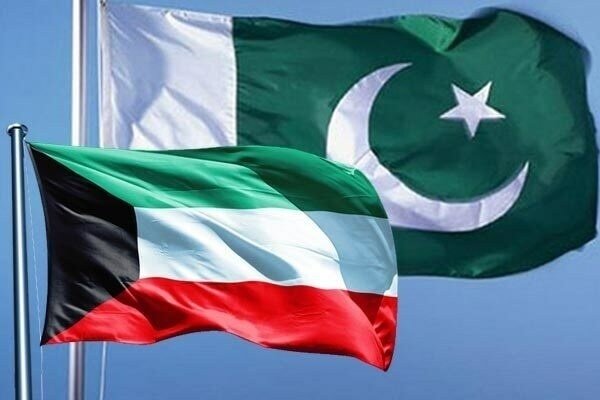
Kuwait and Pakistan are intensifying geo-economic ties through $10B+ investments, $25M loans for hydropower, and 30% export growth in 2025, unlocking potentials in energy, agriculture, and mining for mutual sustainability amid global shifts.
Key Points
- Kuwait’s Vision 2040 complements Pakistan’s SIFC, driving investments in renewables and mining for resilient economic growth.
- Evidence leans toward trade surge, with Pakistan’s exports to Kuwait up 30% to $151M in Jan-Nov 2025, balancing oil imports with diversified exchanges.
- It seems likely that ongoing JMC and MoUs will enhance remittances and labor ties, benefiting over 250,000 Pakistanis in Kuwait.
- The evidence points to collaborative frontiers in agriculture and IT, fostering innovation and food security for both nations’ futures.
Forging Strategic Partnerships for Mutual Resilience
In a dynamic global economy, Kuwait and Pakistan are emerging as vital allies, capitalizing on brotherly ties established in 1958 to drive geo-economic progress. Recent milestones underscore this momentum: In December 2025, Kuwait expressed keen interest in expanding investments during talks between Pakistan’s Petroleum Minister Ali Pervaiz Malik and Kuwait’s Finance Minister Dr. Subaih Al-Mukhaizeem, focusing on energy, trade, and investment. This aligns with Kuwait’s Vision 2040 diversification goals and Pakistan’s Special Investment Facilitation Council (SIFC), offering one-window operations for foreign investors. Policymakers view this as a pathway to stability, with the November 2025 signing of a $25M loan for the Mohmand Dam hydropower project—boosting Pakistan’s renewable capacity by 800MW—exemplifying commitment.
The 5th Joint Ministerial Commission (JMC) in May 2024 and fourth Bilateral Political Consultations reviewed trade, investment, and human resources, paving the way for the December 2025 Kuwait-Pakistan Business Expo. Seven MoUs signed in November 2023, worth multi-billion dollars, target food security, agriculture, hydel power, and water supplies, with Kuwait pledging $10B+ through the Kuwait Investment Authority (KIA). For investors, this signals high ROI, with KIA eyeing $20B in sectors like mining and renewables.
Bilateral trade reflects vitality: In 2024, Pakistan exported $124.86M to Kuwait, while Kuwait exported $2.5B+ to Pakistan, primarily petroleum. Jan-Nov 2025 saw Pakistan’s goods exports surge 30% to $151M, and services exports 40% to $23.6M. Kuwait’s GDP is projected at $107B nominal ($220B PPP) for 2025, Pakistan’s at $410.5B nominal ($1.67T PPP), creating synergies—Kuwait’s energy surplus meets Pakistan’s 250M+ market.
Analysis highlights mutual gains: Pakistan reduces energy imports (5% annual demand growth), while Kuwait diversifies beyond oil, tapping Pakistan’s SIFC incentives like 10-year tax holidays in SEZs. Academics emphasize resilience amid geopolitical shifts, with over 250,000 Pakistanis in Kuwait remitting $600M+ annually, strengthening people-to-people bonds.
Sectoral Opportunities: A Roadmap to Prosperity
Energy leads potentials. Kuwait’s $750M proposed investments include hydropower like Mohmand Dam and renewables, aligning with Pakistan’s green ambitions. Joint ventures could add 10GW capacity by 2030, reducing dependencies and promoting sustainability. For investors, SIFC’s streamlined processes promise 12-15% ROIs.
Agriculture and food security offer fertile ground. Pakistan, a top rice exporter ($49.3M to Kuwait in 2023), can supply halal products while importing tech for yield boosts amid climate challenges. MoUs target mangroves rehabilitation and food security, enhancing Kuwait’s imports and Pakistan’s exports. Seafood exports surged 22% to $253M in H1 FY26, with Kuwait a key market.
Mining and IT shine. KIA’s fund for copper and rare earths taps Pakistan’s resources; IT collaborations leverage Pakistan’s $1.2B freelance sector (4th globally) with Kuwait’s digital push. For the general public, this means jobs—300,000+ in IT—and affordable tech.
Top traded products underscore dynamism:
Top Pakistani Exports to Kuwait (2023, $M) | Value | Top Kuwaiti Exports to Pakistan (2023, $M) | Value |
Bovine Meat | 68.8 | Refined Petroleum | 2000+ |
Non-fillet Fresh Fish | 37.3 | Scrap Iron | 100+ |
Cereal Straws | 17 | Acyclic Alcohols | 50+ |
Rice | 49.3 | Propylene Polymers | 40+ |
House Linen | 10+ | Cyclic Hydrocarbons | 30+ |
Growth rates impress: Pakistan to Kuwait +30% in 2025, reversing imbalances. Challenges like inflation (Kuwait 1%, Pakistan 15%) exist, but JMC mitigates via diversified routes and empathy-building exchanges.
Innovative Horizons: Sustainability and Beyond
Emerging areas include tourism and blue economy. Proximity fosters eco-tourism; digital platforms link SMEs. For academics, research on climate adaptation drives innovation; for the public, remittances and scholarships empower youth. This partnership embodies empathetic growth, bridging the Arabian Sea for prosperity.
Conclusion. Kuwait and Pakistan’s geo-economic alliance heralds mutual empowerment, with 2025 exports up 30% to $151M and $25M+ loans fueling hydropower. By advancing MoUs in energy, agriculture, and mining via SIFC and JMC, both nations drive sustainability, jobs, and innovation amid uncertainties. Policymakers should prioritize JWGs for swift implementation; investors explore high-ROI renewables. This collaboration balances trade while enriching cultural ties, ensuring resilient futures and shared prosperity for citizens. Embracing it transforms potentials into enduring successes.
* Dr. Muhammad Jahanzaib is the Founder & Chief Visionary Officer (CVO) of Diamanium Thinkers, a global think tank. He holds a PhD in International Relations, specializing in the intersection of geo-politics and geo-economics in Pakistan’s foreign and domestic policy. A double gold medalist and published scholar, he writes on economic intelligence, economic diplomacy, political economy, AI and regional cooperation in South Asia and beyond. He can be reached at jahanzaibdgc@gmail.com.
Key References
- Kuwait seeks to broaden investment portfolio in Pakistan – https://mettisglobal.news/Kuwait-seeks-to-broaden-investment-portfolio-in-Pakistan-57345
- Kuwait to provide $25 million loan tranche to Pakistan for Mohmand Dam project – https://www.arabnews.pk/node/2621073/pakistan
- Fourth Round of Pakistan-Kuwait Bilateral Political Consultations – https://mofa.gov.pk/press-releases/fourth-round-of-pakistan-kuwait-bilateral-political-consultations
- Government of Pakistan – Islamabad – Economic Affairs Division – https://www.ead.gov.pk/LatestNews
- Strategic partnership: Kuwait to invest $10 billion in Pakistan’s growth – https://q8dailynews.com/article/strategic-partnership-kuwait-to-invest-10-billion-in-pakistans-growth-1
- Pakistan (PAK) and Kuwait (KWT) Trade – https://oec.world/en/profile/bilateral-country/pak/partner/kwt
- kuwait Trade and Investment – https://mofa.gov.pk/kuwait-trade-and-investment
- Kuwait: Country File, Economic Risk Analysis – https://www.coface.com/news-economy-and-insights/business-risk-dashboard/country-risk-files/kuwait
- Kuwait: Economic stagnation amid falling oil prices – https://www.allianz-trade.com/en_global/economic-research/country-reports/Kuwait.html
- Pakistan sees 40% increase in services exports to Kuwait in 2025 – https://www.arabnews.com/node/2628313/pakistan
- Kuwait, Pakistan sign MoUs, agreements in multiple fields – https://kuwaittimes.com/article/8456/top-stories/kuwait-pakistan-sign-mous-agreements-in-multiple-fields
- Kuwait-Pakistan Business Expo 2025 to be held in Dec – https://www.nation.com.pk/11-Oct-2025/kuwait-pakistan-business-expo-2025-held-dec?version=amp
- Pakistan, Kuwait ink $25mn loan agreement for Mohmand Dam Hydropower Project – https://www.brecorder.com/news/40390387/pakistan-kuwait-ink-25mn-loan-agreement-for-mohmand-dam-hydropower-project
- Kuwait seeks to invest $750 million in Pakistan projects – https://en.mugtama.com/articles/kuwait_seeks_to_invest_750_million_in_pakistan_projects
- Pakistan Kuwait Investment Company: Home – https://pkic.com/
- Pakistan seafood exports rise 22% in last six months on strong Gulf, Asia demand – https://www.arabnews.pk/node/2629542/pakistan