
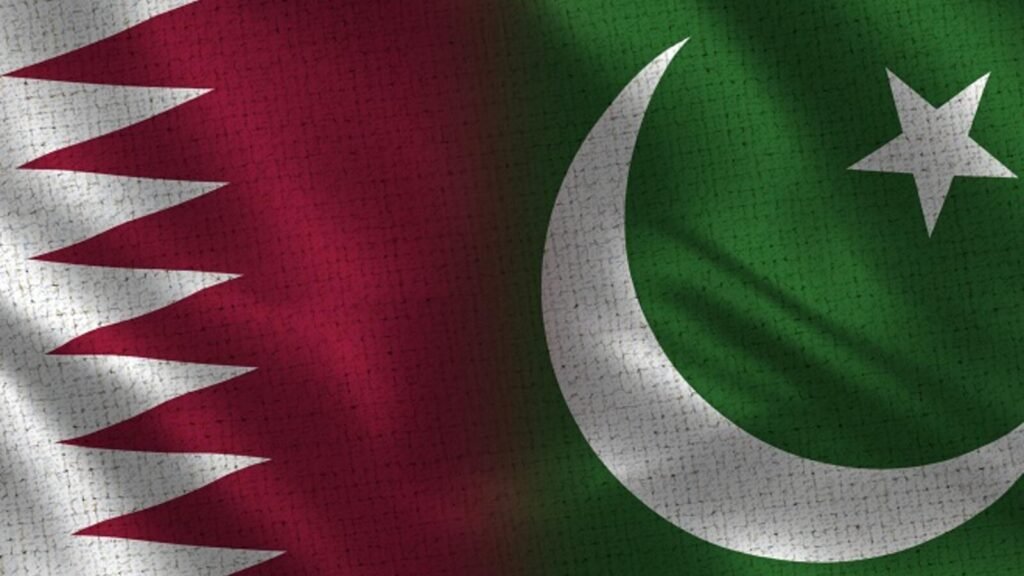
Qatar and Pakistan are advancing geo-economic ties through $3B investments, JMC protocols, and GCC FTA, with 2024 trade at $3.89B poised for 15% growth in 2025, unlocking synergies in energy, AI, and agriculture.
Key Points
- Qatar’s Vision 2030 aligns with Pakistan’s SIFC, channeling $3B investments into energy and infrastructure for sustained growth.
- Evidence suggests trade rebound, with 2024 volumes at $3.89B, Pakistan’s exports up 10% annually, balancing LNG imports with diversified products.
- It seems likely that AI and tech collaborations, post-December 2025 agreements, will drive innovation, enhancing competitiveness for both economies.
- The evidence points to agricultural and tourism potentials, leveraging Qatar’s food security needs with Pakistan’s resources for resilient partnerships.
Reinforcing Bilateral Pillars for Shared Success
Amid evolving global dynamics, Qatar and Pakistan are fortifying a geo-economic partnership rooted in fraternal bonds since 1969. The October 2025 Sixth Joint Ministerial Commission (JMC) in Islamabad marked a milestone, with ministers signing a protocol committing $3B from the Qatar Investment Authority (QIA) into Pakistan’s sectors like energy, agriculture, and infrastructure. This fulfills the Amir of Qatar’s 2019 pledge, amplified by Pakistan’s Special Investment Facilitation Council (SIFC), offering streamlined incentives for Qatari investors. Policymakers hail this as a blueprint for stability, with Prime Minister Shehbaz Sharif’s meetings emphasizing SIFC’s role in attracting FDI amid regional uncertainties.
December 2025 saw further momentum, with agreements on AI and emerging technologies during high-level talks, aligning Qatar’s digital ambitions with Pakistan’s IT prowess. The GCC-Pakistan Free Trade Agreement (FTA), effective from 2025, reduces tariffs, boosting market access. For investors, this ecosystem promises high ROIs—up to 12% in renewables—while academics underscore its role in fostering knowledge exchanges through scholarships and joint R&D. Bilateral trade hit $3.89B in 2024, with projections for 15% growth in 2025 amid diversification. Qatar’s GDP is estimated at $222B nominal ($369B PPP) for 2025, Pakistan’s at $410.5B nominal ($1.67T PPP), creating complementary scales—Qatar’s energy exports fueling Pakistan’s market.
Qatar’s export surplus (exports 42% of GDP) integrates with Pakistan’s SIFC tax holidays in SEZs, mitigating energy demands rising 5% annually. Analysis reveals mutual advantages—Pakistan gains tech transfers, Qatar secures food imports, enhancing resilience against global volatility.
Sectoral Catalysts: Driving Collaborative Growth
Energy remains foundational. Qatar, supplying 70% of Pakistan’s LNG, exported $3.55B in mineral fuels in 2024. The JMC protocol expands this to renewables and hydel power, with QIA eyeing $750M+ in solar projects. This supports Qatar’s Vision 2030 diversification and Pakistan’s green transition, creating 500,000 jobs in renewables. Investors benefit from stable contracts, while academics note reduced carbon footprints as a model for Gulf-South Asia ties.
Agriculture offers bountiful prospects. Pakistan, exporting $49.3M in rice and $28.3M in meat to Qatar in 2024-2025, addresses Qatar’s food security amid arid challenges. Joint ventures in halal processing and irrigation tech could boost yields 15%, with Pakistan’s mango exports surging 228,000 kg in 2025 festivals. For the general public, this means affordable imports and employment in agro-SEZs.
AI and IT emerge as high-potential frontiers. Pakistan’s exports to Qatar doubled to $9.37M in FY2024, with December 2025 pacts focusing on digital infrastructure and skills. Qatar’s tech hubs can collaborate with Pakistan’s 300,000+ IT workforce, fostering startups and e-commerce. Health and tourism also beckon: Qatar’s medical expertise pairs with Pakistan’s pharmaceuticals, while visa easing could lift bilateral tourism 20%, blending deserts and Himalayas for cultural enrichment.
Top traded products reflect evolving dynamics:
Top Qatari Exports to Pakistan (2024, $B) | Value | Top Pakistani Exports to Qatar (2024-2025, $M) | Value |
Mineral Fuels/Oils | 3.55 | Bovine Meat | 28.3 |
Plastics | 0.14 | Potatoes | 17.1 |
Iron/Steel | 0.03 | Rice | 8.2 |
Chemicals | 0.02 | Edible Vegetables | 7.4 |
Machinery | 0.01 | Textiles | 6.5 |
Growth trends are optimistic: Pakistan’s exports to Qatar rose 10% annually (2023-2025), narrowing the imbalance. Challenges like inflation (Qatar 1.5%, Pakistan 15%) persist, but JMC mechanisms and FTA address them through diversified supply chains. November 2025 discussions with QIA CEO emphasized energy and tech, positioning both for empathetic, inclusive progress.
Future Vistas: Innovation and Inclusivity
Emerging horizons include blue economy and education. Pakistan’s maritime resources complement Qatar’s fisheries tech, while scholarships empower youth. This alliance diversifies dependencies, with Gwadar enhancing Qatar’s trade routes. For investors, high-ROI AI ventures; for the public, remittances from 200,000+ Pakistanis in Qatar ($500M+ annually) uplift communities. This partnership transcends economics—it’s a beacon of mutual empowerment.
Conclusion. Qatar and Pakistan’s geo-economic synergy heralds transformative growth, with $3.89B 2024 trade evolving via $3B investments, JMC protocols, and GCC FTA. By prioritizing energy, AI, and agriculture through SIFC and QIA, both nations foster sustainability, innovation, and jobs amid global shifts. Policymakers should expedite JWGs for MoUs; investors target renewables for ROIs. This alliance balances metrics while deepening cultural bonds, ensuring resilient futures. Embracing it empowers citizens through shared prosperity and empathy.
* Dr. Muhammad Jahanzaib is the Founder & Chief Visionary Officer (CVO) of Diamanium Thinkers, a global think tank. He holds a PhD in International Relations, specializing in the intersection of geo-politics and geo-economics in Pakistan’s foreign and domestic policy. A double gold medalist and published scholar, he writes on economic intelligence, economic diplomacy, political economy, AI and regional cooperation in South Asia and beyond. He can be reached at jahanzaibdgc@gmail.com.
Key References
- Government of Pakistan – Economic Affairs Division – https://www.ead.gov.pk/NewsDetail/MWFiMTI5NDAtYjBhYi00Y2Y3LTlkMTItZjgwNjU5NDU5NDE4
- Pakistan And Qatar Leaders Reaffirm Deepening Ties – https://evrimagaci.org/gpt/pakistan-and-qatar-leaders-reaffirm-deepening-ties-520615
- Pakistan praises Qatar’s ‘positive role’ on National Day, seeks deeper trade and investment ties – https://www.arabnews.com/node/2626681/pakistan
- October 24, 2025 – Prime Minister’s Office, Islamabad, Pakistan – https://www.pmo.gov.pk/news_details.php?news_id=1335
- Pakistan, Qatar agree to boost cooperation in AI – https://www.radio.gov.pk/06-12-2025/pakistan-qatar-agree-to-boost-cooperation-in-emerging-technologies
- Doha signs protocol to invest $3bn in Pakistan – https://www.dawn.com/news/1950926
- Pakistan, Qatar explore deeper investment cooperation in energy, infrastructure, and technology – https://profit.pakistantoday.com.pk/2025/11/06/pakistan-qatar-explore-deeper-investment-cooperation-in-energy-infrastructure-and-technology
- Qatar (QAT) and Pakistan (PAK) Trade – https://oec.world/en/profile/bilateral-country/qat/partner/pak
- Pakistan (PAK) and Qatar (QAT) Trade – https://oec.world/en/profile/bilateral-country/pak/partner/qat
- GDP by Country (2025) – https://www.worldometers.info/gdp/gdp-by-country
- Economy of Qatar – https://en.wikipedia.org/wiki/Economy_of_Qatar
- Economy of Pakistan – https://en.wikipedia.org/wiki/Economy_of_Pakistan
- Pakistan, Qatar enjoy strong and steadily growing trade relations – https://www.qatar-tribune.com/article/192418/nation/pakistan-qatar-enjoy-strong-and-steadily-growing-trade-relations
- Pakistan, Qatar agree on $3bn investment plan, expand cooperation in trade, transport and health – https://profit.pakistantoday.com.pk/2025/10/24/pakistan-qatar-agree-on-3bn-investment-plan-expand-cooperation-in-trade-transport-and-health
- Doha Pak-Qatar Bilateral Trade – https://mofa.gov.pk/doha-pak-qatar-bilateral-trade
- Qatar Exports to Pakistan – https://tradingeconomics.com/qatar/exports/pakistan