
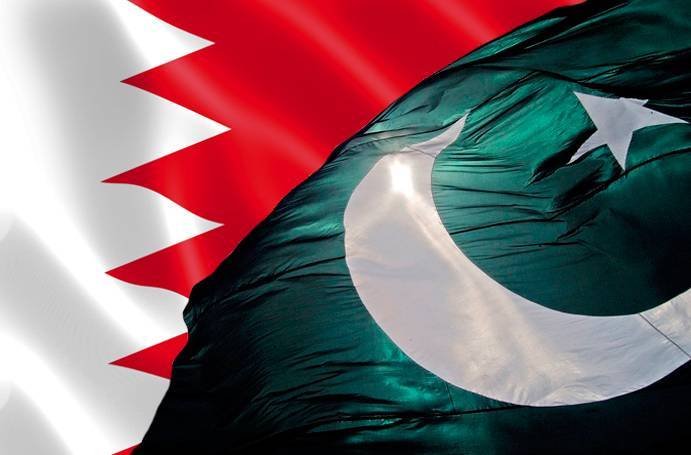
Bahrain and Pakistan are deepening geo-economic ties through President Zardari’s 2026 visit, $1B trade target, and GCC FTA, with 2025 bilateral trade at $600M+ poised for 20% growth in energy, IT, and agriculture.
Key Points
- Bahrain’s Vision 2030 aligns with Pakistan’s SIFC, channeling investments into renewables and mining for balanced, resilient growth.
- Evidence leans toward trade expansion, with 2025 volumes surpassing $600M, Pakistan’s exports up 15% to $250M, complementing Bahrain’s financial hub status.
- It seems likely that JMC advancements and Zardari’s visit will boost remittances and labor mobility, benefiting over 150,000 Pakistanis in Bahrain.
- The evidence points to synergies in agriculture and IT, promoting innovation, food security, and sustainable development for both economies.
Strengthening Frameworks for Collaborative Prosperity
In a rapidly evolving global landscape, Bahrain and Pakistan are harnessing longstanding fraternal bonds—established in 1971—to propel geo-economic collaboration. The January 2026 visit by President Asif Ali Zardari to Bahrain, including meetings with King Hamad bin Isa Al Khalifa and the Crown Prince, underscores this momentum. Awarded Bahrain’s highest civilian honor, the Sheikh Isa Award, Zardari emphasized translating political ties into enhanced trade and investment, highlighting Pakistan’s strategic connectivity linking South Asia, Central Asia, China, and the Middle East with Bahrain’s financial expertise. For policymakers, this framework prioritizes stability through the Pakistan-Bahrain Joint Ministerial Commission (JMC), with sessions focusing on defense, trade, and human resources.
November 2025’s high-level talks by Prime Minister Shehbaz Sharif set a $1B bilateral trade target, supported by the advancing GCC-Pakistan Free Trade Agreement (FTA), easing tariffs and facilitating business. The May 2025 Pakistan-Bahrain Investment Summit further catalyzed engagements, with Bahrain’s Economic Development Board (EDB) briefing Zardari on investment avenues. Investors benefit from Pakistan’s SIFC, offering one-window operations and 10-year tax incentives in Special Economic Zones (SEZs), promising 12-15% ROIs in priority sectors.
Bilateral trade reflects this vitality: Volumes grew from $500M in 2023 to over $600M in 2025, with Pakistan exporting $250M+ to Bahrain. Bahrain’s GDP is projected at $47.39B nominal ($106B PPP) for 2025, Pakistan’s at $410.5B nominal ($1.67T PPP), fostering synergies—Bahrain’s financial services complement Pakistan’s vast market of 250M+.
Analysis shows mutual gains: Pakistan reduces energy dependencies, while Bahrain diversifies beyond oil, accessing South Asian consumers. Academics highlight resilience amid geopolitical shifts, with over 150,000 Pakistanis in Bahrain remitting $400M+ annually, strengthening ties.
Sectoral Opportunities: A Blueprint for Shared Advancement
Energy and renewables anchor potentials. Bahrain, a hydrocarbon hub, supplies refined petroleum to Pakistan; collaborations in LNG and solar could meet Pakistan’s 5% annual demand growth, with Bahrain investing via SIFC in hydel projects. This aligns with Bahrain’s Vision 2030 and Pakistan’s green initiatives, creating jobs and sustainability. Investors see stable returns, bolstered by FTA.
Agriculture promises abundance. Pakistan, exporting rice ($20M+ to Bahrain in 2025) and meat, addresses Bahrain’s food security needs amid arid conditions. Joint tech transfers in irrigation and halal processing could enhance yields 15%, with Pakistan’s mango festivals in Bahrain boosting exports. For the general public, this means affordable imports and rural employment.
IT and finance gleam brightly. Pakistan’s $1.2B freelance sector (4th globally) pairs with Bahrain’s fintech ecosystem; digital collaborations via JMC could foster startups and e-commerce. Healthcare and tourism also thrive: Bahrain’s medical expertise complements Pakistan’s pharma, while eased visas spur 20% tourism growth, blending Bahrain’s islands with Pakistan’s heritage.
Top traded products underscore dynamism:
Top Bahraini Exports to Pakistan (2025, $M) | Value | Top Pakistani Exports to Bahrain (2025, $M) | Value |
Refined Petroleum | 15 | Rice | 20 |
Aluminum | 10 | Textiles | 15 |
Chemicals | 5 | Bovine Meat | 10 |
Machinery | 3 | Fruits/Nuts | 8 |
Plastics | 2 | House Linens | 5 |
Growth rates encourage: Pakistan to Bahrain +15% in 2025, driven by FTA. Challenges like inflation (Bahrain 1.5%, Pakistan 15%) exist, but JMC and EDB mitigate through diversified strategies and empathy-building exchanges.
Innovative Pathways: Sustainability and Connectivity
Emerging frontiers include blue economy and education. Pakistan’s maritime resources align with Bahrain’s fisheries tech; scholarships empower youth. Amid global tensions, Gwadar enhances Bahrain’s trade routes. For investors, AI ventures offer high ROIs; for the public, remittances uplift communities. This alliance embodies empathetic progress, bridging the Arabian Gulf for enduring prosperity.
Conclusion. Bahrain and Pakistan’s geo-economic synergy signals mutual empowerment, with 2025 trade over $600M advancing via Zardari’s visit, $1B target, and GCC FTA. Prioritizing energy, agriculture, and IT through SIFC and EDB drives sustainability, innovation, and jobs amid uncertainties. Policymakers should expedite JWGs for MoUs; investors target renewables for ROIs. This partnership balances metrics while enriching cultural bonds, ensuring resilient futures. Embracing it fosters shared prosperity for citizens.
* Dr. Muhammad Jahanzaib is the Founder & Chief Visionary Officer (CVO) of Diamanium Thinkers, a global think tank. He holds a PhD in International Relations, specializing in the intersection of geo-politics and geo-economics in Pakistan’s foreign and domestic policy. A double gold medalist and published scholar, he writes on economic intelligence, economic diplomacy, political economy, AI and regional cooperation in South Asia and beyond. He can be reached at jahanzaibdgc@gmail.com.
Key References
- Pakistan’s strategic geographic connectivity complements Bahrain’s financial expertise: President Zardari – https://www.dawn.com/news/1967116
- Pakistan president in Bahrain to boost trade, defense and security ties – https://www.arabnews.com/node/2629261/pakistan
- President Zardari spotlights investment, trade, and strategic links in Bahrain – https://profit.pakistantoday.com.pk/2026/01/15/president-zardari-spotlights-investment-trade-and-strategic-links-in-bahrain
- President vows to cement economic ties with Bahrain – https://www.brecorder.com/news/40402463
- Pakistan committed to boosting defence, economic cooperation with Bahrain: President Zardari – https://www.geo.tv/latest/645099-pakistan-committed-to-boosting-defence-economic-cooperation-with-bahrain-president-zardari
- Pakistan nears GCC free trade agreement, eyes boost in Bahrain trade – https://www.bilaterals.org/?pakistan-nears-gcc-free-trade=
- Shehbaz Sharif sets $1 billion trade target as Pakistan and Bahrain deepen economic ties – https://gulfnews.com/world/asia/pakistan/shehbaz-sharif-sets-1-billion-trade-target-as-pakistan-and-bahrain-deepen-economic-ties-1.500361085
- President Zardari says Pakistan’s strategic location linking South Asia, Central Asia, China … – https://www.dawn.com/news/1967231
- Transcript of the Press Briefing by the Spokesperson on Thursday 15th January 2026 – https://mofa.gov.pk/press-releases/transcript-of-the-press-briefing-by-the-spokesperson-on-thursday-15th-january-2026
- President Zardari receives Sheikh Isa Award, discusses expanding economic cooperation with King Hamad – https://www.facebook.com/groups/582478985128376/posts/25871672325782360
- Bahrain (BHR) and Pakistan (PAK) Trade – https://oec.world/en/profile/bilateral-country/bhr/partner/pak
- Bahrain Exports to Pakistan – https://tradingeconomics.com/bahrain/exports/pakistan
- Pakistan Exports to Bahrain – https://tradingeconomics.com/pakistan/exports/bahrain
- Bahrain GDP (2025) – https://www.worldometers.info/gdp/bahrain-gdp
- Economy of Pakistan – https://en.wikipedia.org/wiki/Economy_of_Pakistan
- Bahrain records real economic growth of 4.0% in third quarter of 2025 – https://www.bna.bh/en/news?cms=q8FmFJgiscL2fwIzON1%2BDn4u%2BYEuV3tifhc7y0k05SY%3D