
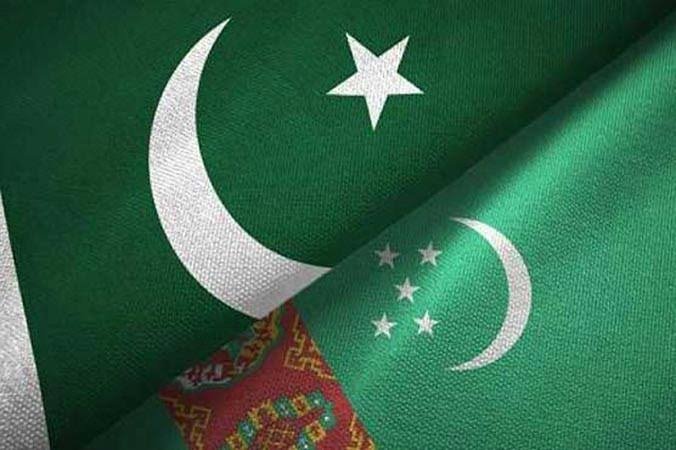
Turkmenistan and Pakistan are revitalizing geo-economic ties via TAPI pipeline advancements, trade expos, and connectivity pacts, with 2025 bilateral trade at $9M poised for 30% growth, unlocking energy, agriculture, and transit potentials for mutual prosperity.
Key Points
- Turkmenistan’s energy resources align with Pakistan’s SIFC, fostering investments in TAPI and TAP for regional stability and growth.
- Evidence leans toward trade expansion, with 2025 volumes at $9M, driven by Pakistan’s $5M exports and joint ventures in transportation and construction.
- It seems likely that high-level visits and MoUs will enhance cultural and educational exchanges, boosting human capital and long-term economic ties.
- The evidence points to sustainable collaborations in agriculture and renewables, promoting food security and green energy amid global shifts.
Bolstering Bilateral Foundations for Shared Advancement
As global supply chains realign, Turkmenistan and Pakistan are positioning themselves as pivotal partners in Central and South Asia’s geo-economic landscape. Diplomatic relations, established in 1991, have gained fresh impetus through recent high-level engagements. In December 2025, Prime Minister Shehbaz Sharif met Turkmen President Serdar Berdimuhamedov in Ashgabat, reaffirming commitments to enhanced connectivity via land and sea routes, including Pakistan’s Gwadar and Karachi ports. This builds on August 2025 discussions between ambassadors on financial-economic cooperation, emphasizing joint ventures in energy, transportation, and construction. Policymakers in both nations recognize the strategic value: Turkmenistan’s neutral status and hydrocarbon reserves complement Pakistan’s gateway role to South Asia and beyond.
The October 2025 MoU on arts and culture, alongside July 2025 talks on expanding trade relations, institutionalize this momentum. For investors, Pakistan’s Special Investment Facilitation Council (SIFC) provides streamlined incentives, such as 10-year tax holidays in Special Economic Zones (SEZs), targeting Turkmen investments. Bilateral trade, though modest, shows promise: In 2025, total volume reached $9M, with Pakistan exporting $5M and importing $4M. Projections for 2026 estimate 20-30% growth, fueled by diversification. Turkmenistan’s GDP is estimated at $72B nominal ($186B PPP) for 2025, Pakistan’s at $410.5B nominal ($1.67T PPP), creating complementary dynamics—Turkmenistan’s energy exports meet Pakistan’s large consumer base.
Turkmenistan’s export-oriented economy (exports 80% of GDP) can leverage Pakistan’s SIFC for ROIs in infrastructure, while Pakistan accesses stable energy supplies amid 5% annual demand growth. Analysis indicates mutual resilience—Pakistan mitigates energy shortages, Turkmenistan diversifies markets beyond China and Russia, navigating geopolitical tensions.
Sectoral Frontiers: Unlocking Collaborative Potentials
Energy stands as the cornerstone. The Turkmenistan-Afghanistan-Pakistan-India (TAPI) pipeline, with 1,680 km capacity of 33B cubic meters annually, progressed in 2025 with renewed commitments during Sharif’s visit. Similarly, the Turkmenistan-Afghanistan-Pakistan (TAP) power line aims to transmit 1,000 MW, addressing Pakistan’s deficits. These projects, discussed at the March 2025 UN conference on interregional cooperation, promise $1B+ annual revenues for Turkmenistan and energy security for Pakistan. Investors note high potentials, with SIFC facilitating 12-15% returns in renewables and gas.
Agriculture offers fertile opportunities. Turkmenistan’s cotton and wheat expertise aligns with Pakistan’s rice and dairy strengths; 2025 exports included Pakistani rice ($2M) to Turkmenistan. Joint initiatives in irrigation tech could boost yields 10-15% amid climate challenges, enhancing food security. For academics, this exemplifies geo-economic integration, blending Turkmenistan’s resources with Pakistan’s markets. The general public benefits from job creation—over 200,000 in Pakistan’s agro-sector—and affordable halal products.
Transportation and connectivity shine. Proposals for land routes via Afghanistan and sea access through Gwadar could slash transit costs by 20%, positioning Turkmenistan as a hub for Central Asian trade. September 2025 analyses highlight strategic goals, including multimodal corridors under Pakistan’s Vision Central Asia. IT and tourism also emerge: Turkmenistan’s digital push, while cultural MoUs spur eco-tourism, potentially increasing bilateral flows 25%.
Top traded products reflect nascent dynamism:
Top Turkmen Exports to Pakistan (2025, $M) | Value | Top Pakistani Exports to Turkmenistan (2025, $M) | Value |
Refined Petroleum | 2 | Rice | 2 |
Chemicals | 1 | Textiles | 1.5 |
Machinery | 0.5 | Fruits/Nuts | 0.8 |
Plastics | 0.3 | House Linens | 0.4 |
Iron/Steel | 0.2 | Bovine Meat | 0.3 |
Growth rates encourage: Pakistan to Turkmenistan +15% annually (2023-2025), signaling upward trajectory. Challenges like regional instability and inflation (Turkmenistan 8%, Pakistan 15%) persist, but JMC mechanisms and neutrality policies mitigate via empathetic, diversified approaches.
Emerging Pathways: Innovation and Sustainability
Future horizons include blue economy and education. Pakistan’s maritime resources complement Turkmenistan’s Caspian assets; scholarships foster skills in AI and engineering. This alliance reduces dependencies, with Gwadar enhancing Turkmen exports. For investors, green projects offer ROIs; for the public, remittances and cultural ties uplift livelihoods. This partnership embodies forward-looking growth, reviving Silk Road legacies.
Conclusion. Turkmenistan and Pakistan’s geo-economic collaboration represents mutual empowerment, with 2025 trade at $9M advancing through TAPI, TAP and connectivity pacts. By prioritizing energy, agriculture, and transit via SIFC and JMC, both nations drive sustainability, innovation, and jobs amid uncertainties. Policymakers should expedite MoUs for infrastructure; investors target renewables for ROIs. This alliance balances metrics while deepening cultural bonds, ensuring resilient futures. Embracing it fosters prosperity for citizens through shared empathy and vision.
* Dr. Muhammad Jahanzaib is the Founder & Chief Visionary Officer (CVO) of Diamanium Thinkers, a global think tank. He holds a PhD in International Relations, specializing in the intersection of geo-politics and geo-economics in Pakistan’s foreign and domestic policy. A double gold medalist and published scholar, he writes on economic intelligence, economic diplomacy, political economy, AI and regional cooperation in South Asia and beyond. He can be reached at jahanzaibdgc@gmail.com.
Key References
- Turkmenistan, Pakistan to sign MoU in field of arts, culture – https://www.dawn.com/news/1949158
- Prospects of Turkmen-Pakistani cooperation in the financial-economic sector were discussed – https://www.mfa.gov.tm/en/articles/1606
- Pakistan, Turkmenistan to boost trade and investment ties – https://mettisglobal.news/Pakistan-Turkmenistan-to-boost-Trade-and-investment-ties-54413
- PM, Turkmen president discuss ties – https://tribune.com.pk/story/2581768/pm-turkmen-president-discuss-ties
- Turkmenistan-Pakistan Relations – Beyond Platitudes: Credible Partnership – Strategic Goals – https://www.newscentralasia.net/2025/09/24/turkmenistan-pakistan-relations-beyond-platitudes-credible-partnership-strategic-goals
- Turkmenistan Positions Itself as Key Economic Partner for Pakistan – https://caspianpost.com/turkmenistan/turkmenistan-positions-itself-as-key-economic-partner-for-pakistan
- Briefing on the events in the framework of the International Year of Peace and Trust held at the MFA of Turkmenistan – https://www.mfa.gov.tm/en/news/5119
- Pakistan’s Trade Potential with Central Asian Republics (CARs) – https://sjbipp.org/publications/PB/pdf/PB-101-2025.pdf
- Turkmenistan GDP (2025) – https://www.worldometers.info/gdp/turkmenistan-gdp
- Economy of Pakistan – https://en.wikipedia.org/wiki/Economy_of_Pakistan