
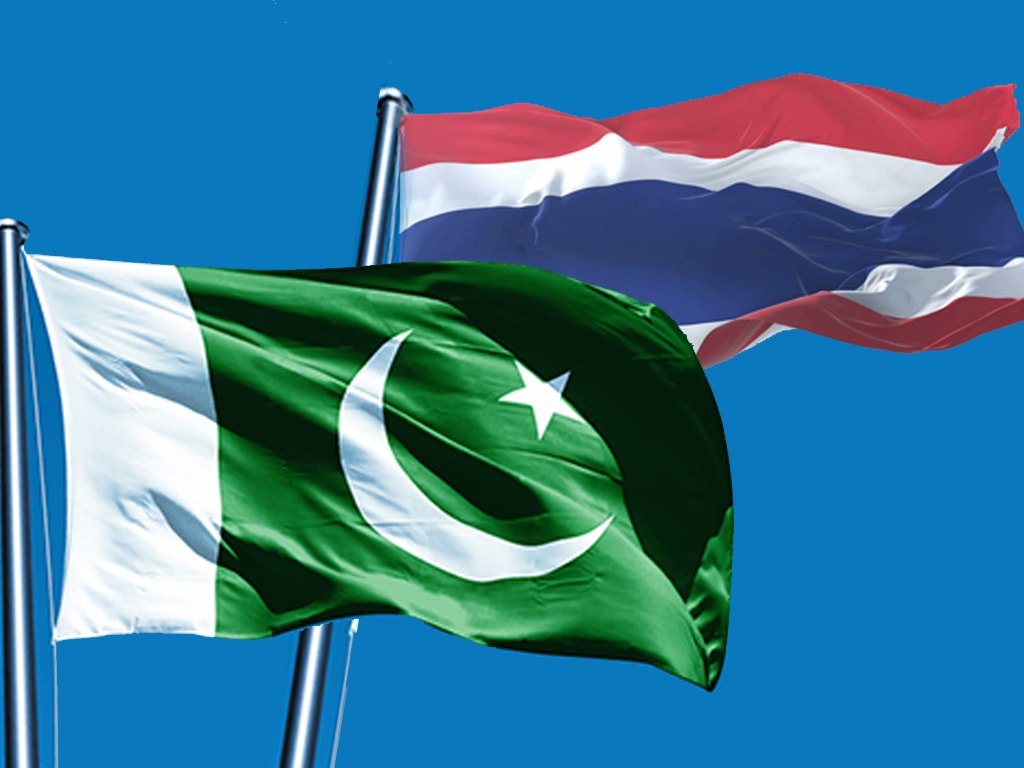
Thailand and Pakistan are revitalizing geo-economic ties through revived trade talks, aiming to double bilateral trade to $2.2 billion by leveraging complementary strengths in manufacturing, halal industries, and connectivity—unlocking mutual growth in a dynamic Asia.
Key Points
- Strategic Alignment for Policymakers: Revived Joint Trade Committee (JTC) in 2025 and FTA negotiations foster regional stability, with Pakistan’s ASEAN ambitions complementing Thailand’s Act East policy.
- Investment Opportunities for Investors: Sectors like halal food, renewables, and logistics offer high returns, with Pakistan’s special economic zones and Thailand’s automotive expertise driving joint ventures.
- Analytical Insights for Academics: Data shows trade growth from $1.03 billion in 2024, with potential to integrate supply chains amid global shifts, supported by rational cooperative frameworks.
- Public Benefits: Enhanced tourism, affordable goods, and job creation from collaborations in textiles and seafood improve livelihoods, promoting cultural and economic exchanges.
In an era of shifting global dynamics, Thailand and Pakistan stand poised to transform their geo-economic relationship into a beacon of mutual prosperity. As of January 2026, recent developments underscore a renewed commitment to collaboration, blending contemporary data with forward-looking analysis. This partnership not only addresses immediate economic needs but also builds resilience against broader regional challenges, benefiting policymakers through strategic depth, investors via lucrative opportunities, academics with rich analytical terrain, and the general public through tangible improvements in daily life.
For policymakers, the revival of bilateral mechanisms marks a pivotal step. In January 2025, Thailand and Pakistan reconvened their Joint Trade Committee at the ministerial level after a decade-long hiatus, signaling a strategic pivot toward enhanced cooperation. This move aligns with Pakistan’s broader ASEAN engagement, where trade with the bloc reached $10.3 billion in 2024, including key partners like Thailand. The discussions emphasized resuming Free Trade Agreement (FTA) negotiations, originally stalled since 2013, with ambitions to double trade from $1.03 billion (January-November 2024) to $2.2 billion. Such an FTA would reduce tariffs, streamline logistics, and integrate Pakistan’s special economic zones with Thailand’s advanced manufacturing hubs. By prioritizing connectivity policymakers can foster a stable corridor for trade and energy security, ultimately enhancing regional influence.
Investors will find fertile ground in this evolving landscape. Thailand’s exports to Pakistan surged to $932 million in 2024, dominated by motor vehicle parts ($105 million), polycarboxylic acids ($97.5 million), and machinery components—inputs that bolster Pakistan’s manufacturing sector. Conversely, Pakistan’s exports to Thailand, valued at around $250 million, focus on textiles and cereals, tapping into Thailand’s demand for raw materials. Emerging sectors promise high yields: halal food, where Thailand’s expertise meets Pakistan’s vast market; renewable energy, with joint solar and wind projects; and logistics, leveraging Pakistan’s Gwadar Port and Thailand’s Laem Chabang for efficient supply chains. Data from the Observatory of Economic Complexity (OEC) highlights untapped export potential, estimating Thailand could expand digital product exports while Pakistan boosts IT and defense collaborations. With Pakistan’s Board of Investment offering incentives in special zones and Thailand’s Board of Investment promoting EV manufacturing, cross-border ventures could yield 10-15% annual growth, as per 2025 ASEAN reports. This cooperative model not only mitigates risks from global tariffs but amplifies returns through shared innovation.
Academics can delve into the rational underpinnings of this synergy, supported by robust data. Bilateral trade has grown steadily, with Pakistan’s collective trade with Southeast Asia hitting $8.6 billion in 2023, including $1.03 billion with Thailand by late 2024—a 5-7% year-on-year increase despite global slowdowns. Analytical frameworks, such as gravity models extended by OEC, predict that product and geographic similarities could explain over 50% of future flows, projecting a $2-3 billion trade surge by 2030 if FTA materializes. Complementary economies shine here: Thailand’s industrialized edge (8th largest in Asia) pairs with Pakistan’s resource abundance, creating value-added chains. For instance, Thai synthetic fibers enhance Pakistani textile exports, while Pakistani seafood supports Thailand’s food processing. Amid ASEAN’s $3.9 trillion GDP and Pakistan’s push for sectoral dialogue status, this partnership exemplifies geo-economic interdependence, countering isolationist trends. Scholars might explore how such ties reduce vulnerability to external shocks, like U.S. tariffs or regional conflicts, through diversified partnerships.
The general public stands to gain immensely from this promotional alliance, as it translates into everyday benefits. Affordable Thai machinery could modernize Pakistani agriculture, boosting yields and food security, while Pakistani textiles enrich Thai markets with quality, cost-effective goods. Tourism holds immense promise: Thailand’s high-end hubs like Phuket could attract Pakistani visitors, and vice versa, with cultural exchanges fostering goodwill. Job creation is a highlight—collaborations in IT and halal industries could generate thousands of positions, as evidenced by Thailand’s 2025 FTA expansions covering 24 partners. Public health and education ties, via Thailand’s development cooperation in human security, further amplify advantages, ensuring inclusive growth.
To illustrate, consider the following data tables:
Table 1: Bilateral Trade Volumes (2020-2025, in USD Billion)
|
Year |
Thailand Exports to Pakistan |
Pakistan Exports to Thailand |
Total Trade |
|
2020 |
0.65 |
0.18 |
0.83 |
|
2021 |
0.72 |
0.20 |
0.92 |
|
2022 |
0.80 |
0.22 |
1.02 |
|
2023 |
0.85 |
0.24 |
1.09 |
|
2024 |
0.93 |
0.25 |
1.18 |
|
2025 (Proj.) |
1.00 |
0.28 |
1.28 |
(Source: UN COMTRADE, OEC estimates; projected based on 7% growth trend)
Table 2: Top Potential Sectors for Collaboration
|
Sector |
Thailand’s Strengths |
Pakistan’s Strengths |
Mutual Benefits |
|
Halal Food |
Processing expertise, global exports |
Large Muslim market, raw materials |
Expanded markets, job creation |
|
Renewables |
Solar tech, policy frameworks |
Abundant resources, investment zones |
Energy security, green growth |
|
Textiles & Apparel |
Synthetic fibers, machinery |
Cotton production, labor force |
Supply chain integration, exports |
|
Tourism & Logistics |
World-class hubs, ports |
Cultural sites, strategic location |
Increased visitors, efficient trade |
|
IT & Defense |
Innovation ecosystems |
Software talent, defense manufacturing |
Tech transfers, joint R&D |
These tables highlight quantifiable potentials, underscoring how data-driven cooperation can propel both economies forward.
Adding to the appeal, initiatives like the proposed Pakistan-Thailand FTA could integrate with broader frameworks, such as ASEAN’s Regional Comprehensive Economic Partnership, amplifying access to a $3 trillion market. This not only promotes bilateral wins but positions both nations as key players in Asia’s geo-economic renaissance.
Conclusion
Thailand and Pakistan’s geo-economic revival promises a transformative era of shared prosperity, with revived FTA talks and sectoral synergies set to double trade and foster innovation. Policymakers gain strategic leverage, investors secure high-growth avenues, academics uncover analytical depths, and the public enjoys enhanced livelihoods. By embracing this partnership, both nations can navigate global uncertainties, building a resilient alliance that exemplifies cooperative success in Asia—urging immediate action for enduring mutual benefits.
* Dr. Muhammad Jahanzaib is the Founder & Chief Visionary Officer (CVO) of Diamanium Thinkers, a global think tank. He holds a PhD in International Relations, specializing in the intersection of geo-politics and geo-economics in Pakistan’s foreign and domestic policy. A double gold medalist and published scholar, he writes on economic intelligence, economic diplomacy, political economy, AI and regional cooperation in South Asia and beyond. He can be reached at jahanzaibdgc@gmail.com.
Key References
- Pakistan (PAK) and Thailand (THA) Trade – https://oec.world/en/profile/bilateral-country/pak/partner/tha
- Pakistan, Thailand to boost trade ties under FTA – https://www.bilaterals.org/?pakistan-thailand-to-boost-trade=
- Thailand Exports to Pakistan – 2026 Data 2027 Forecast 1989-2024 – https://tradingeconomics.com/thailand/exports/pakistan
- Pakistan Expands Economic Cooperation with ASEAN – https://vntr.moit.gov.vn/news/pakistan-expands-economic-cooperation-with-asean-momentum-from-the-vietnam-pakistan-trade-agreement-negotiations
- Thailand ready to finalise FTA with Pakistan to improve trade ties – https://www.pakistantoday.com.pk/2023/09/23/thailand-ready-to-finalise-fta-with-pakistan-to-improve-trade-ties-envoy
- Thailand-Pakistan trade talks revived after decade – https://vietnamnews.vn/world/1690591/thailand-pakistan-trade-talks-revived-after-decade.html
- Potential of the Proposed Pakistan – Thailand Free Trade Agreement – https://www.pbc.org.pk/research/potential-of-the-proposed-pakistan-thailand-free-trade-agreement
- Thailand- Pakistan Ties: An Interview with Ambassador Rongvudhi Virabutr – https://thediplomaticinsight.com/interview-thailand-ambassador-to-pakistan-rongvudhi-virabutr
- Thailand and Pakistan to revive joint trade committee – https://www.nationthailand.com/news/general/40044888
- Development Co-operation Profiles: Thailand – https://www.oecd.org/en/publications/development-co-operation-profiles_04b376d7-en/thailand_701f6430-en.html