
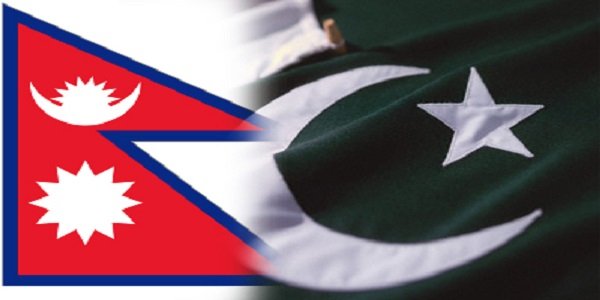
In a rapidly evolving South Asian landscape, Nepal and Pakistan are poised to deepen geo-economic bonds through enhanced trade, investment, and regional cooperation, leveraging shared SAARC frameworks to drive mutual growth, stability, and prosperity amid global uncertainties.
Key Points
- Strategic Alignment for Growth: Recent bilateral engagements, including ambassadorial meetings in January 2026, signal renewed commitment to the Nepal-Pakistan Joint Economic Commission (JEC), fostering policy frameworks for energy, agriculture, and tourism collaboration.
- Trade Momentum: Bilateral trade reached approximately $5.11 million in 2023, with Pakistan exporting spices and medical instruments to Nepal, while Nepal supplies perfume plants and orthopedic appliances—growth rates averaging 12-30% annually suggest room for expansion.
- Investment Opportunities: Pakistani ventures in Nepali textiles, hotels, and banking highlight untapped potential; double tax avoidance treaties since the 2000s could attract more FDI, especially in hydropower and pharmaceuticals.
- Regional Resilience: Amid projections of Nepal’s GDP growth slowing to 2.1% in FY26 and Pakistan stabilizing at 2% in FY24, cooperative initiatives under SAFTA could mitigate vulnerabilities like inflation and remittances dependency.
- Future Potentials: Enhanced connectivity via tourism agreements and BRI synergies could boost people-to-people ties, with benefits for employment and cultural exchange, though balanced navigation of geopolitical influences remains key.
As South Asia navigates a complex geopolitical environment, the relationship between Nepal and Pakistan offers a beacon of opportunity for mutual advancement. For policymakers, this means crafting strategies that align national interests within broader regional frameworks like the South Asian Association for Regional Cooperation (SAARC), which, despite inactivity since 2014, holds promise for revival through focused economic dialogues. Investors can capitalize on emerging sectors, while academics gain fertile ground for analyzing cooperative models that blend data-driven insights with rational geopolitical assessments. The general public stands to benefit from job creation, affordable goods, and cultural enrichment, underscoring the promotional value of these ties.
Recent developments paint an encouraging picture. In November 2025, Nepal’s Ambassador to Pakistan, Rita Dhital, emphasized strengthening trade and investment linkages during SAARC discussions. This was followed by a January 2026 meeting between Ambassador Dhital and Pakistan’s Director General for South Asia & SAARC, exploring avenues to deepen bilateral relations. These interactions build on the Nepal-Pakistan Joint Economic Commission established in 1983, with its last session in 2013 focusing on trade, banking, agriculture, energy, health, education, culture, tourism, telecom, and aviation. A 1980s tourism and archaeology agreement further supports exchanges, promoting joint ventures in these areas.
Economically, both nations are stabilizing post-challenges. Nepal’s GDP growth rebounded to 4.6% in FY25, driven by manufacturing, construction, and hydropower, though projected to slow to 2.1% in FY26 due to political transitions and unrest, per the World Bank’s November 2025 update. Inflation moderated to 4.1%, with a current account surplus widening to 6.7% of GDP, bolstered by remittances. Pakistan, meanwhile, shows stabilization signs, with inflation averaging 5% in the first half of FY25-26 and remittances hitting $16.1 billion, as noted in December 2025 reports.
Bilateral trade, while modest, is growing dynamically. In 2023, Pakistan exported $3.1 million to Nepal, up 12.4% annually from 2018, primarily spices ($744k), medical instruments ($681k), and perfume plants ($586k). Nepal exported $2.01 million to Pakistan, surging 30.2% annually, led by perfume plants ($683k), nutmeg/mace/cardamoms ($544k), and orthopedic appliances ($248k), based on Observatory of Economic Complexity data. By 2024, Pakistan’s exports to Nepal reached $2.09 million, with imports at $4.27 million, per Trading Economics. This imbalance highlights potential for Nepal to export more agricultural and herbal products, while Pakistan can supply affordable pharmaceuticals and textiles.
|
Bilateral Trade Overview (2023-2024) |
Pakistan to Nepal |
Nepal to Pakistan |
|
Total Value (2023) |
$3.1M |
$2.01M |
|
Annual Growth Rate (2018-2023) |
12.4% |
30.2% |
|
Key Products |
Spices, Medical Instruments, Perfume Plants |
Perfume Plants, Nutmeg/Mace/Cardamoms, Orthopedic Appliances |
|
Total Value (2024 Estimate) |
$2.09M |
$4.27M |
Investments remain underdeveloped but promising. Pakistani firms have joint ventures in Nepali textiles, hotels, and banking, supported by a double tax avoidance treaty. Nepal’s Foreign Investment and Technology Transfer Act encourages FDI, with Pakistan as a potential partner in hydropower—Nepal’s surplus energy could address Pakistan’s shortages via regional grids. Conversely, Pakistan’s expertise in agriculture and IT could modernize Nepal’s sectors. Under SAFTA, tariff reductions could amplify trade, especially in edibles and medicinal, where synergies exist.
Potentials extend to tourism and people-to-people links. Both nations boast Himalayan heritage; cooperative packages could attract global visitors, boosting revenues amid Nepal’s tourism slowdown due to airport upgrades and Pakistan’s stabilization efforts. Energy cooperation, perhaps through BRI frameworks (both participate), could involve hydropower exports or joint solar initiatives, enhancing resilience against climate vulnerabilities—Pakistan ranks among the top 10 climate-vulnerable nations, while Nepal faces flood risks.
Academically, this partnership invites analysis of geo-economic models. Rational cooperation could counterbalance influences from larger neighbors, promoting a “Pakistan-China-Bangladesh-Nepal” nexus for trade without exclusionary geopolitics, as discussed in December 2025 forums. For the public, benefits include affordable imports (e.g., Pakistani rice for Nepal), job opportunities in joint ventures, and cultural exchanges fostering goodwill.
Challenges like border issues and external pressures require diplomatic finesse, but the tone is optimistic: collaborative efforts under JEC and SAFTA can yield win-win outcomes, driving sustainable development.
|
Economic Indicators Comparison (2024-2026 Projections) |
Nepal |
Pakistan |
|
GDP Growth (FY25/26) |
2.1% (slow to rebound 4.7% FY27) |
2% (stabilizing) |
|
Inflation (Recent) |
4.1% |
5% |
|
FDI Potential Sectors |
Hydropower, Tourism |
Pharmaceuticals, Agriculture |
Conclusion
Nepal and Pakistan’s geo-economic trajectory holds immense promise, blending recent trade gains with strategic potentials in energy, tourism and investment. By revitalizing the JEC and leveraging SAFTA, policymakers can forge resilient policies; investors unlock profitable ventures; academics dissect innovative models; and the public enjoys tangible benefits like jobs and affordability. This partnership not only bolsters bilateral prosperity but also contributes to South Asian stability, countering global headwinds through cooperative synergy. Embracing these opportunities will pave the way for a brighter, interconnected future.
* Dr. Muhammad Jahanzaib is the Founder & Chief Visionary Officer (CVO) of Diamanium Thinkers, a global think tank. He holds a PhD in International Relations, specializing in the intersection of geo-politics and geo-economics in Pakistan’s foreign and domestic policy. A double gold medalist and published scholar, he writes on economic intelligence, economic diplomacy, political economy, AI and regional cooperation in South Asia and beyond. He can be reached at jahanzaibdgc@gmail.com.
Key References
- “Nepal-Pakistan Relations” – https://pk.nepalembassy.gov.np/pages/bilateral-relations-between-nepal-pakistan-9
- “Nepal’s Envoy to Pakistan calls for stronger trade, investment ties” – https://www.linkedin.com/posts/saarccci_saarcinsights-nepal-pakistan-activity-7391394256201883649-A3hK
- “Pakistan (PAK) and Nepal (NPL) Trade” – https://oec.world/en/profile/bilateral-country/pak/partner/npl
- “Nepal Development Update (November 2025)” – https://www.worldbank.org/en/country/nepal/publication/nepaldevelopmentupdate
- “Pakistan says economy stabilizing as it looks to 2026 growth” – https://www.arabnews.com/node/2626724/pakistan
“Pakistan Economic Recovery Rests On Resuming Robust Reforms — ADB” – https://www.adb.org/news/pakistan-economic-recovery-rests-resuming-robust-reforms-adb