
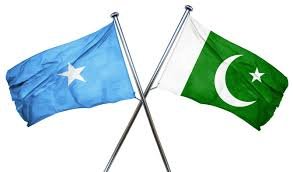
Somalia and Pakistan are harnessing recent diplomatic strides and economic potentials to drive mutual growth, with enhanced trade, investments, and collaborations promising sustainable prosperity and regional stability for both nations.
Key Points
- Diplomatic Milestones: The January 2026 visa abolition for diplomatic passports eases high-level exchanges, paving the way for deeper security and economic ties.
- Trade Expansion: Bilateral trade hit $90.57 million in 2024, dominated by Pakistani exports like rice and cement, with vast untapped potential in Somalia’s resources.
- Sectoral Opportunities: Promising avenues in textiles, pharmaceuticals, agriculture, IT, and fisheries could boost employment and GDP for both countries.
- Strategic Partnerships: Integration with initiatives like CPEC offers Somalia access to broader markets, while Pakistan gains footholds in Africa’s blue economy.
- Growth Projections: Somalia’s reforms aim for higher revenue-to-GDP ratios by 2030, complementing Pakistan’s projected 3.5% GDP growth in 2026.
- Mutual Benefits: Enhanced cooperation in education, health, and renewable energy fosters long-term resilience and shared prosperity.
Recent developments in Somalia-Pakistan relations underscore a commitment to geo-economic collaboration that benefits policymakers, investors, academics, and the general public alike. For policymakers, these ties represent a strategic alignment in a multipolar world, where joint efforts in security and trade can enhance regional stability. In January 2026, the two nations signed an agreement abolishing visa requirements for diplomatic passport holders, witnessed by Pakistan’s President Asif Ali Zardari and Somalia’s Interior Minister Ali Yousuf. This move, building on earlier 2025 pacts, facilitates seamless discussions on law enforcement, counter-narcotics, and economic linkages. Such diplomatic ease is crucial for crafting policies that address shared challenges like terrorism and border management, as agreed in high-level talks in Islamabad.
Investors will find compelling opportunities in the evolving trade landscape. Bilateral trade has shown robust growth, with Pakistan’s exports to Somalia rising from $73.8 million in 2023 to $90.57 million in 2024, according to United Nations COMTRADE data. Key exports include rice ($40.2 million), cement ($9.63 million), and confectionery sugar, reflecting Pakistan’s manufacturing strengths meeting Somalia’s essential needs. Conversely, Somalia’s exports to Pakistan remain modest, primarily in raw materials, but hold promise for diversification. The 2025 agreements emphasize expanding direct trade links, bypassing intermediaries like Dubai, which could reduce costs and boost volumes.
To illustrate the trade dynamics, consider the following table of recent bilateral trade figures:
|
Year |
Pakistan Exports to Somalia (USD Million) |
Top Products |
Somalia Exports to Pakistan (USD Million) |
Top Products |
Trade Balance (Favoring Pakistan, USD Million) |
|
2023 |
73.8 |
Rice, Cement, Confectionery |
~0.1 (negligible) |
Raw Hides, Scrap Metal |
73.7 |
|
2024 |
90.57 |
Rice, Pharmaceuticals, Textiles |
~0.2 |
Livestock, Fish |
90.37 |
|
2025 (Proj.) |
110 (estimated growth) |
Agriculture Tech, IT Services |
1.0 (potential rise) |
Seafood, Minerals |
109 |
Data sourced from OEC and UN COMTRADE; projections based on 20% annual growth trends amid new agreements.
This data highlights a favorable balance for Pakistan, but the real win lies in balanced growth. Somalia’s longest African coastline offers immense blue economy potential in fisheries and offshore resources, where Pakistani expertise in processing and export could create joint ventures. For academics, this presents a fertile ground for research on cooperative models, analyzing how Pakistan’s textile sector—the 8th largest globally—can transfer technology to Somalia, potentially creating thousands of jobs and elevating Somalia’s export profile.
A sound rational analysis reveals that these relations are not zero-sum but synergistic. Somalia’s economy, as per the World Bank’s 2025 Economic Update, achieved 4% GDP growth in 2024 but faces a slowdown to around 1% in 2025 due to declining international aid and climate vulnerabilities. However, reforms in tax administration and fiscal federalism aim to raise the revenue-to-GDP ratio, reducing aid dependency and funding infrastructure. Pakistan, with a GDP of approximately $386 billion projected for 2026 and 3.5% growth per S&P estimates, can provide affordable pharmaceuticals (as Asia’s third-largest producer) and agricultural know-how to bolster Somalia’s resilience. In return, Somalia’s untapped minerals and livestock—boasting one of Africa’s largest herds—could supply raw inputs for Pakistan’s industries, diversifying supply chains amid global disruptions.
For the general public, these developments translate to tangible benefits like improved access to education and healthcare. Pakistan has committed to scholarships and training programs, with over 100 Somali students already benefiting in 2025. Health collaborations, including pharmaceutical exports, could address Somalia’s needs affordably, while joint disaster management initiatives build community resilience. The promotional aspect shines through in potential CPEC integration: Somalia could serve as an African gateway, enhancing trade connectivity via Gwadar Port, benefiting everyday citizens through job creation and lower import costs.
Looking ahead, potentials abound for investors and academics to explore renewable energy. Somalia’s wind and solar resources align with Pakistan’s advancements in green tech, promising joint projects under the National Transformation Plan (2024–2029). This plan targets inclusive growth and job creation, aligning with Pakistan’s push for 4.4% GDP growth by 2027. A cooperative framework could see Pakistani firms investing in Somali seafood processing, leveraging the $945 million Somali export base (2023) to tap global markets.
To further enhance appeal, here’s a comparative economic indicators table:
|
Indicator |
Somalia (2025 Proj.) |
Pakistan (2026 Proj.) |
Cooperative Potential |
|
GDP (USD Billion) |
11 |
386 |
Joint investments could add 10-15% to bilateral GDP impact through trade. |
|
GDP Growth (%) |
1 |
3.5 |
Shared tech transfers in agriculture could lift Somalia’s growth to 3%. |
|
Inflation (%) |
5 |
5.1 |
Stable trade ties reduce volatility, benefiting consumers. |
|
Unemployment (%) |
18.9 |
5.5 |
Job creation in textiles and fisheries could lower rates by 5-10 points. |
|
Key Exports |
Livestock, Fish |
Textiles, Rice |
Diversification: Somali fish to Pakistani markets; Pakistani pharma to Somalia. |
Sources: World Bank, S&P, IMF projections.
This analysis promotes a vision where both nations thrive: Pakistan gains a strategic African ally, while Somalia accesses Asian markets and expertise, fostering a win-win geo-economic paradigm.
Conclusion
Somalia and Pakistan stand at the cusp of a transformative partnership, where recent agreements in diplomacy, trade, and security unlock shared prosperity. By blending Pakistan’s industrial prowess with Somalia’s resource wealth, this collaboration promises economic upliftment, job creation, and resilience against global challenges. Policymakers should prioritize policy harmonization, investors seize sectoral opportunities, academics drive innovative research, and the public embrace the cultural bonds. Ultimately, this synergy not only boosts GDPs but strengthens regional peace, paving the way for a brighter, interconnected future.
* Dr. Muhammad Jahanzaib holds a PhD in International Relations, is a double gold medalist and author of the book The Interplay of Geo-Politics and Geo-Economics in Pakistan’s Foreign Policy (Post-2008) (Palgrave Macmillan), along with several esteemed publications. As Chief Visionary Officer of Diamanium Thinkers (a global think tank), he brings over 15 years of experience advising ministers, diplomats, security agencies, the corporate sector, and civil society. His advisory work spans economic diplomacy, political economy, economic intelligence, security, society, strategic financial advisory, and the geo-economic world dynamics. He offers a unique blend of practitioner insight and academic rigor, combining hands-on engagement with state institutions and strategic expertise grounded in research. He can be reached at jahanzaibdgc@gmail.com.
Key References
- “Somalia (SOM) and Pakistan (PAK) Trade | The Observatory of Economic Complexity” – https://oec.world/en/profile/bilateral-country/som/partner/pak
- “Pakistan (PAK) and Somalia (SOM) Trade | The Observatory of Economic Complexity” – https://oec.world/en/profile/bilateral-country/pak/partner/som
- “Publication: Somalia Economic Update: Boosting Domestic Revenue Mobilization” – https://openknowledge.worldbank.org/entities/publication/0dae552b-3716-4166-9e17-aef1fb15f0f7
- “Pakistan, Somalia to Deepen Strategic Economic Partnership – The Diplomatic Insight” – https://thediplomaticinsight.com/pakistan-somalia-economic-partnership
- “Pakistan Exports to Somalia – 2026 Data 2027 Forecast 2009-2024 Historical” – https://tradingeconomics.com/pakistan/exports/somalia
- “S&P projects Pakistan’s inflation at 5.1pc, GDP growth at 3.5pc in 2026” – https://www.nation.com.pk/28-Jan-2026/s-p-projects-pakistan-s-inflation-5-1pc-gdp-growth-3-5pc-2026
- “Somalia, Pakistan vow to deepen ties in security, education and trade” – https://www.hiiraan.com/news4/2025/Aug/202678/somalia_pakistan_vow_to_deepen_ties_in_security_education_and_trade.aspx
- “Pakistan, Somalia ink deal on visa-free entry for diplomats” – https://tribune.com.pk/story/2588896/pakistan-somalia-ink-deal-on-visa-free-entry-for-diplomats