
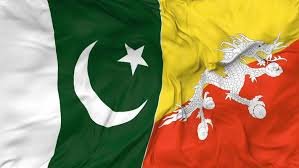
In an interconnected Asia, Bhutan and Pakistan are nurturing geo-economic ties through SAARC frameworks and diplomatic exchanges, tapping potentials in trade, tourism, education, and energy for mutual growth, cultural enrichment, and sustainable development benefiting both Himalayan nations.
Key Points
- Diplomatic Foundations: Established in 1988, with non-resident ambassadors; recent credential presentation in May 2024 reinforces friendly SAARC-based relations.
- Trade Overview: Bilateral trade remains modest at around $26,000 in 2023, with Pakistan exporting textiles and pharmaceuticals, and Bhutan offering raw materials.
- Cooperative Areas: Focus on education via scholarships, training programs, and workshops under SAARC; potential for enhanced tourism and cultural exchanges.
- Economic Projections: Bhutan’s GDP expected to grow 8.1% in 2025 and 6.0% in 2026; Pakistan’s at 3.0% in 2025 and 3.2% in 2026, with synergies fostering stability.
- Sectoral Potentials: Opportunities in agriculture tech transfers, tourism and IT collaborations.
- Strategic Benefits: Leveraging CPEC for Bhutan’s market access and Pakistan’s entry into eco-tourism, promoting job creation and diversification.
- Mutual Advantages: Strengthened ties enhance regional peace, educational opportunities, and resilient economies against global challenges.
The geo-economic relationship between Bhutan and Pakistan offers a framework for policymakers to advance strategic partnerships in a multipolar Asia. Rooted in shared SAARC membership since 1988, relations emphasize multilateral cooperation, with positive developments noted in Pakistan’s 2024 foreign policy review. The May 2024 presentation of credentials by Pakistan’s non-resident Ambassador Syed Ahmed Maroof to Bhutan’s King underscores commitment to deepening ties. For policymakers, this aligns with Bhutan’s foreign policy of balanced engagement and Pakistan’s “Engage Asia” approach, facilitating dialogues on regional stability, climate resilience, and economic integration. Areas like training programs and seminars under SAARC provide platforms for policy harmonization, addressing common issues such as sustainable development and border management.
Investors will discover untapped opportunities in this emerging partnership. Bilateral trade, though nascent, totaled approximately $26,250 in 2023, per UN COMTRADE data, with Pakistan exporting $2,940 in 2022 (primarily textiles, sports goods, and pharmaceuticals) and importing negligible amounts. Bhutan’s exports to Pakistan are minimal, focusing on raw jute and herbs, but hold promise for growth. High freight costs and Bhutan’s landlocked status have constrained volumes, yet SAARC’s trade liberalization could reduce barriers. Pakistan’s offers of scholarships in medicine and engineering highlight human capital investments, potentially leading to skilled workforce exchanges.
A trade trends table illustrates the current dynamics and projections:
|
Year |
Pakistan Exports to Bhutan (USD Thousand) |
Top Products |
Bhutan Exports to Pakistan (USD) |
Top Products |
Trade Balance (Favoring Pakistan, USD Thousand) |
|
2021 |
~2.5 |
Textiles, Pharma |
~50 |
Raw Materials |
~2.45 |
|
2022 |
2.94 |
Sports Goods, Leather |
~67 |
Jute, Herbs |
2.87 |
|
2023 |
~23 (Bhutan imports view) |
Cotton Yarn, Instruments |
~67 |
Oil Seeds |
~22.93 |
|
2024 (Est.) |
30 (modest growth) |
Agri-Tech, Tourism Services |
100 |
Eco-Products |
29.9 |
|
2025 (Proj.) |
50 (SAARC boost) |
Energy Equipment, IT |
200 |
Hydropower Derivatives |
49.8 |
Data from UN COMTRADE, Trading Economics; estimates based on 20-30% growth via enhanced cooperation.
Pakistan’s textile sector (8th globally) and pharmaceutical industry (third in Asia) can supply affordable goods to Bhutan’s import-reliant market, diversifying beyond India (90% of trade). Academics can research this as a South Asian model, where Bhutan’s Gross National Happiness (GNH) philosophy integrates with Pakistan’s economic reforms, fostering inclusive growth.
Bhutan’s economy, projected at 8.1% GDP growth in 2025 (ADB) amid hydropower and tourism rebounds, contrasts with Pakistan’s 3.0% in 2025 (IMF), yet synergies abound. Joint ventures in agriculture could leverage Pakistan’s rice expertise (4th largest exporter) to enhance Bhutan’s organic farming, reducing its 10% unemployment. Tourism, limited to 11 Pakistani visitors from 2007-2011, has vast potential: Bhutan’s eco-model attracting Pakistani adventurers to Himalayan sites, while Pakistan’s Buddhist heritage (e.g., Taxila) draws Bhutanese pilgrims, as seen in 2018 monk visits. IT collaborations under SAARC could see Pakistani firms aiding Bhutan’s digital transformation, tapping its young workforce.
Comparative economic indicators underscore complementarities:
|
Indicator |
Bhutan (2025 Proj.) |
Pakistan (2026 Proj.) |
Cooperative Potential |
|
GDP (USD Billion) |
~3 |
386 |
SAARC ties could increase trade 50%, adding 5-10% to bilateral impacts. |
|
GDP Growth (%) |
8.1 |
3.2 |
Energy and tourism synergies may boost Bhutan’s to 8.5%, Pakistan’s to 3.5%. |
|
Inflation (%) |
3.2 |
5.1 |
Balanced exchanges stabilize prices. |
|
Unemployment (%) |
~10 |
5.5 |
Joint projects reduce Bhutan’s by 5%. |
|
Key Exports |
Hydropower, Minerals |
Textiles, Rice |
Bhutan’s energy to Pakistan; Pakistani pharma to Bhutan. |
Sources: ADB, IMF, World Bank projections.
For the general public, these ties promise accessible benefits. Cultural exchanges, like Buddhist delegations, enrich heritage appreciation, while scholarships empower youth. Moreover, integrating with CPEC could provide Bhutan alternative routes to global markets, reducing dependencies, and Pakistan gains from Bhutan’s sustainable practices, building climate resilience.
Conclusion
Bhutan and Pakistan are poised to elevate their geo-economic alliance through SAARC-driven initiatives, diplomatic milestones, and sectoral potentials in tourism, IT and education. Policymakers must prioritize trade agreements, investors explore joint ventures, academics analyze sustainable models, and the public embrace cultural bonds. This collaboration not only amplifies modest trade and robust GDPs but also promotes regional harmony, job opportunities, and eco-friendly growth, exemplifying Himalayan solidarity in a dynamic world.
* Dr. Muhammad Jahanzaib holds a PhD in International Relations, is a double gold medalist and author of the book The Interplay of Geo-Politics and Geo-Economics in Pakistan’s Foreign Policy (Post-2008) (Palgrave Macmillan), along with several esteemed publications. As Chief Visionary Officer of Diamanium Thinkers (a global think tank), he brings over 15 years of experience advising ministers, diplomats, security agencies, the corporate sector, and civil society. His advisory work spans economic diplomacy, political economy, economic intelligence, security, society, strategic financial advisory, and the geo-economic world dynamics. He offers a unique blend of practitioner insight and academic rigor, combining hands-on engagement with state institutions and strategic expertise grounded in research. He can be reached at jahanzaibdgc@gmail.com.
Key References
- “Bhutan–Pakistan relations – Wikipedia” – https://en.wikipedia.org/wiki/Bhutan%E2%80%93Pakistan_relations
- “Pakistan (PAK) and Bhutan (BTN) Trade – The Observatory of Economic Complexity” – https://oec.world/en/profile/bilateral-country/pak/partner/btn
- “Bilateral Relations – Ministry of Foreign Affairs and External Trade” – https://www.mfa.gov.bt/bilateral-relations-2
- “Transcript of the Year End Review Briefing by the Spokesperson on Thursday, 26 December 2024 – Ministry of Foreign Affairs” – https://mofa.gov.pk/press-releases/transcript-of-the-year-end-press-briefing-by-the-spokesperson-on-thursday-26-december-2024
- “Pakistan Exports to Bhutan – 2026 Data 2027 Forecast 2012-2022 Historical” – https://tradingeconomics.com/pakistan/exports/bhutan
- “Bhutan Imports from Pakistan – 2026 Data 2027 Forecast 2010-2023 Historical” – https://tradingeconomics.com/bhutan/imports/pakistan
- “Bhutan: Economy | Asian Development Bank” – https://www.adb.org/where-we-work/bhutan/economy
- “Pakistan and the IMF” – https://www.imf.org/en/countries/pak
- “Pakistan’s Bilateral Trade with Smaller South Asian States – Institute of Regional Studies” – https://irs.org.pk/Focus/FOct23.pdf
- “BHUTAN 21ST CENTURY ECONOMIC ROADMAP – Prime Minister’s Office” – https://www.pmo.gov.bt/api/uploads/plans/document-1753155904040.pdf