

Water Stress as the New Geoeconomics Fault Line: Climate Change and Pakistan’s Search for Stability
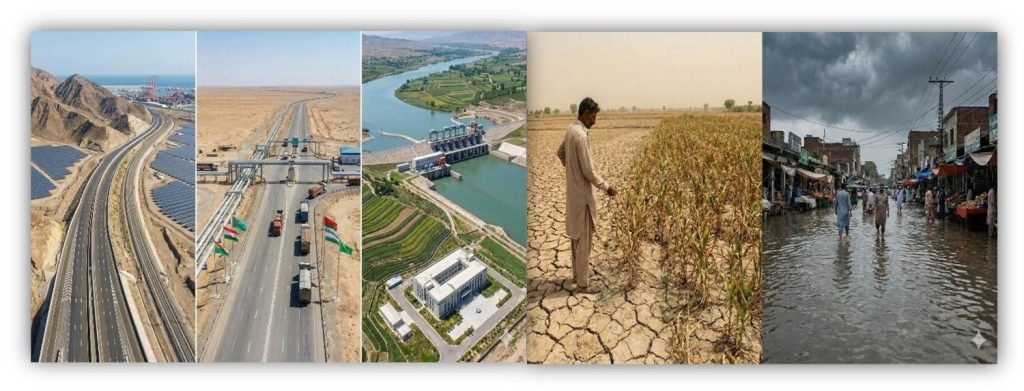
António Guterres, the Secretary-General of the United Nations, uses this statement to highlight how climate change shapes security, economics, development, and human survival. In the context of Pakistan, his message reflects how climate impacts have moved beyond environmental concerns and now threaten national stability, food systems, and long-term economic planning. The quote supports your article’s argument that climate change must be treated as a strategic and geoeconomics priority. Pakistan is experiencing a degree of climatic stress which is redefining its economy, its security perspective and the lives of millions of people. Floods, heatwaves and changing rain patterns are no longer a rare occurrence. They have already turned out to be a constant development burden. Since the nation struggles to revive itself after the frequent tragedies, the same question pops up every now and then: how can Pakistan establish long-term stability in the climate-prone area? An emergent thinking of policy is to consider climate resilience by the lens of connectivity. Connections between the energy systems, transportation networks, water management, and regional collaboration will make Pakistan convert climate risk into an
economic regeneration opportunity. This is a geoeconomics prism that provides a viable path ahead when the price of not doing is increasing.