
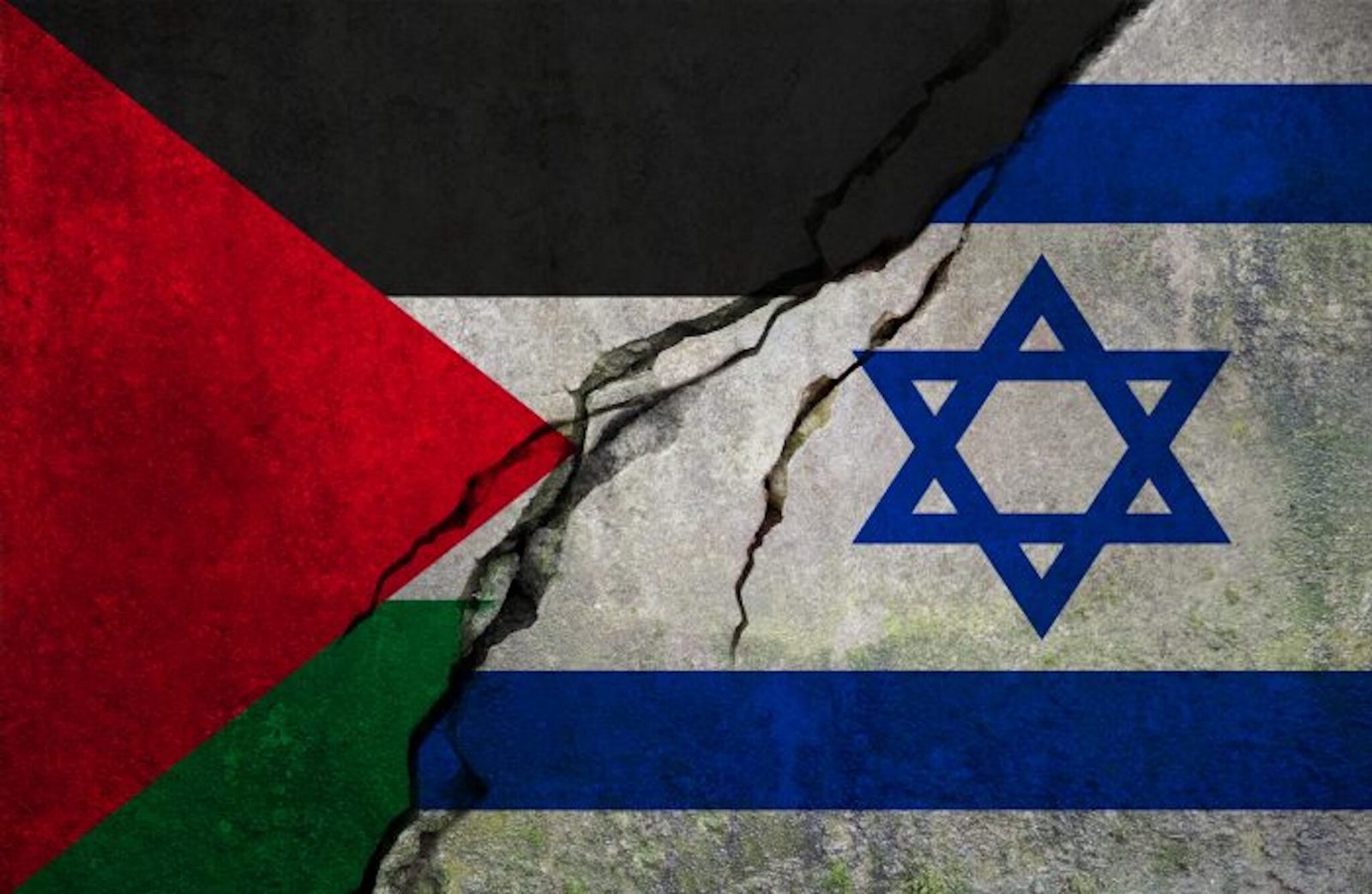
Few conflicts have captured global attention for as long, and with as much moral weight, as the Israeli–Palestinian struggle. Each side claims legitimacy grounded in history, law, and justice. Yet, as this comparative analysis shows, the Palestinian and Israeli perspectives operate within fundamentally different frameworks: one seeks liberation from occupation, the other the preservation of sovereignty and security. Using a comparative methodology allows us to examine the assumptions, values, and contradictions that shape both narratives and how they interact with international law and global ethics.
Key points
- Both Israel and Palestine base their claims to the land on distinct foundations, Israel on historical and religious continuity, and Palestine on continuous presence and demographic reality.
- International law overwhelmingly supports the Palestinian position that the West Bank, Gaza, and East Jerusalem are occupied territories, while Israel frames them as disputed areas justified by security and defensive needs.
- Israel’s pursuit of security often results in Palestinian restrictions and displacement, creating a cycle where safety for one side means insecurity for the other.
- Both sides have engaged in peace efforts, yet mutual distrust persists, Israel demands recognition and security, while Palestinians demand sovereignty and an end to occupation.
- The conflict embodies a clash between two valid moral claims, Israel’s right to survival and security, and Palestine’s right to freedom and self-determination, both essential for lasting peace.
Historical Claims
Both Palestinians and Israelis claim an intrinsic connection to the same land, but their narratives of belonging emerge from different temporal and moral foundations.
Israel’s argument emphasizes ancient ties and the right of return after millennia of exile. The Jewish people’s historic connection to the land of Israel is deeply rooted in religious and cultural identity. Key historical documents often cited include the Balfour Declaration (1917), which expressed British support for “a national home for the Jewish people,” and the League of Nations Mandate (1922), which formalized this commitment under international law. Furthermore, the UN Partition Plan (1947) provided legal and political recognition for a Jewish state.
From Israel’s viewpoint, these milestones represent international legitimacy for Jewish statehood, grounded in both history and restitution after centuries of persecution culminating in the Holocaust. The creation of Israel in 1948 was thus seen not merely as political but as moral reparation, a necessary return to safety and self-determination in a world that had failed to protect Jewish life.
Palestinians, by contrast, frame their claim in terms of continuous presence and displacement. They reject the notion that ancient texts or historical trauma can justify modern sovereignty when Palestinians had lived continuously on the land for centuries. Before 1948, they were the demographic majority, cultivating the soil, building communities, and shaping a distinct national identity under Ottoman and then British rule.
From their perspective, the invocation of biblical history to justify modern political control conflates spiritual heritage with territorial entitlement, a practice inconsistent with international norms governing self-determination. The right to live in one’s homeland, they argue, cannot be superseded by another group’s historical memory.
Comparatively, Israel’s narrative is transhistorical, rooted in symbolic and religious continuity; Palestine’s is territorial and existential, rooted in presence and dispossession. Both claim authenticity, but one’s moral power often negates the other’s political reality.
Legal Dimensions: Occupation vs. Sovereignty
Legally, the two sides operate from contrasting premises. The Palestinian position rests on international law, which overwhelmingly identifies the West Bank, Gaza Strip, and East Jerusalem as occupied territories. The International Court of Justice (ICJ), the UN Security Council, and multiple UN resolutions (notably 242 and 338) have affirmed that Israeli settlements in these territories are illegal under the Fourth Geneva Convention, which prohibits an occupying power from transferring its population into occupied areas.
Palestinians thus assert that the matter is legally unambiguous: occupation cannot produce sovereignty. They view Israel’s continued expansion of settlements and control of movement as violations not only of law but of moral conscience, an example of prolonged occupation normalized under the guise of security.
Israel, however, contends that the territories are “disputed,” not occupied, arguing that no recognized sovereign state existed in these areas prior to the 1967 Six-Day War. From this perspective, Israel captured the land in a defensive war, and until a final peace agreement defines borders, its presence is legally permissible and strategically necessary. Furthermore, Israel maintains that its security needs justify its continued control, given the persistent threats from militant groups and unstable neighboring regions.
The comparative tension here lies in the interpretation of international law versus the realities of security politics. While the Palestinian argument finds robust support among international institutions, Israel’s argument reflects the dilemmas of a state seeking both legality and survival in a hostile environment. Yet, as Palestinians point out, international law offers no provision for an occupying power to claim self-defense against the population it occupies, a principle that underscores the moral and legal contradiction at the heart of Israel’s justification.
Security and Human Rights: Mutual Vulnerability
Security lies at the center of Israel’s national narrative. Having fought existential wars in 1948, 1967, and 1973, and faced ongoing threats from non-state actors such as Hamas and Hezbollah, Israel views its security policies as defensive and essential. Its military doctrine is built around deterrence, preemption, and technological superiority, justified by the argument that the Jewish state cannot afford vulnerability in a region where its legitimacy is still contested.
For Palestinians, however, the rhetoric of security translates into a daily reality of restriction and control. Checkpoints, the separation barrier, curfews, and the blockade of Gaza are experienced not as defensive measures but as collective punishment, instruments that fracture social life and deny basic freedoms. While Israel cites rocket attacks and infiltration attempts as justification, Palestinians emphasize the disproportionate nature of these measures and the humanitarian consequences they produce.
In comparative terms, both sides are locked in a security paradox: the measures that make one side feel safe make the other feel oppressed. This asymmetry of power—one side with one of the world’s most advanced militaries, the other under occupation, creates an ethical imbalance that perpetuates resentment and cycles of retaliation. Security for Israel has become a permanent condition, while for Palestinians, insecurity is the only constant.
Peace Efforts: Recognition and Reciprocity
Both sides have participated in numerous peace initiatives: the Camp David Accords (1978), the Oslo Accords (1993 and 1995), and subsequent negotiations such as Annapolis (2007). Israel highlights its willingness to engage in dialogue and sign treaties, as well as its withdrawals from territories such as Sinai (1979) and Gaza (2005). For Israel, the persistence of violence, even after concessions, is evidence that peace requires mutual recognition and renunciation of hostility.
Palestinians counter that these agreements have often been asymmetric, requiring them to recognize Israel’s legitimacy without a reciprocal end to occupation. They argue that while they accepted the two-state framework and recognized Israel within the 1967 borders, Israel’s ongoing settlement expansion and control of Palestinian land undermined the peace process.
Comparatively, the peace efforts illustrate a tragic mirror dynamic: each side demands conditions the other cannot yet fulfill. Israel insists that peace must precede statehood; Palestinians insist that statehood is the prerequisite for peace. This mutual distrust, compounded by internal political divisions and external pressures, has transformed negotiations into cycles of blame rather than bridges to compromise.
Moral and Philosophical Reflections
At its core, the conflict is not merely territorial, it is existential. For Israel, existence itself is the moral claim: the right of a persecuted people to self-determination and safety. For Palestinians, existence is equally moral: the right of a dispossessed people to live freely in their homeland.
The comparative framework reveals that both claims are simultaneously valid and mutually exclusive within their current formulations. International law supports the Palestinian position on occupation, yet moral empathy supports Israel’s security concerns. The enduring challenge, then, lies in reconciling historical justice with present-day humanity, a balance between restitution and recognition, between the memory of exile and the reality of occupation.
Conclusion
The comparative analysis of the Palestinian and Israeli positions demonstrates that both sides possess legitimate claims, but their frameworks for justice diverge. The Palestinian argument aligns with international law and decolonization principles, emphasizing rights and legality. The Israeli argument draws strength from historical continuity, survival, and the pursuit of security in an uncertain region. Peace, if it is ever to emerge, must reconcile these truths: acknowledging Israel’s right to security without denying Palestine’s right to sovereignty. Until history and security cease to be weapons in themselves, both peoples will remain captives of their own narratives, each defending justice, each denying it to the other.
*Dr Sajid Iqbal Khattak is an Assistant Professor of International Relations in the department of International Relations at National University of Modern Languages, Islamabad.
Acknowledgment
The following students participated in the class activity that led to the development of this comparative article on the Israeli and Palestinian perspectives:
Israel’s Stance: Maleeha Ali, Sajida Aijaz, Muhammad Aman Javed, Taimur Hassan, Masood Khan, and Mansoor Ahmad.
Palestine’s Stance: Momina Rais, Sadia Faraz, Naorez Khan, Zubair Hussain, and Aqib Ali
Key Citations
- Berbert-Born, A. (2025). Do we have a new “apartheid” from Israel versus Occupied Palestinian Territory according to the rules of international criminal law. YIECPL Journal. https://yiecpl.free.nf/index.php/yiecpl/article/view/56
- Sehwail, M., Rasras, K., Sehwail, W., Madsen, K. W., & Aon, M. (2025). The profile and psychological effects of torture of Palestinians detained in Israeli prisons after 7th October 2023. Torture Journal. https://tidsskrift.dk/torture-journal/article/view/156890
- Martín Henríquez, K. (2025). Israel’s main violations of international law in the Israeli–Palestinian conflict since October 7th, 2023. Universitat Autònoma de Barcelona. https://ddd.uab.cat/record/319385
- Salsabila, N. R. (2025). Legal realism perspective on the International Court of Justice judges in the 2023–2024 Israeli occupation of Palestine. Universitas Islam Indonesia. https://dspace.uii.ac.id/handle/123456789/56773
- Casolaro, A. B. B. (2025). A fome como arma de guerra em Gaza: uma análise jurídico-humanitária [Hunger as a weapon of war in Gaza: A juridical-humanitarian analysis]. Pontifícia Universidade Católica de São Paulo. https://repositorio.pucsp.br/handle/handle/44987
- Ozaki, K. (2025). The 2023 Gaza conflict and international law. In Foreseeable Issues in the Israeli–Palestinian Conflict (pp. 203–220). Springer. https://link.springer.com/chapter/10.1007/978-981-96-2587-1_11
- Ghalandari, T., & Sobhani, M. (2025). Challenges in the realm of proportionality in international humanitarian law with emphasis on Israel’s 2023–2024 attack on Gaza. International Law Review. https://www.cilamag.ir/article_719071_en.html
- Fiddian-Qasmiyeh, E., & Carpi, E. (2025). Southern responses to displacement – Editors’ introduction. Journal of Humanitarian Affairs, 6(1), 1–5. https://www.manchesterhive.com/view/journals/jha/6/1/article-p1.xml