
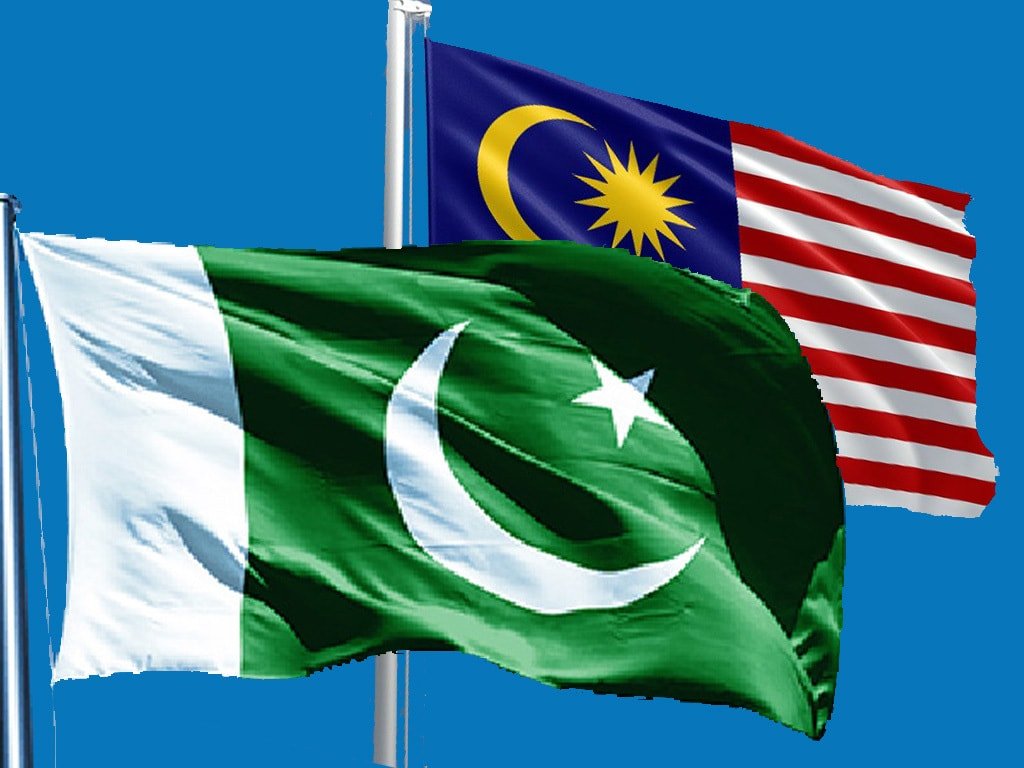
Prime Minister Shehbaz Sharif’s pivotal October 2025 visit to Malaysia has revitalized bilateral ties, with $200 million halal meat quotas, six MoUs, and commitments to renegotiate the MPCEPA, unlocking trade, tech, and investment potentials for mutual growth.
Key Points
- The renegotiation of the Malaysia-Pakistan Closer Economic Partnership Agreement (MPCEPA) by 2027, alongside MoUs in diplomacy, education, and anti-corruption, provides a robust framework for balanced trade, defense tech sharing, and regional stability, addressing Pakistan’s $300 million trade deficit while enhancing counter-terrorism and sustainable development cooperation.
- Lucrative prospects in semiconductors, IT, halal industries, and agriculture await, with Malaysia’s ASEAN gateway offering Pakistani firms access to a $3 trillion market, and Pakistan’s SIFC facilitating Malaysian investments in CPEC-linked zones for green energy and automotive ventures.
- Timeless Islamic bonds and post-colonial alliances merge with 2024-25 data showing 97.6% export growth from Pakistan, highlighting analytical opportunities in geo-economics, such as ASEAN-CPEC linkages and digital economy shifts amid global fragmentation.
- Strengthened relations promise affordable palm oil and rice stability, job opportunities in SMEs and tourism, and cultural exchanges, improving livelihoods through health, education scholarships, and halal food security for families in both nations.
Malaysia and Pakistan, two dynamic Muslim-majority nations, share a profound historical connection dating back to diplomatic relations in 1957. Malaysia, a Southeast Asian tiger with a GDP over $400 billion and a prominent state in ASEAN, complements Pakistan’s strategic South Asian position and access to Central Asia via the China-Pakistan Economic Corridor (CPEC). This evergreen synergy which is grounded in shared Islamic values, mutual support in the Organization of Islamic Cooperation (OIC), and non-aligned movement legacies has been supercharged by contemporary developments, notably Prime Minister Shehbaz Sharif’s official visit to Malaysia from October 5-7, 2025. Hosted by Prime Minister Anwar Ibrahim, the visit featured a red-carpet welcome, delegation talks, and a business conference, underscoring a promotional push for beneficial, brotherly collaboration.
The visit’s outcomes exemplify rational cooperative analysis: both leaders committed to renegotiating the 2007 MPCEPA into a more comprehensive framework, emphasizing digital economy, sustainability, and emerging technologies. Six MoUs were signed, covering diplomatic training, tourism, halal certification, higher education, anti-corruption, and SME development. A standout achievement is the $200 million annual halal meat export quota from Pakistan to Malaysia, regulated by market prices and certifications, alongside exceeded rice export quotas. These steps address trade imbalances, with Pakistan’s agricultural strengths meeting Malaysia’s demand, while fostering joint ventures in semiconductors and AI. Policymakers can leverage this to counter geo-economic fragmentation, positioning both as Global South leaders.
Bilateral trade has shown remarkable growth, reaching approximately $1.5 billion in FY2024, up from $1.37 billion in 2023. Pakistan’s exports surged 97.6% to $608 million in FY2024, driven by agricultural diversification, while imports grew modestly by 1.4% to $898 million. This contemporary momentum builds on evergreen potentials: Pakistan’s textile and food exports align with Malaysia’s consumer market, while Malaysia’s palm oil and tech imports fuel Pakistan’s industries. Rational analysis suggests removing non-tariff barriers could triple trade within a decade, per expert projections.
To visualize, here’s recent trade data:
|
Year |
Pakistan Exports to Malaysia ($M) |
Malaysia Exports to Pakistan ($M) |
Total Trade ($M) |
Growth Rate (%) |
|
2023 |
452 |
918 |
1,370 |
– |
|
FY2024 |
608 |
898 |
1,506 |
9.9 |
|
Oct 2025 (partial) |
~14 (MYR 62.9M equiv.) |
~135 (MYR 587M equiv.) |
~149 |
Varies monthly |
Sources: OEC, PBS Annual Report FY2023-24, Trading Economics. Growth rates are year-over-year for total trade.
Top products highlight complementary economies:
|
Top Pakistani Exports to Malaysia (FY2024) |
Value ($M) |
Top Malaysian Exports to Pakistan (2023) |
Value ($M) |
|
Non-Basmati Rice |
337 |
Palm Oil |
379 |
|
Vegetables (e.g., Onions) |
69 |
Refined Petroleum |
41 |
|
Corn |
50 |
Computers |
28 |
|
Fish & Preparations |
19 |
Electrical Machinery |
~25 |
|
Textiles (Knitwear, Garments) |
23 |
Chemicals |
~20 |
This data reveals untapped potentials: Pakistan could expand rice exports by $100 million annually, leveraging Malaysia’s food needs, while Malaysia’s semiconductor expertise (valued at $100 billion globally) could partner with Pakistan’s IT sector for joint hubs. Investors benefit from Pakistan’s Special Investment Facilitation Council (SIFC), streamlining approvals, and Malaysia’s incentives for Foreign Direct Investment (FDI), potentially channeling $100 million in ventures as seen in recent commitments.
Malaysia’s ASEAN integration provides Pakistan a bridge to a 670-million-person market, while CPEC could extend Malaysian goods to Central Asia, creating a “Southern Connectivity Corridor.” Evergreen elements like cultural tourism (boosted by MoUs) and Islamic finance synergies ensure resilience. Contemporary challenges, such as climate change, are addressed through green energy collaborations, with Pakistan’s hydro potential complementing Malaysia’s renewables.
For the public, these ties mean real benefits: stable palm oil prices curbing inflation in Pakistan, job creation via Malaysian investments in agriculture processing, and scholarships enhancing skills. Promotional narratives emphasize win-win: Malaysia gains diversified suppliers amid global supply chain shifts, while Pakistan accesses tech transfers for its youthful population.
In geo-economic terms, this alliance amplifies voices in forums like the UN and SCO, advocating equitable trade. Blending recent visit-driven momentum with timeless strategic alignments, Malaysia and Pakistan are poised for a prosperous era.
Conclusion
Prime Minister Sharif’s Malaysia visit in October 2025 has elevated bilateral relations to new heights, with halal quotas, MoUs, and MPCEPA upgrades promising balanced trade and innovative partnerships. Policymakers should prioritize implementation, investors explore sectoral synergies, academics deepen research, and the public reap everyday gains. This geo-economic bond, rooted in history and propelled by data, fosters sustainable growth, regional peace, and shared prosperity for over 300 million citizens in both nations.
* Dr. Muhammad Jahanzaib is the Founder & Chief Visionary Officer (CVO) of Diamanium Thinkers, a global think tank. He holds a PhD in International Relations, specializing in the intersection of geo-politics and geo-economics in Pakistan’s foreign and domestic policy. A double gold medalist and published scholar, he writes on economic intelligence, economic diplomacy, political economy, AI and regional cooperation in South Asia and beyond. He can be reached at jahanzaibdgc@gmail.com.
Key References
- Prime Minister’s Office, Islamabad, Pakistan – https://www.pmo.gov.pk/news_details.php?news_id=1334
- MALAYSIA – PAKISTAN MUST REIGNITE TIES WITH MORE AGGESSIVE POLICY – YAB PRIME MINISTER – https://www.pmo.gov.my/en/news-en/malaysia-pakistan-must-reignite-ties-with-more-aggessive-policy-yab-prime-minister/
- JOINT STATEMENT BETWEEN MALAYSIA AND THE ISLAMIC REPUBLIC OF PAKISTAN ON THE OCCASION OF THE OFFICIAL VISIT OF HIS EXCELLENCY MUHAMMAD SHEHBAZ SHARIF – https://www.kln.gov.my/web/guest/-/joint-statement-between-malaysia-and-the-islamic-republic-of-pakistan-on-the-occasion-of-the-official-visit-of-his-excellency-muhammad-shehbaz-sharif-
- Pakistan, Malaysia announce $200 million halal meat trade quota, closer cooperation in tech, education – https://www.arabnews.com/node/2617907/pakistan
- Pakistan (PAK) and Malaysia (MYS) Trade – https://oec.world/en/profile/bilateral-country/pak/partner/mys
- Annual Analytical Report on External Trade Statistics of Pakistan – https://www.pbs.gov.pk/wp-content/uploads/2020/07/Annual-Analytical-Report-on-Trade-Statistics-of-Pakistan-FY2023-24.pdf
- Pakistan Exports to Malaysia – 2025 Data 2026 Forecast 2009-2024 – https://tradingeconomics.com/pakistan/exports/malaysia
- Malaysia secures RM2.65bil potential exports from Pakistan – https://www.mida.gov.my/mida-news/malaysia-secures-rm2-65bil-potential-exports-from-pakistan/
Realizing the Potential of Pakistan-ASEAN Relations – https://issi.org.pk/wp-content/uploads/Pivot-Magazine/Pivot_Magazine_Nov_2024.pdf