
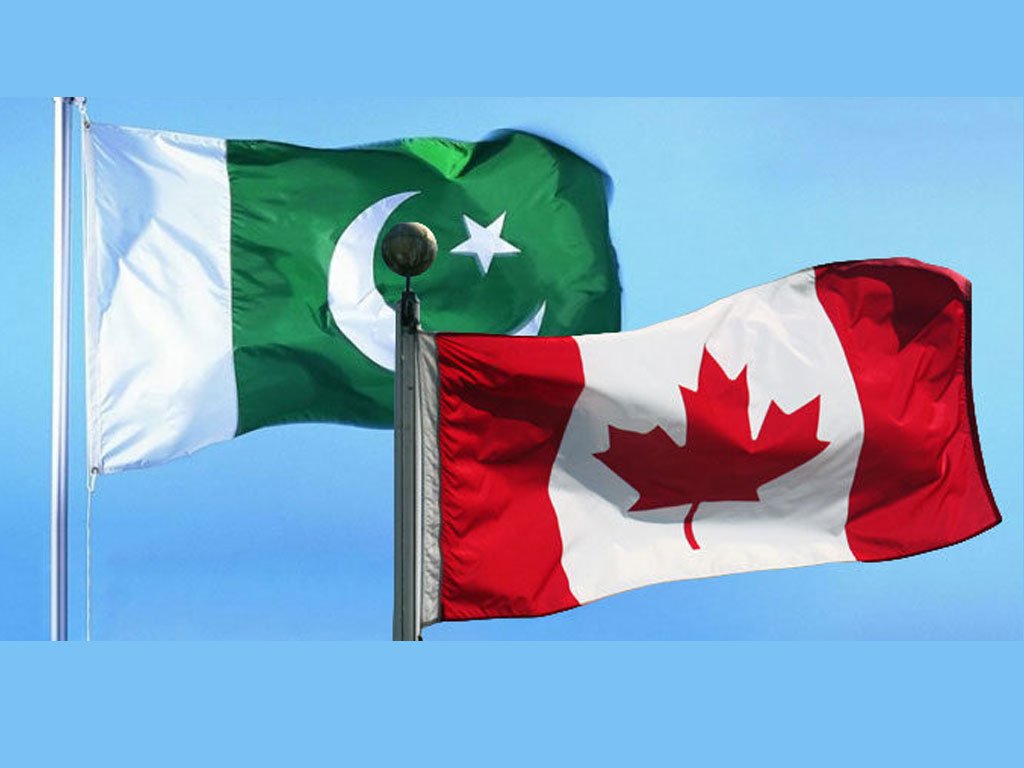
Canada-Pakistan public health collaborations, spanning maternal care, mental health, disability surveys, and telemedicine, drive innovative solutions, enhancing access, equity, and outcomes for mutual prosperity in an interconnected world.
Key Points
- Joint initiatives in maternal and child health, supported by Canadian funding, improve reproductive rights and nutrition in Pakistan.
- Mental health programs like the Being Initiative foster youth well-being through ecosystem building and innovation.
- Collaborative disability surveys provide data for inclusive policies, promoting human rights and societal integration.
- Telemedicine advancements, backed by Canadian grants, expand healthcare access in remote Pakistani areas.
- Academic and research ties, such as university partnerships, build capacity for sustainable public health systems.
In today’s globalized landscape, where health challenges transcend borders, Canada-Pakistan partnerships exemplify how collaborative efforts can yield transformative benefits. These alliances, rooted in shared values of equity and innovation, offer policymakers frameworks for bilateral strategies, investors avenues for impactful funding, academics opportunities for cross-cultural research, and the general public improved health outcomes. By blending contemporary initiatives with evergreen principles like capacity building and knowledge exchange, these collaborations promote resilience against emerging threats, fostering economic stability and social harmony for both nations.
A cornerstone of this partnership is in maternal and child health, where Canadian support has catalyzed progress in Pakistan’s underserved regions. Through Global Affairs Canada (GAC), initiatives like the Promoting Healthy Families project with UNFPA empower women to exercise reproductive rights, reducing coercion and discrimination. Launched in recent years, this effort addresses high maternal mortality rates—Pakistan’s at 186 per 100,000 live births versus Canada’s 8.4—by enhancing family planning services. Similarly, the ENRICH program, funded by $47 million from Canada, focuses on maternal and child nutrition across multiple countries, including Pakistan, to improve birth outcomes and reduce stunting. Dr. Zulfiqar Bhutta, holding dual roles at Toronto’s Hospital for Sick Children and Pakistan’s Aga Khan University, leads research on integrated services for fragile states, advocating for evidence-based policies that could halve child mortality rates. For investors, these programs open doors to public-private partnerships in nutrition tech; academics can study their scalability; and the public benefits from healthier families, boosting workforce productivity.
|
Maternal Health Initiative |
Canadian Contribution |
Impact in Pakistan |
Mutual Benefits |
|
Promoting Healthy Families (UNFPA) |
Funding via GAC |
Empowers reproductive rights; reduces violence |
Policy alignment; shared research data |
|
ENRICH Nutrition Program |
$47M investment |
Improves maternal nutrition; reduces stunting |
Global health leadership for Canada; capacity building for Pakistan |
|
Bhutta’s Research at SickKids/AKU |
Joint expertise |
Integrated MNCH services in conflict areas |
Knowledge transfer; reduced global morbidity |
This table highlights contemporary impacts, with evergreen value in integrated care models that endure beyond funding cycles. Rational analysis shows that such investments yield high returns: each dollar in maternal health can generate $20 in economic benefits through healthier populations.
Shifting to mental health, where stigma and access barriers persist, Canada-Pakistan ties shine through innovative programs. The Being Initiative, hosted by Grand Challenges Canada with GAC partnership, targets youth mental well-being in Pakistan via research, innovation, and ecosystem support. Offering transition-to-scale funding up to $1.5 million CAD, it promotes prevention approaches amid Pakistan’s youth bulge (64% under 30). Complementary efforts include the Foundations for Health and Empowerment (F4HE) by Aga Khan Health Service Pakistan, funded by GAC, which creates safe spaces for young people. In 2025, initiatives like AKFC-supported community programs emphasize connection and resilience, addressing rising mental health needs post-floods and pandemics. Policymakers can replicate these for national strategies; investors find opportunities in digital mental health tools; academics analyze cultural adaptations; and the public gains from reduced societal costs, estimated at 4% of GDP in low-income countries.
Another vital area is disability-inclusive health, exemplified by the Model Disability Survey collaboration between Pakistan, the Canadian High Commission, and WHO. Piloted in Attock district, this study collects nuanced data on impairments, participation restrictions, and environmental factors to inform policies aligned with the UN Convention on the Rights of Persons with Disabilities. As the second country to implement this regionally, Pakistan benefits from evidence for inclusive development, while Canada advances global human rights agendas. Outcomes include population estimates and trend tracking, enabling international comparisons. This rational cooperative approach underscores evergreen principles: data-driven policies enhance equity, potentially integrating 15% of Pakistan’s population with disabilities into mainstream society.
|
Disability Survey Components |
Objectives |
2025 Outcomes |
Broader Implications |
|
Questionnaire Training |
Build local capacity |
Two-day expert sessions |
Standardized data collection |
|
Data Analysis (LMU Munich) |
Generate insights |
Pilot evidence for nationwide rollout |
Policy reforms for inclusion |
|
UNCRPD Alignment |
Monitor rights |
Track trends and comparisons |
Human rights advancement |
This table illustrates the project’s structure, blending current pilots with timeless inclusivity goals. For stakeholders, it offers investment in assistive tech and research on disability economics.
Telemedicine emerges as a high-potential frontier, with Canadian support accelerating access in Pakistan’s remote areas. Grand Challenges Canada’s Humanitarian Grand Challenge backs innovators like Sehat Kahani, which provides nurse-assisted e-clinics and mobile apps for teleconsultations. In 2025, these platforms have expanded hybrid services, aligning with Pakistan’s digital health push amid feasibility studies in Karachi showing enhanced access. COMSATS Tele-Health leverages ICT for quality care, complementing Canadian expertise in telehealth trends like AI-driven tools. Rational analysis: telemedicine reduces urban-rural disparities, with potential 30% cost savings, benefiting Canada’s export of health tech while bolstering Pakistan’s infrastructure.
Academic collaborations further solidify ties, such as the University of Manitoba’s involvement in teaching MSPH courses at Pakistan’s Health Services Academy, fostering joint public health education. Broader Canadian aid, including Global Fund contributions for HIV/TB/malaria ($1.8 billion commitment, aiding Pakistan), and flood response health services, underscores commitment.
Overall, these partnerships reflect a promotional vision: Canada gains leadership in global health, while Pakistan accesses resources for development, creating win-win dynamics.
Conclusion Canada-Pakistan public health collaborations exemplify synergistic progress, from maternal nutrition to mental health innovations and telemedicine expansions. These efforts promise enhanced equity, reduced burdens, and economic gains, urging policymakers to deepen ties, investors to fund scalable solutions, academics to pursue joint studies, and the public to embrace healthier futures. By sustaining this momentum, both nations can lead in global health resilience, inspiring inclusive, innovative partnerships worldwide.
* Dr. Muhammad Jahanzaib is the Founder & Chief Visionary Officer (CVO) of Diamanium Thinkers, a global think tank. He holds a PhD in International Relations, specializing in the intersection of politics and economics in Pakistan’s foreign and domestic policy. A double gold medalist and published scholar, he writes on economic intelligence, economic diplomacy, political economy, AI and regional cooperation in South Asia and beyond. He can be reached at jahanzaibdgc@gmail.com.
Key References
- Promoting healthy families in Pakistan under Global Affairs Canada’s support – https://pakistan.unfpa.org/en/news/promoting-healthy-families-pakistan-under-global-affairs-canadas-support
- Canada-Led Effort on Maternal and Child Nutrition Receives Partnership Award – https://temertymedicine.utoronto.ca/news/canada-led-effort-maternal-and-child-nutrition-receives-partnership-award
- Global Leaders in Maternal and Newborn Health: Dr. Zulfiqar Bhutta (Canada and Pakistan) – https://hsph.harvard.edu/maternal-health-task-force/news/global-leaders-in-maternal-and-newborn-health-dr-zulfiqar-bhutta-canada-and-pakistan/
- Pakistan – Grand Challenges Canada – Being Initiative – https://being-initiative.org/pakistan/
- “You’re not alone”: Youth perspectives on mental health – https://www.akfc.ca/our-work/mental-health-week-youth-perspectives/
- Launch of Being, a new international mental health initiative for young people – https://www.fondationbotnar.org/wp-content/uploads/2022/10/Launch-of-Being-a-new-international-mental-health-initiative-for-young-people.pdf
- Aga Khan Health Service, Pakistan – https://www.facebook.com/akhspak/posts/under-the-foundations-for-health-and-empowerment-f4he-project-supported-by-globa/1125266933110579/
- WHO EMRO – Pakistan, Canadian High Commission and WHO collaborate to collect comprehensive information on disabilities – https://www.emro.who.int/pak/pakistan-news/information-on-disability.html
- Humanitarian Grand Challenge – https://www.facebook.com/HumanitarianGC/posts/-congratulations-to-sehat-kahani-a-supported-innovator-for-winning-the-aidex-202/1240137504813097/
- Enhancing telehealth services development in Pakistani healthcare settings – https://public-pages-files-2025.frontiersin.org/journals/public-health/articles/10.3389/fpubh.2024.1376534/epub
- Feasibility of digital healthcare in enhancing healthcare access in semiurban areas of Karachi, Pakistan – https://pmc.ncbi.nlm.nih.gov/articles/PMC12273075/
- COMSATS’ Tele-Health Services – https://comsats.org/comsats-tele-health-services/
- University of Manitoba – Health Services Academy – https://hsa.edu.pk/university-of-manitoba/
- Canada announces commitment to the global fight against HIV, tuberculosis and malaria – https://www.canada.ca/en/global-affairs/news/2025/11/canada-announces-commitment-to-the-global-fight-against-hiv-tuberculosis-and-malaria.html
Canada’s response to flooding in Pakistan – https://www.international.gc.ca/world-monde/issues_development-enjeux_developpement/response_conflict-reponse_conflits/flooding-pakistan-inondations.aspx?lang=eng