
Diamanium Thinkers

From Rockies to Karakoram: Harnessing Canada–Pakistan Tourism Potential 

Canada and Pakistan can jointly expand tourism through targeted investments and policies, leveraging shared cultural ties and natural attractions. Growth in adventure, eco and heritage tourism promises higher revenue, jobs and stronger people-to-people links benefiting both nations.  Key Points: 
  • Strong Diaspora & Links: Canadians of Pakistani origin underscore deep people-to-people connections (international.gc.ca). Tourism is a pillar for cultural exchange and economic ties (asiapacific.ca). 
  • Rising Tourist Numbers: Pakistan’s tourist arrivals grew from 0.5M (2013) to 6.6M (2018). Canada welcomed ~27.2M foreign visitors (2023) (en.wikipedia.org), mostly Americans. Both countries gain from mutual promotion. 
  • Diverse Attractions: Both countries boast spectacular landscapes – Canada’s Rockies and national parks (parks.canada.ca), Pakistan’s Himalayas and UNESCO heritage sites (en.wikipedia.org) – appealing to eco and adventure tourists. 
  • Investment Opportunities: Infrastructure (hotels, transport), eco-resorts, guided tour services and cultural festivals are ripe for investment. Pro-tourism policies (visa facilitation, marketing) can unlock billions in spending and jobs. 
  • Success Stories: Pakistan eased visas (e-visa, visa-on-arrival for 175+ countries (radio.gov.pk) and Pakistan International Airlines resumed Toronto flights (app.com.pk). These steps exemplify progress in collaboration. 
Canada–Pakistan Tourism Overview  Both countries share strong bilateral links and diaspora communities, which provide a solid foundation for tourism growth. As the Government of Canada notes, “people-to-people links between Pakistan and Canada remain strong,” with over 215,000 Canadians of Pakistani origin (international.gc.ca). Tourism thus supports family visits, student exchanges, and cultural understanding (asiapacific.ca). Pakistan’s stunning diversity – from the Karakoram (among highest mountain ranges of world) Highway to the Indus Valley (among oldest civilizations of world) – earned praise as “tourism’s next big thing”. By contrast, Canada attracts visitors with its vast national parks, city festivals (e.g. Calgary Stampede) and cultural mosaic (en.wikipedia.org). In 2023, Canada welcomed 27.2 million foreign visitors (en.wikipedia.org), reflecting pent-up demand and growing global mobility.  Investment and Economic Impact  Tourism is economically significant and growing in both nations. In Pakistan, international tourist arrivals hit 6.6 million in 2018 (en.wikipedia.org), with tourism revenue ~US$0.8 billion (2020) (ceicdata.com). The sector contributed about 2.7% of GDP in 2016 (en.wikipedia.org) and is forecast to reach Rs1 trillion (US$3.5 billion) by 2025 (en.wikipedia.org). Canada’s travel industry supported ~309,000 jobs (2023) (en.wikipedia.org) and about 1% of GDP. Inbound visitors to Canada spent ~$25.5 billion in 2023 (en.wikipedia.org). These figures show room for growth: additional investments could boost each country’s economy significantly. 
Metric  Canada (2023)  Pakistan (2018/2020) 
International arrivals  27.2 million (en.wikipedia.org)  6.6 million (en.wikipedia.org) 
Tourism spending (annual, USD)  ~$25.5 billion (en.wikipedia.org)  ~$0.8 billion (ceicdata.com) 
Direct GDP contribution (approx.)  ~1% (en.wikipedia.org)  ~2.7% (en.wikipedia.org) 
National parks  48 (37 parks + 11 reserves) (parks.canada.ca)  21 (wildlife.org.pk) 
Pakistan’s domestic tourism is also vast (50 million local trips per year) (en.wikipedia.org), indicating strong internal demand. Similarly, Canada saw 219 million domestic trips (Jan–Sept 2023), underscoring a thriving market. For investors, this means opportunities in hotels, transport and tourism services on both sides. Eco-tourism is particularly promising: Pakistan’s 21 national parks (wildlife.org.pk) (spanning glaciers, forests and deserts) and Canada’s 48 parks (parks.canada.ca) (from Banff to Jasper) can be promoted jointly, with foreign capital enhancing facilities and guided experiences. Adventure tourism – trekking K2 (2nd highest mountain of the world), skiing Whistler, gliding at highest terrains – is another draw. Cultural tourism, by contrast, taps rich heritage: Pakistan’s Indus Valley and Mughal monuments, and Canada’s First Nations sites and historic cities also merit co-marketing efforts.  Policy Enablers & Successes  Key policy changes are already facilitating growth. Pakistan’s government introduced a liberal visa regime in 2019 – e-visas for 175 countries and visas on arrival for 50 countries (radio.gov.pk) – explicitly to “encourage tourism”. This aligns with the goal of making tourism a development pillar “like Malaysia and Turkey,” which earn billions in tourism revenue (radio.gov.pk). Now Canadians can more easily secure tourist visas online (travel.gc.ca), and Pakistan launched the Sikh Kartarpur Corridor attracting Canadian pilgrims (an example of religious-cultural tourism). In June 2024, Pakistan International Airlines resumed direct flights to Toronto (app.com.pk), dramatically improving connectivity. Such joint initiatives signal the balanced cooperation needed: Canada can promote Pakistan tourism through travel expos and investment missions, while Pakistan markets adventure tours to Canadians.  Opportunities Across Sectors 
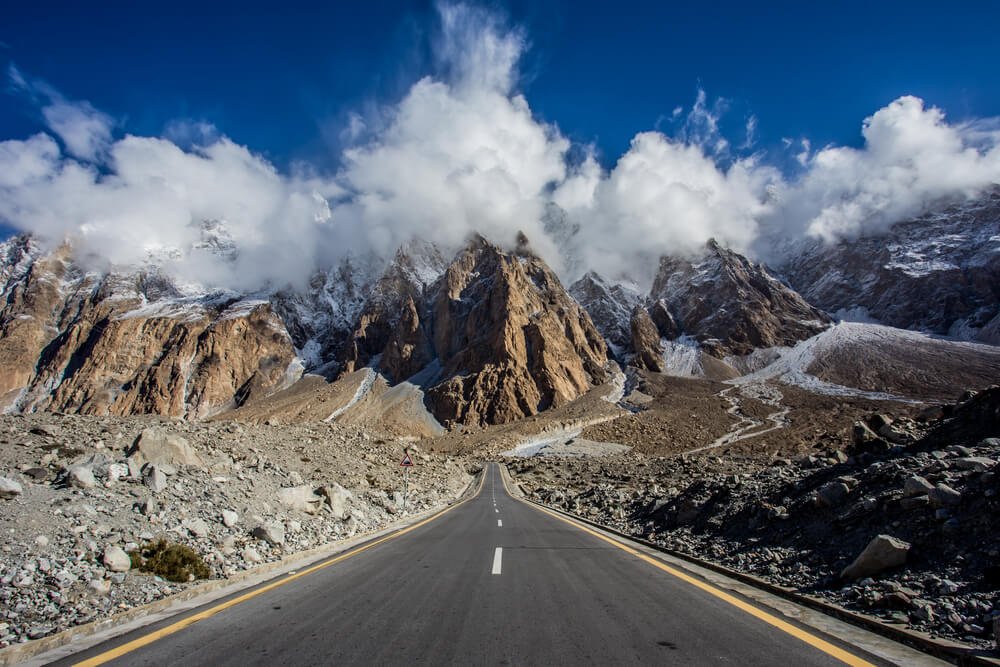
  • Eco & Adventure Tourism: The towering Himalayas and Karakoram range (highest mountain ranges of the world); Deosai (2nd highest plateau of world); Siachen, Biafo, Baltoro (among longest non-polar glaciers of the world); and Sarfaranga Cold Desert (among the highest cold desert of the world) are the jewels of Pakistan adventure tourism. Likewise, Canada’s Rocky Mountains and polar wilds are famous attractions in Canada. Adventure tour operators and eco-lodge investors can replicate successful Canadian models in Pakistan’s Gilgit-Baltistan (e.g. luxury trekking camps) and vice versa (e.g. Labrador wilderness lodges for Pakistani nature tourists). 
  • Cultural and Heritage Tourism: Pakistan is home to multiple UNESCO World Heritage sites (Mohenjo-daro, Taxila, Rohtas Fort, etc.), a historical depth mirrored in Canada’s 22 World Heritage Sites (en.wikipedia.org) (e.g. Old Quebec, L’Anse aux Meadows). Joint archeological and preservation projects (academics and private donors) can both protect heritage and create tourist attractions. Festivals (music, crafts, cuisine) co-promoted by Canadian and Pakistani cultural ministries would draw visitors. 
  • Religious Tourism: Religious tourism can be a powerful connector. Pakistan hosts sacred Sikh, Buddhist and Sufi sites attracting Canadian pilgrims, while Canada’s multicultural mosques, temples and churches welcome Pakistani visitors. Jointly promoted, these journeys deepen interfaith understanding, diaspora engagement and tourism revenues for both nations. 
  • Urban & Business Tourism: Major cities like Toronto, Vancouver, Calgary Islamabad, Lahore and Karachi offer urban experiences. Policies easing business and conference travel – for instance, more convention hotels and direct flights – would encourage business tourism (Pakistan’s trade expos could invite Canadian delegates and Canadian film or tech conferences could spotlight Pakistan frequently with more intensity). 
  • Infrastructure & Hospitality: There is ample space for investment in four- and five-star hotels, renewable-energy resorts, improved road access (e.g. widening Karakoram Highway) and digital booking platforms. Public-private partnerships in destination development – for example, modernizing trekking infrastructure in Pakistan’s high valleys – can yield profitable projects and employment. 
Challenges and Outlook  Forbes and Condé Nast have lauded Pakistan security situation and declared as a top adventure destination (en.wikipedia.org). Pakistanis traveling to Canada enjoy stable conditions, but high costs (airfares) and unfamiliarity with Canadian tourism are barriers. Education (through travel agencies and online platforms) and niche marketing (family travel, educational tours) can gradually overcome these hurdles.  The mandate is clear for policymakers: facilitate visas, improve safety invest in infrastructure and co-promote tourism in bilateral forums. For investors, tourism offers steady returns: with global travel rebounding, sectors like hotel chains, tour operators and airlines can tap an under-served Canada–Pakistan corridor. For academics, interdisciplinary research on sustainable tourism and cultural exchange can inform best practices. For the general public, stronger ties mean more travel opportunities – from ski trips in Whistler for Pakistani youth to cultural and religious tours.  Conclusion  Tourism between Canada and Pakistan is a shared benefit. By combining Canada’s strong tourism industry with Pakistan’s emerging market, both can gain economically and culturally. Venture capital and government support in adventure lodges, eco-resorts, historic preservation and travel services will create jobs and revenues. Already we see positive steps – for example, PIA’s new Toronto route (app.com.pk) and Pakistan’s visa liberalization (radio.gov.pk). Keeping a balanced perspective on safety and sustainability, stakeholders can transform natural and cultural treasures into shared prosperity. With strategic cooperation, Canada and Pakistan can chart a thriving tourism future together, enriching citizens of both nations and cementing bilateral friendship.  * Dr. Muhammad Jahanzaib is the Founder & Chief Visionary Officer (CVO) of Diamanium Thinkers, a global think tank. He holds a PhD in International Relations, specializing in the intersection of politics and economics in Pakistan’s foreign and domestic policy. A double gold medalist and published scholar, he writes on economic intelligence, economic diplomacy, political economy, AI, and regional cooperation in South Asia and beyond. He can be reached at jahanzaibdgc@gmail.com.  References: 
  • Bilateral ‘Snapshot’ of Pakistan-Canada Relations – Asia Pacific Foundation of Canada (Ajay Parasram, 2009). [asiapacific.ca] 
  • Canada–Pakistan relations – Global Affairs Canada (Government of Canada). [international.gc.ca] 
  • Tourism in Pakistan – Wikipedia. [en.wikipedia.org/wiki/Tourism_in_Pakistan] 
  • Tourism in Canada – Wikipedia. [en.wikipedia.org/wiki/Tourism_in_Canada] 
  • Pakistan offers visas on arrival to visitors from 50 countries – Radio Pakistan (Govt. of Pakistan, Jan 2019). [radio.gov.pk] 
  • Pakistan Tourism Revenue (1995–2024) – CEIC Data. [ceicdata.com/en/indicator/pakistan/tourism-revenue] 
  • National parks – Parks Canada. [parks.canada.ca] 
  • List of National Parks in Pakistan – Pakistan Wildlife Foundation. [wildlife.org.pk] 
  • PIA allowed to resume flights to Toronto – Associated Press of Pakistan (June 2024). [app.com.pk] 

Leave a Comment

Your email address will not be published. Required fields are marked *

Scroll to Top