
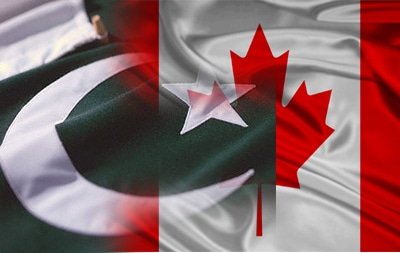
Recent 2025 initiatives, including parliamentary friendship groups and bilateral consultations, are bolstering Canada-Pakistan legislative ties, promoting policy dialogues on trade, climate, and empowerment for shared prosperity and global cooperation.
Key Points
- Formation of the Canada-Pakistan Parliamentary Friendship Group in Canada’s 45th Parliament in November 2025 enhances inter-parliamentary dialogue.
- Pakistan’s Parliamentary Friendship Group briefing in September 2025 proposed a Canadian counterpart and action plans for exchanges.
- Bilateral political consultations emphasize parliamentary cooperation alongside trade and social development.
- Focus areas include climate change, women’s empowerment, and economic policies, fostering mutual learning.
- Benefits span strengthened governance, investor confidence, and people-to-people connections for long-term resilience.
In an interconnected world where legislative frameworks shape international partnerships, Canada-Pakistan parliamentary diplomacy exemplifies how targeted exchanges can amplify bilateral relations. These efforts, rooted in shared Commonwealth values and democratic principles, provide policymakers with platforms for aligned strategies, investors with stable environments, academics with case studies in cooperative governance, and the general public with enhanced cultural and economic ties. By integrating contemporary initiatives like friendship groups with evergreen concepts of policy harmonization, both nations are building bridges for sustainable progress.
A significant development occurred in September 2025, when Pakistan’s National Assembly hosted a briefing session for the Pakistan-Canada Parliamentary Friendship Group (PFG). Chaired by Convener MNA Ms. Shagufta Jumani, the session reviewed bilateral relations and proposed establishing a counterpart “Canadian Parliamentary Friendship Group” to mirror efforts and strengthen ties. Participants, including parliamentarians and diplomats, discussed an action plan to boost inter-parliamentary exchanges, trade, investment, and cultural linkages. The Canadian High Commissioner to Pakistan, Leslie Scanlon, attended via video link, highlighting opportunities in education, technology, and sustainable development. This initiative reflects a rational approach: parliamentary diplomacy facilitates direct legislator interactions, enabling nuanced policy discussions beyond executive channels.
Building on this, November 2025 saw the formation of the new Canada-Pakistan Parliamentary Friendship Group in Canada’s 45th Parliament. High Commissioner of Pakistan to Canada, Saleem Mandviwalla, hosted members at the Pakistan Residence in Ottawa on November 3, 2025. The event underscored the group’s role in advancing legislative cooperation, with discussions on trade facilitation, such as the resumption of Canadian canola exports, and social issues like women’s empowerment. This mirrors the evergreen principle of friendship groups as mechanisms for fostering trust and addressing common challenges, such as climate resilience in vulnerable regions.
Key Parliamentary Initiatives (2025) | Date | Participants | Focus Areas |
Pakistan-Canada PFG Briefing Session | September 10 | Pakistani MNAs, Canadian High Commissioner (virtual) | Bilateral review, proposal for Canadian group, action plans for exchanges |
Formation of Canada-Pakistan PFG in Canada | November 3 | Canadian MPs, Pakistani High Commissioner | Trade, education, women’s empowerment, cultural ties |
Bilateral Political Consultations (5th Round Reference) | Ongoing from 2024 | Foreign affairs officials | Parliamentary cooperation, counter-terrorism, people-to-people contacts |
This table captures contemporary milestones with timeless benefits like policy alignment, as seen in the 5th Round of Bilateral Political Consultations in April 2024, which committed to enhancing parliamentary exchanges alongside trade and education. Analysis indicates these forums mitigate geopolitical tensions, with Canada gaining insights into South Asian dynamics and Pakistan accessing advanced legislative practices on issues like environmental policy.
Further emphasizing this trajectory, a January 2025 LinkedIn post by Canadian MP Robert Oliphant highlighted a Canada-Pakistan PFG meeting to reorganize and discuss deepening relations, aligning with broader 2025 engagements. These include the joint statement on November 3, 2025, reaffirming ties and looking to the 6th round of consultations for strategic collaboration. Policymakers benefit from such exchanges in crafting inclusive policies; for instance, discussions on climate change draw on Canada’s expertise in green transitions, aiding Pakistan’s adaptation efforts amid floods.
Investors find value in the stability these ties promote, as parliamentary oversight ensures transparent agreements like the Foreign Investment Promotion and Protection Agreement (FIPPA). Academics can study how these groups facilitate knowledge transfer, such as in women’s empowerment programs, where Canada’s feminist foreign policy complements Pakistan’s initiatives. The general public enjoys indirect gains through diaspora networks fostering remittances and cultural events.
Evergreen aspects include the Commonwealth Parliamentary Association (CPA) framework, where both nations participate in events like the 2025 CPA bulletin on inter-parliamentary conferences. Contemporary data shows bilateral trade exceeding $1 billion in 2025, partly buoyed by these diplomatic layers. Challenges, such as coordinating agendas, are addressed through regular sessions, positioning Canada-Pakistan as a model for North-South legislative partnerships.
Conclusion. 2025’s parliamentary diplomacy advancements, from friendship groups to consultative commitments, are fortifying Canada-Pakistan legislative bonds, yielding policy synergies in key sectors. This collaboration promises governance enhancements, urging policymakers to expand dialogues, investors to leverage stability, academics to analyze models, and the public to embrace shared opportunities. By nurturing these ties, both countries can lead in inclusive global cooperation, ensuring enduring mutual benefits.
* Dr. Muhammad Jahanzaib is the Founder & Chief Visionary Officer (CVO) of Diamanium Thinkers, a global think tank. He holds a PhD in International Relations, specializing in the intersection of politics and economics in Pakistan’s foreign and domestic policy. A double gold medalist and published scholar, he writes on economic intelligence, economic diplomacy, political economy, AI and regional cooperation in South Asia and beyond. He can be reached at jahanzaibdgc@gmail.com.
Key References
- Pakistan–Canada Joint Statement: Reaffirming strong and enduring ties – 3rd November 2025 – https://mofa.gov.pk/press-releases/pakistan-canada-joint-statement-reaffirming-strong-and-enduring-ties-3rd-november-2025
- 5th Round of Pakistan-Canada Bilateral Political Consultations – https://mofa.gov.pk/press-releases/5th-round-of-pakistan-canada-bilateral-political-consultations
- Briefing Session of the Pakistan-Canada Parliamentary Friendship Group (PFG) – https://na.gov.pk/en/pressrelease_detail.php?id=7222
- The High Commissioner welcomed members of the new Canada-Pakistan Parliamentary Friendship Group of the 45th Parliament of Canada at Pakistan Residence on Nov 03, 2025 – https://mofa.gov.pk/news/the-high-commissioner-welcomed-members-of-the-new-canada-pakistan-parliamentary-friendship-group-of-the-45th-parliament-of-canada-at-pakistan-residence-on-nov-03-2025?mission=ottawa
- Pakistan proposes “Canadian Parliamentary Friendship Group” to strengthen ties – https://www.app.com.pk/national/pakistan-proposes-canadian-parliamentary-friendship-group-to-strengthen-ties
- Robert Oliphant’s Post – https://www.linkedin.com/posts/robert-oliphant-1598989_canada-and-pakistan-share-a-relationship-activity-7387594800113438721-dAIm
- Pakistan, Canada Seek to Revive Investment Agreement to Deepen Cooperation – https://thediplomaticinsight.com/pak-canada-seek-to-revive-investment-agreement
- Parliamentary Diplomacy: Canadian Parliamentarians and the World – https://hillnotes.ca/2025/05/20/parliamentary-diplomacy-canadian-parliamentarians-and-the-world-2