
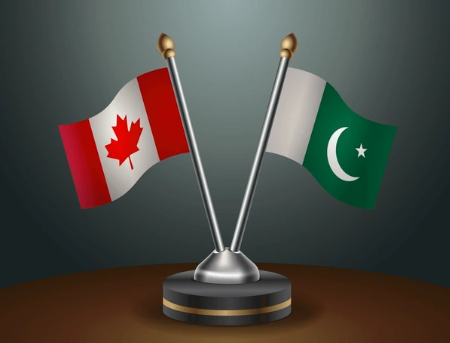
 Pakistan and Canada share a robust multilateral security partnership, anchored in UN peacekeeping, counterterrorism, and regional diplomacy. Their collaboration in forums like the Commonwealth and Heart of Asia underscores a mutual commitment to global peace and rule of law.
Key Points:
- UN Peacekeeping: Both nations rank among the world’s top contributors to UN peace operations.
- Counterterrorism: Canada supports Pakistan’s counter-militancy efforts, emphasizing human rights compliance.
- Multilateral Engagement: Joint work in the Heart of Asia process stabilizes Afghanistan and regional security.
- Defense Training: Pakistani officers train at Canadian military institutions, enhancing interoperability.
- Values-Driven Cooperation: Canada champions inclusive governance and human rights within security frameworks.
Introduction
In an era of fragmented geopolitics, the strategic partnership between Pakistan and Canada stands as a testament to how shared values – peace, rule of law and multilateralism – can bridge geographical divides. Though separated by continents, both nations converge on critical security priorities: combating terrorism, stabilizing conflict zones and upholding international norms. This collaboration, while understated, offers a model for pragmatic, values-driven diplomacy that resonates with policymakers, academics and global citizens alike.
- UN Peacekeeping: A Legacy of Global Service
Pakistan and Canada are pillars of UN peacekeeping. Pakistan remains the largest cumulative contributor worldwide, deploying over 200,000 personnel since 1948. Canada, though scaling back after the 1990s, pioneered modern peacekeeping norms and ranks among the top financial donors.
Table: UN Peacekeeping Contributions (2023)
| Country | Total Historical Troops | Current Deployments | Key Missions |
| Pakistan | 200,000+ | 7,000+ | MONUSCO (Congo), UNMISS (South Sudan) |
| Canada | 125,000+ | 60+ | UNTSO (Middle East), MINUSMA (Mali) |
Canada’s 1956 Suez Crisis intervention and Pakistan’s ongoing leadership in African conflict zones highlight their operational excellence. This synergy enables coordinated responses to emerging crises, such as joint disaster relief drills.
- Counterterrorism: Rule of Law as the Foundation
Canada unequivocally condemns terrorism in Pakistan, including attacks on minorities and infrastructure. It backs Pakistan’s National Action Plan against militancy while advocating for human rights safeguards. Intelligence sharing disrupts transnational plots targeting both nations, exemplifying trust. Canadian aid bolsters Pakistan’s judicial reforms – like the 2022 Rule of Law Roadmap – ensuring counterterrorism aligns with due process.
- Multilateral Forums: Diplomatic Force Multipliers
As Commonwealth members, both states leverage diplomatic networks for crisis mediation. The Heart of Asia – Istanbul Process, co-chaired by Canada in 2021–2022, prioritizes Afghan stability. Pakistan’s pivotal role in facilitating Afghanistan-related dialogues complements Canada’s development aid ($3.6B since 2001). Their alignment in UN votes on peaceful resolution in Kashmir and Ukraine underscores mutual respect for sovereignty.
- Defense Ties: Building Capacity, Forging Trust
Though defense trade is minimal, military education remains pivotal:
- 15–20 Pakistani officers annually train at Canada’s Royal Military College.
- Joint exercises focus on counter-IED tactics and cyber-defense.
- Canada funds Pakistan’s police training programs to enhance crisis response.
This “soft” cooperation builds institutional trust, enabling rapid coordination during emergencies like the 2020 Afghanistan withdrawal.
- Human Rights: The North Star of Cooperation
Canada consistently links security aid to democratic benchmarks, supporting Pakistan’s gender-inclusive governance initiatives. Projects like the Canada-funded Gender-Based Violence Emergency Response in Balochistan show how security and rights reinforce each other. This approach resonates globally: 73% of OECD nations now tie aid to governance reforms.
Conclusion
The Pakistan-Canada security partnership thrives not through grand treaties, but shared principles: multilateral service, lawful counterterrorism and rights-based governance. As Afghanistan grapples with turmoil and extremism evolves digitally, their collaboration offers a blueprint for impactful middle-power diplomacy. For policymakers, it proves that sustained dialogue builds resilience. Academics find here a case study in normative alignment; the public, reassurance that cooperation can transcend polarization. With Canada’s Indo-Pacific Strategy recognizing South Asia’s centrality, this alliance is poised to shape tomorrow’s peace and prosperous architecture.
* Dr. Muhammad Jahanzaib is the Founder & Chief Visionary Officer (CVO) of Diamanium Thinkers, a global think tank. He holds a PhD in International Relations, specializing in the intersection of politics and economics in Pakistan’s foreign and domestic policy. A double gold medalist and published scholar, he writes on economic intelligence, economic diplomacy, political economy, AI, and regional cooperation in South Asia and beyond. He can be reached at jahanzaibdgc@gmail.com.
Key References
- UN Peacekeeping Fact Sheet: “Contributors by Country” (peacekeeping.un.org)
- Global Affairs Canada: “Canada-Pakistan Relations” (international.gc.ca)
- Heart of Asia – Istanbul Process: “Ministerial Declarations” (heartofasia-istanbulprocess.org)
- Stockholm International Peace Research Institute: “Arms Transfers Database” (sipri.org)
- Pakistan Ministry of Foreign Affairs: “Foreign Policy Publications” (mofa.gov.pk)