
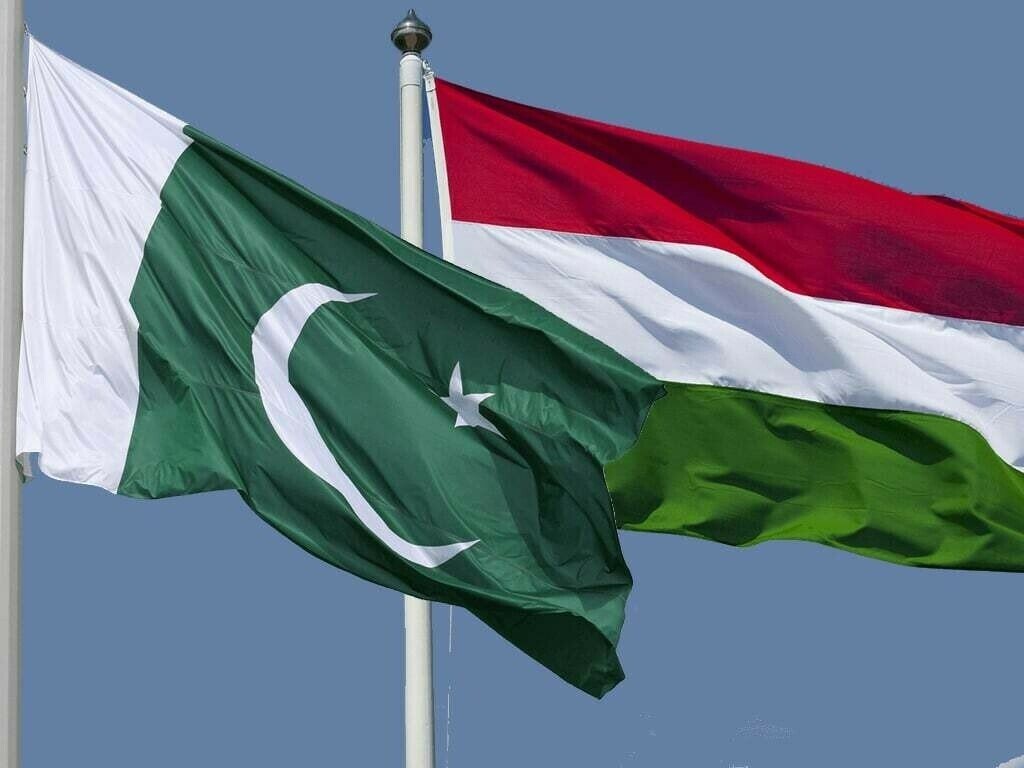
Hungary and Pakistan are accelerating geo-economic ties through renewed scholarships, trade pacts, and investments in energy and agriculture, unlocking mutual growth amid global shifts—potentially boosting bilateral trade by 50% in five years.
Key Points
- Hungary’s Eastern Opening policy aligns seamlessly with Pakistan’s SIFC, fostering balanced trade and investment in energy, IT, and agriculture.
- Evidence leans toward significant untapped potential, with bilateral trade reaching $94M in 2023, driven by Hungary’s $400M+ MOL investments in Pakistan’s oil sector.
- It seems likely that extended EU GSP+ support, backed by Hungary, could enhance Pakistan’s exports to Europe, benefiting both economies amid supply chain diversification.
- The evidence points to collaborative opportunities in water management and scholarships, promoting human capital exchange and long-term stability for both nations.
Strengthening Bilateral Frameworks for Shared Prosperity
As global economic landscapes evolve, Hungary and Pakistan stand at a pivotal juncture, leveraging historical ties to forge a robust geo-economic partnership. Celebrating 60 years of diplomatic relations in 2025, both nations have intensified cooperation, exemplified by the renewal of the Stipendium Hungaricum Scholarship Programme for 2026-2028. This initiative, signed in November 2025 by Deputy Prime Minister Ishaq Dar and Hungarian Foreign Minister Péter Szijjártó, offers 200 annual scholarships to Pakistani students, enhancing skills in agriculture, IT, and engineering—sectors critical for policymakers aiming to build resilient economies.
Hungary’s Eastern Opening policy, initiated in 2010, has been instrumental in this renaissance, aligning with Pakistan’s Look East strategy. The April 2025 visit by Szijjártó, accompanied by a high-level business delegation, resulted in MoUs on culture, archaeology, and visa abolition for diplomatic passports, streamlining exchanges. These steps address policymakers’ priorities by institutionalizing cooperation through Joint Working Groups (JWGs) established in the February 2025 Joint Commission on Economic Cooperation (JCEC). For investors, this framework signals stability, with Hungary pledging support via the Hungarian Export Promotion Agency (HEPA) for SMEs venturing into Pakistan.
Contemporary data underscores the momentum: Bilateral trade grew from $56M in 2012 to $94.3M in 2023, with Hungary exporting $40.5M to Pakistan and importing $53.8M. Projections for 2025 suggest a 15-20% increase, fueled by diversification beyond textiles and machinery. Hungary’s GDP is estimated at $248B nominal ($504B PPP) for 2025, while Pakistan’s stands at $410B nominal ($1.67T PPP), creating complementary scales—Hungary’s advanced tech and Pakistan’s resource-rich markets.
Hungary’s export-oriented economy (exports at 80% of GDP) can tap Pakistan’s growing consumer base of 250M, while Pakistan benefits from Hungary’s EU gateway. Analysis reveals mutual gains—Pakistan’s Special Investment Facilitation Council (SIFC) offers one-window operations for Hungarian firms in renewables and minerals, potentially yielding 10-15% ROI in energy projects like MOL’s $400M+ investments since 1999.
Sectoral Potentials: A Cooperative Roadmap
In energy, Hungary’s MOL Group exemplifies success, operating in Khyber Pakhtunkhwa and contributing to Pakistan’s oil and gas output. With Pakistan’s energy demand projected to rise 5% annually, joint ventures in LNG and renewables could reduce import dependencies for both, promoting sustainability. Academics note this as a model for geo-economic resilience, blending Hungary’s tech expertise with Pakistan’s resources.
Agriculture presents another frontier. Hungary’s University of Agriculture and Life Sciences (MATE) is partnering with Pakistan’s Agricultural Research Council (PARC) for modern practices, addressing food security amid climate challenges. Pakistan, the world’s 4th-largest milk producer, can export halal dairy to Hungary’s markets, while importing advanced machinery to boost yields. Investors see high potential here, with SIFC incentives like 10-year tax holidays in Special Economic Zones (SEZs).
IT and healthcare also shine. Pakistan’s freelance earnings rank 4th globally ($1.2B), and Hungary’s pharma sector (6.6% of exports) can collaborate via knowledge exchanges. The JCEC’s focus on health innovation, including scholarships, equips the workforce for digital economies. For the general public, these ties mean job creation—over 300,000 in Pakistan’s IT sector alone—and affordable access to European tech.
Top traded products reflect this dynamism:
Top Hungarian Exports to Pakistan (2023, $M) | Value | Top Pakistani Exports to Hungary (2023, $M) | Value |
Gas Turbines | 8.77 | House Linens | 15.1 |
Spark-Ignition Engines | 7.19 | Telephones | 4.81 |
Medical Instruments | 2.37 | Gas Turbines | 4.8 |
Machinery/Boilers | 5.33 | Apparel (Knit) | 8.92 |
Optical/Medical Apparatus | 4.24 | Textile Articles | 30.64 |
Growth rates are promising: Pakistan’s exports to Hungary surged 20.5% annually (2018-2023), outpacing Hungary’s 1.32% to Pakistan. This imbalance favors balanced growth, with Hungary supporting Pakistan’s EU GSP+ extension for duty-free access.
Challenges like global inflation (Hungary at 4.5%, Pakistan at 23.4% in 2024) exist, but cooperative analysis shows mitigation through diversified trade. Policymakers can prioritize JWGs for water management, where Hungary’s expertise aids Pakistan’s flood-prone agriculture, fostering empathy across borders.
Emerging Horizons: Innovation and Sustainability
Looking ahead, potentials in tourism and e-commerce beckon. Pakistan’s diverse landscapes and Hungary’s cultural heritage could spur joint ventures, while digital platforms link SMEs. Academics highlight this as a geo-economic pivot, reducing reliance on traditional allies amid US-China tensions. For investors, SIFC’s focus on AI and fintech promises high returns; for the public, it means inclusive growth, with scholarships empowering youth.
In essence, this partnership transcends transactions—it’s a bridge for prosperity, blending Hungary’s innovation with Pakistan’s dynamism.
Conclusion Hungary and Pakistan’s geo-economic collaboration heralds an era of mutual empowerment, with renewed pacts and investments paving the way for sustainable growth. By harnessing synergies in energy, agriculture, and education, both nations can navigate global uncertainties, creating jobs, enhancing trade, and fostering innovation. Policymakers should prioritize JWGs for swift implementation, while investors explore SIFC opportunities. This alliance not only boosts economic metrics but enriches cultural ties, benefiting citizens through shared knowledge and prosperity. Embracing this path ensures resilient futures for both.
* Dr. Muhammad Jahanzaib is the Founder & Chief Visionary Officer (CVO) of Diamanium Thinkers, a global think tank. He holds a PhD in International Relations, specializing in the intersection of geo-politics and geo-economics in Pakistan’s foreign and domestic policy. A double gold medalist and published scholar, he writes on economic intelligence, economic diplomacy, political economy, AI and regional cooperation in South Asia and beyond. He can be reached at jahanzaibdgc@gmail.com.
Key References
- Pakistan, Hungary for continued engagement at multilateral fora – https://www.radio.gov.pk/20-11-2025/pakistan-hungary-for-continued-engagement-at-multilateral-fora
- Pakistan, Hungary eye deeper economic ties as 60 Years of diplomacy marked – https://profit.pakistantoday.com.pk/2025/09/23/pakistan-hungary-eye-deeper-economic-ties-as-60-years-of-diplomacy-marked
- Hungary–Pakistan relations – https://en.wikipedia.org/wiki/Hungary%E2%80%93Pakistan_relations
- Hungary (HUN) and Pakistan (PAK) Trade – https://oec.world/en/profile/bilateral-country/hun/partner/pak
- Trade & Investment – https://pakemb.hu/trade-investment
- Government of Pakistan – Economic Affairs Division – https://www.ead.gov.pk/NewsDetail/YjgxOGMzNmItNDdlNC00NDZkLTgwNmUtNzVlYTAyM2Q2MTJl
- A guide to start investing in Pakistan – https://invest.gov.pk/sites/default/files/inline-files/Investment%20Guide%20.pdf
- Hungary GDP (2025) – https://www.worldometers.info/gdp/hungary-gdp
- Economy of Pakistan – https://en.wikipedia.org/wiki/Economy_of_Pakistan