
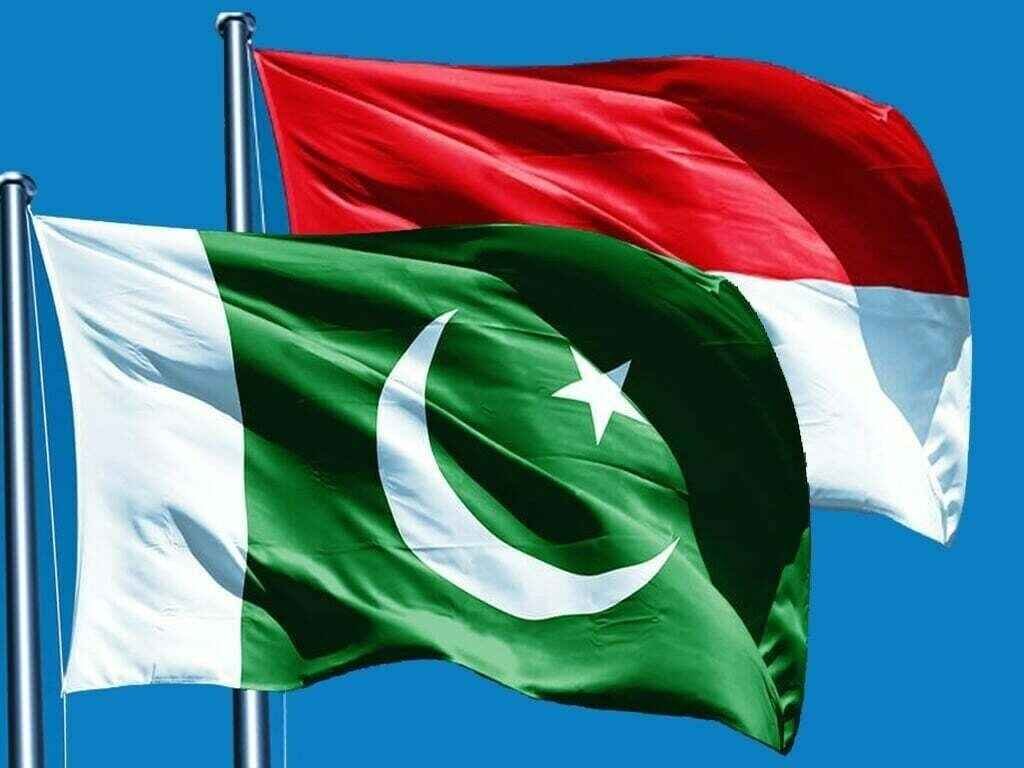
President Prabowo Subianto’s landmark visit to Pakistan in December 2025 has ignited a new era of geo-economic synergy, with upgraded trade agreements, diversified investments, and collaborative potentials promising mutual prosperity for both Muslim-majority powerhouses.
Key Points
- The upgrade from Preferential Trade Agreement (PTA) to Comprehensive Economic Partnership Agreement (CEPA) by 2027, coupled with seven new MoUs, offers a strategic framework for balanced trade, defense collaboration, and regional stability, addressing imbalances like Pakistan’s $4 billion palm oil dependency while fostering joint counter-terrorism and narcotics control.
- Untapped opportunities in IT, mining, agriculture, and halal industries beckon, with Indonesia’s nickel reserves enabling EV battery ventures and Pakistan’s Special Investment Facilitation Council (SIFC) streamlining access to ASEAN markets via Indonesia as a gateway.
- Evergreen shared histories—from Sukarno-Bhutto alliances to Islamic values—blend with contemporary data, revealing 40% trade growth in FY2024, yet underscoring potentials in high-tech exports and sustainable development amid global shifts.
- Enhanced ties mean affordable goods, job creation through SMEs, and cultural exchanges, ensuring food security via palm oil stability and health collaborations that benefit everyday lives in both nations.
Indonesia and Pakistan, two of the world’s largest Muslim-majority countries, share a bond rooted in historical solidarity and strategic geography. Indonesia, Southeast Asia’s economic powerhouse with a GDP exceeding $1 trillion, sits at the crossroads of the Indo-Pacific, while Pakistan, with its pivotal South Asian location and access to Central Asia via the China-Pakistan Economic Corridor (CPEC), offers complementary strengths. This evergreen foundation—built on mutual respect since diplomatic ties were established 75 years ago—has been revitalized by recent developments, particularly President Prabowo Subianto’s visit to Pakistan on December 8-9, 2025. Escorted by Pakistan Air Force jets and honored with the Nishan-e-Pakistan award, the visit marked a promotional milestone, emphasizing beneficial cooperation for shared growth.
The visit, Prabowo’s first to Pakistan as president, involved high-level meetings with Prime Minister Shehbaz Sharif and President Asif Ali Zardari. It culminated in agreements to rebalance trade, which has historically favored Indonesia due to Pakistan’s heavy reliance on imports like palm oil. Bilateral discussions highlighted the need for diversification, with both leaders committing to deeper concessions and removal of non-tariff barriers. This contemporary push aligns with evergreen geo-economic rationale: Indonesia’s resource-rich economy can fuel Pakistan’s industrial needs, while Pakistan’s textile and pharmaceutical expertise can penetrate Indonesia’s vast market of over 270 million consumers.
Current trade dynamics underscore this potential. Bilateral trade surged to $4.7 billion in FY2025, a 40% increase from $3.36 billion in 2023, reflecting robust growth amid global challenges. Indonesia’s exports to Pakistan dominate, primarily commodities, while Pakistan’s exports remain modest but promising in value-added sectors. The imbalance – over 90% of trade comprising Indonesian palm oil – presents an opportunity for rational cooperation, such as joint ventures in processing and distribution to stabilize prices and enhance food security for both populations.
To illustrate, consider the following trade data:
|
Year |
Indonesia Exports to Pakistan ($B) |
Pakistan Exports to Indonesia ($B) |
Total Trade ($B) |
Growth Rate (%) |
|
2023 |
3.22 |
0.30 |
3.52 |
– |
|
2024 |
3.52 |
0.40 |
3.92 |
11.4 |
|
2025 (FY) |
4.20 |
0.50 |
4.70 |
19.9 |
Sources: Observatory of Economic Complexity (OEC), Trading Economics, and Pakistan Today reports. Growth rates are year-over-year.
Top products further highlight synergies. Indonesia’s exports are resource-intensive, offering Pakistan essential inputs for its economy, while Pakistan’s offerings align with Indonesia’s demand for consumer and industrial goods:
|
Top Indonesian Exports to Pakistan (2023-2025) |
Value ($B, approx.) |
Top Pakistani Exports to Indonesia (2023-2025) |
Value ($B, approx.) |
|
Palm Oil |
2.29 |
Textiles (Cotton, Fabrics) |
0.10 |
|
Petroleum Gas |
0.30 |
Pharmaceuticals |
0.08 |
|
Coal Briquettes |
0.25 |
Processed Foods (Rice, Fruits) |
0.07 |
|
Rubber |
0.20 |
Sports Goods |
0.05 |
|
Nickel Products |
0.15 |
Halal Meat and Seafood |
0.04 |
This data reveals evergreen potentials: Pakistan could boost textile exports by $251 million annually, leveraging Indonesia’s apparel market, while Indonesia’s nickel (critical for EV batteries) could partner with Pakistan’s emerging auto sector for sustainable tech hubs.
The seven MoUs signed during the visit exemplify promotional collaboration. These include mutual recognition of higher education degrees, scholarships for Pakistani students, SME support to bridge Indonesia’s innovation with Pakistan’s entrepreneurial spirit, archival exchanges for cultural preservation, narcotics control to combat transnational threats, halal certification to tap the global $2 trillion halal economy, and health sector ties for pandemic preparedness. For policymakers, these agreements provide a roadmap for institutionalizing defense links, including joint exercises and training, enhancing regional security in a volatile world.
Investors stand to gain from targeted sectors. Indonesia’s Sovereign Wealth Fund (Danantara) and Pakistan’s SIFC are set to collaborate on mining, IT, and infrastructure, with potentials in digital connectivity and energy. Academics can delve into analytical frameworks: Indonesia’s ASEAN leadership offers Pakistan a gateway to a 600-million-person market, while CPEC could link Indonesian goods to Central Asia, fostering a “Southern Silk Road” narrative. Rational analysis suggests that addressing challenges like non-tariff barriers could double trade within a decade, per PTA reviews.
For the general public, these developments translate to tangible benefits i.e. affordable palm oil stabilizing food prices in Pakistan, job-creating IT collaborations, and cultural tourism boosting people-to-people ties. Evergreen elements, like shared non-aligned histories and Islamic finance synergies, ensure resilience against global disruptions, promoting a narrative of brotherly progress.
In geo-economic terms, this partnership counters fragmentation. Indonesia’s G20 role and Pakistan’s SCO membership amplify their voice in multilateral forums, advocating for equitable trade. By blending contemporary momentum from the visit with timeless strategic alignments, both nations can emerge as pivotal players in the Global South.
Conclusion
President Prabowo’s visit has transformed Indonesia-Pakistan relations from cordial to catalytic, promising balanced trade, innovative investments, and shared security. As both countries navigate geo-economic shifts, this alliance which rooted in history and fueled by data-driven cooperation offers a blueprint for prosperity. Policymakers must expedite CEPA negotiations, investors seize sectoral opportunities, academics refine analyses, and the public embrace the benefits. Ultimately, this partnership not only rebalances economies but fosters a brighter, interconnected future for over 500 million people.
* Dr. Muhammad Jahanzaib is the Founder & Chief Visionary Officer (CVO) of Diamanium Thinkers, a global think tank. He holds a PhD in International Relations, specializing in the intersection of geo-politics and geo-economics in Pakistan’s foreign and domestic policy. A double gold medalist and published scholar, he writes on economic intelligence, economic diplomacy, political economy, AI and regional cooperation in South Asia and beyond. He can be reached at jahanzaibdgc@gmail.com.
Key References
- Prabowo pushes trade rebalance in first visit to Pakistan – https://en.antaranews.com/amp/news/395887/prabowo-pushes-trade-rebalance-in-first-visit-to-pakistan
- Indonesia, Pakistan fast-track upgrade to CEPA by 2027 – https://en.antaranews.com/news/396046/indonesia-pakistan-fast-track-upgrade-to-cepa-by-2027
- Pakistan-Indonesia bilateral trade reaches $4.7 billion in FY25, FTA negotiations underway – https://profit.pakistantoday.com.pk/2025/09/03/pakistan-indonesia-bilateral-trade-reaches-4-7-billion-in-fy25-fta-negotiations-underway/
- Indonesia (IDN) and Pakistan (PAK) Trade – https://oec.world/en/profile/bilateral-country/idn/partner/pak
- The Southeast Asia Country Series: The Republic of Indonesia – https://www.pbc.org.pk/research/the-southeast-asia-country-series-the-republic-of-indonesia/
- Indonesia, Pakistan Agree on Seven Collaborations in Various Fields – https://setkab.go.id/en/indonesia-pakistan-agree-on-seven-collaborations-in-various-fields/
Pak, Indonesia ink 7 MoUs to bolster cooperation as PM Shehbaz hosts Prabowo – https://www.taxtmi.com/news?id=64100