
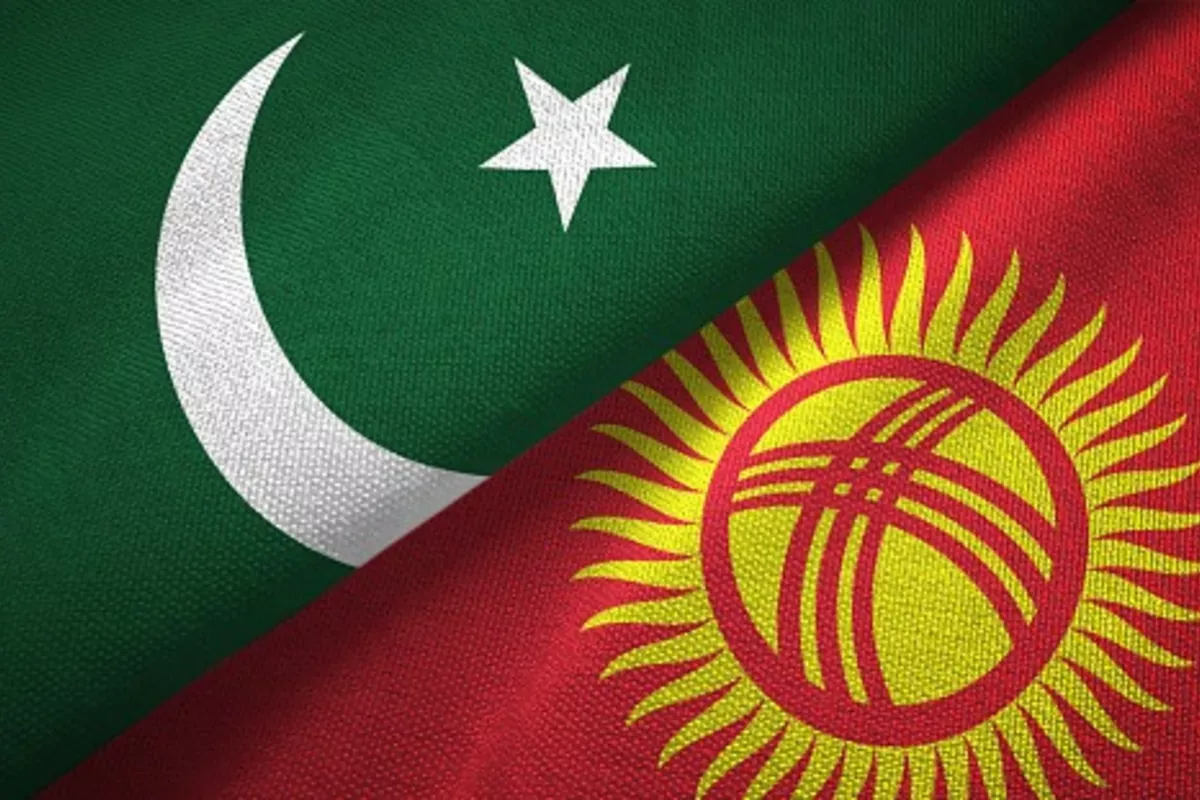
Kyrgyzstan and Pakistan are accelerating geo-economic ties via 15 MoUs in trade, energy, and connectivity, with 2025 bilateral trade at $16M targeting $200M by 2027, harnessing CASA-1000 for sustainable energy and mutual prosperity.
Key Points
- Kyrgyzstan’s hydropower aligns with Pakistan’s SIFC, advancing CASA-1000 for regional energy security and economic integration.
- Evidence leans toward trade surge, with 2025 volumes at $16M, aiming for $200M by 2027 through diversified exports in agriculture and textiles.
- It seems likely that December 2025 MoUs will catalyze investments, enhancing remittances and job opportunities for over 10,000 Pakistanis in Kyrgyzstan.
- The evidence points to mining and IT potentials, fostering innovation and resilience amid global transitions for both nations.
Building Strategic Bridges for Mutual Resilience
As global economies seek diversified partnerships, Kyrgyzstan and Pakistan are emerging as key allies in Central and South Asia, leveraging historical ties for geo-economic advancement. Diplomatic relations since 1992 gained momentum with Kyrgyz President Sadyr Japarov’s historic December 2025 visit to Islamabad—the first in 20 years—culminating in 15 MoUs across commerce, energy, mining, agriculture, tourism, culture, and education. Prime Minister Shehbaz Sharif emphasized Pakistan’s ports (Karachi, Bin Qasim, Gwadar) as gateways for landlocked Kyrgyzstan to global markets, reducing transit costs and enhancing connectivity under the Quadrilateral Traffic in Transit Agreement (QTTA). For policymakers, this framework prioritizes stability; the Joint Ministerial Commission (JMC) targets $200M bilateral trade by 2027 from $16M in 2025, reversing a dip from $11.2M in 2022-23 to $5.18M in 2024-25 due to global disruptions.
Energy cooperation headlines potentials, with CASA-1000 progressing: Kyrgyzstan’s segment is largely complete, Pakistan’s on track for mid-2026, enabling 1,300MW hydropower exports from Kyrgyzstan/Tajikistan to Pakistan/Afghanistan by 2026-2027. This $1.2B project, financed by the World Bank consortium, promises $50M annual transit revenues for Afghanistan while addressing Pakistan’s 5% demand growth with clean energy. Investors note SIFC’s incentives—10-year tax holidays in SEZs—yielding 12-15% ROIs in hydro and renewables. Bilateral trade data underscores momentum: In 2024, Pakistan exported $3.77M to Kyrgyzstan, Kyrgyzstan $1.84M to Pakistan, totaling ~$5.61M, with growth at 31.4% annualized for Kyrgyz exports (2018-2023). Kyrgyzstan’s GDP: $18B nominal ($64B PPP) in 2025; Pakistan’s $410.5B nominal ($1.67T PPP), fostering synergies—Kyrgyzstan’s resources meet Pakistan’s markets.
Kyrgyzstan’s 9% growth (driven by construction +30%, trade +11%) can leverage Pakistan’s SIFC for diversified investments, while Pakistan accesses Kyrgyz hydropower to cut imports. Analysis indicates resilience—Pakistan mitigates shortages, Kyrgyzstan expands beyond traditional allies amid geopolitical shifts.
Sectoral Horizons: Pathways to Prosperity
Agriculture offers immediate gains. Kyrgyzstan seeks Pakistani meat ($50M+), complementing Pakistan’s rice/dairy exports. MoUs target joint ventures in halal processing and irrigation, boosting yields 15% amid climate vulnerabilities. For academics, this models geo-economic empathy, blending Kyrgyzstan’s fruits with Pakistan’s markets for food security. The general public benefits from jobs and affordable imports.
Mining and industry shine. Kyrgyzstan’s gold/rare earths align with Pakistan’s needs; 2025 pacts explore exploration/tech transfers. Textiles scale up—Kyrgyz cotton enhances Pakistani manufacturing, potentially adding $100M trade. IT emerges: Pakistan’s IT sector (global 4th) pairs with Kyrgyzstan’s digital initiatives via MoUs. Tourism beckons: Eased visas could surge flows 20%, linking Pamirs to Himalayas for cultural enrichment.
Top traded products underscore dynamism:
Top Pakistani Exports to Kyrgyzstan (2024, $M) | Value | Top Kyrgyz Exports to Pakistan (2024, $M) | Value |
Pharmaceutical Products | 2.54 | Sheep/Lamb Skins | 0.16 |
Sugars | 1.0 | Grapes | 0.04 |
Textiles | 0.5 | Synthetic Yarn | 0.003 |
Dairy Products | 0.3 | Woven Cotton Fabrics | 0.001 |
Fruits/Nuts | 0.2 | Others | 0.0 |
Growth: Pakistan’s exports to Kyrgyzstan tripled 2021-2023, with overall trade up 62% in 2024. Challenges like transit via Afghanistan exist, but QTTA and China routes mitigate, fostering inclusive progress.
Innovative Frontiers: Connectivity and Sustainability
Emerging areas include blue economy and education. Pakistan’s maritime links complement Kyrgyzstan’s Caspian assets; scholarships empower youth in AI/engineering. Amid tensions, Gwadar enhances Kyrgyz exports, reducing dependencies. For investors, green projects yield ROIs; for the public, remittances uplift communities. This alliance revives Silk Road legacies, embodying shared prosperity.
Conclusion. Kyrgyzstan and Pakistan’s geo-economic synergy promises transformative growth, with 2025 trade at $16M advancing to $200M via MoUs, CASA-1000 and QTTA. Prioritizing energy, agriculture, and mining through SIFC drives sustainability, innovation, and jobs amid uncertainties. Policymakers should expedite PTAs for connectivity; investors target opportunities for ROIs. This partnership balances metrics while enriching cultural bonds, ensuring resilient futures.
* Dr. Muhammad Jahanzaib is the Founder & Chief Visionary Officer (CVO) of Diamanium Thinkers, a global think tank. He holds a PhD in International Relations, specializing in the intersection of geo-politics and geo-economics in Pakistan’s foreign and domestic policy. A double gold medalist and published scholar, he writes on economic intelligence, economic diplomacy, political economy, AI and regional cooperation in South Asia and beyond. He can be reached at jahanzaibdgc@gmail.com.
Key References
- Pakistan ready to provide Kyrgyzstan access to regional and global markets through our ports, says PM Shehbaz – https://www.dawn.com/news/1959137
- Pakistan, Kyrgyzstan sign 11 MoUs to boost trade, connectivity – https://mettisglobal.news/Pakistan-Kyrgyzstan-sign-11-MoUs-to-boost-trade-connectivity-57113
- Kyrgyzstan (KGZ) and Pakistan (PAK) Trade – https://oec.world/en/profile/bilateral-country/kgz/partner/pak
- Pakistan and Kyrgyzstan agree to enhance trade volume up to $100m – https://www.dawn.com/news/1927159
- CASA-1000 – HOME – https://www.casa-1000.org/
- Kyrgyzstan GDP – https://tradingeconomics.com/kyrgyzstan/gdp
- Economy of Pakistan – https://en.wikipedia.org/wiki/Economy_of_Pakistan
- The green great game: Crafting an EU-Central Asia energy alliance – https://ecfr.eu/publication/the-green-great-game-crafting-an-eu-central-asia-energy-alliance
- Pakistan proposes CASA Energy Market to transform regional energy trade – https://profit.pakistantoday.com.pk/2025/12/04/pakistan-proposes-casa-energy-market-to-transform-regional-energy-trade
- Pakistan’s Resolve To Expand Economic Stature In Kyrgyzstan – OpEd – https://www.eurasiareview.com/05122025-pakistans-resolve-to-expand-economic-stature-in-kyrgyzstan-oped