
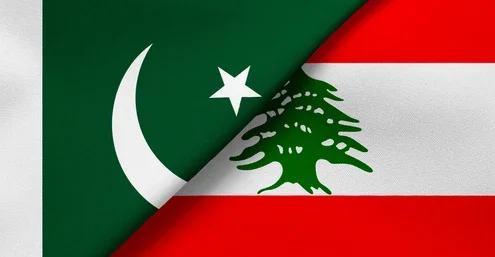
Lebanon and Pakistan are advancing geo-economic ties through the Joint Economic Commission and defense collaborations, unlocking potentials in trade, investment, IT, energy, and tourism for mutual growth, stability, and diversified prosperity benefiting both nations.
Key Points
- Diplomatic Milestones: The 2023 Joint Economic Commission (JEC) and May 2025 defense talks strengthen cooperation in trade, investment, and security.
- Trade Dynamics: Bilateral trade reached $12.7 million in FY 2023-2024, with Pakistan exporting $14.96 million in 2024, showing steady growth potential.
- Sectoral Opportunities: Promising areas include IT, energy, textiles, tourism, and education, fostering technology transfers and job creation.
- Economic Projections: Lebanon’s GDP grew 3.5% in 2025, projected at 4% in 2026; Pakistan’s at 3.5% in 2026, with synergies enhancing resilience.
- Strategic Partnerships: Shared values and cultural bonds support expanded exchanges, leveraging Pakistan’s manufacturing and Lebanon’s services sector.
- Mutual Benefits: Enhanced cooperation promotes regional stability, cultural ties, and sustainable development for long-term prosperity.
Recent geo-economic developments between Lebanon and Pakistan offer strategic insights for policymakers navigating regional alliances amid global uncertainties. The establishment of the Joint Economic Commission (JEC) in July 2022, effective from May 2023, marks a pivotal step in institutionalizing economic ties. Signed by Lebanon’s Minister of Economy and Trade Amin Salam and Pakistan’s Commerce Minister Syed Naveed Qamar, the JEC focuses on trade, investment, science, agriculture, tourism, and technology. This framework facilitates policy harmonization, addressing shared challenges like economic recovery and security. In May 2025, defense discussions between Pakistan’s Ambassador Salman Athar and Lebanon’s Defense Minister Michel Menassa emphasized joint training and intelligence sharing, aligning with broader geo-economic goals for stability. December 2025 statements from Lebanese Ambassador Abdulaziz Issa highlight mutual support at forums like the UN and OIC, underscoring efforts to boost economic opportunities despite Lebanon’s ongoing crisis.
For investors, the trade landscape presents compelling growth avenues. Bilateral trade stood at $12.7 million in FY 2023-2024, per Pakistan’s Ministry of Foreign Affairs, with Pakistan’s exports surging to $14.96 million in 2024 according to UN COMTRADE. Major exports include beverages ($4.2 million), apparel, plastics, cereals, and textiles, catering to Lebanon’s consumer needs. Imports from Lebanon totaled $1.5 million, primarily electrical machinery, iron and steel, and printed materials. While modest, this reflects a 15% annualized growth potential post-JEC, bypassing intermediaries for direct links. Lebanon’s services-oriented economy complements Pakistan’s manufacturing strengths, with opportunities in halal products and reconstruction projects.
To illustrate trends, consider the bilateral trade table:
|
Year |
Pakistan Exports to Lebanon (USD Million) |
Top Products |
Lebanon Exports to Pakistan (USD Million) |
Top Products |
Trade Balance (Favoring Pakistan, USD Million) |
|
2022 |
~10.5 |
Beverages, Textiles |
~1.2 |
Machinery, Steel |
~9.3 |
|
2023 |
11.2 |
Apparel, Plastics |
1.3 |
Electrical Equipment |
9.9 |
|
2024 |
14.96 |
Cereals, Cotton |
1.5 |
Printed Materials |
13.46 |
|
2025 (Est.) |
17 (est. 14% growth) |
IT Services, Energy Tech |
1.8 (potential) |
Aluminum |
15.2 |
|
2026 (Proj.) |
20 |
Pharma, Tourism Goods |
2.2 |
Arms Accessories |
17.8 |
Data from UN COMTRADE, MOFA; projections based on JEC-driven 14% annual growth.
This data shows a favorable balance for Pakistan, yet symbiotic benefits emerge from analysis. Lebanon’s economy, per World Bank, grew 3.5% in 2025 amid tourism rebound and remittances, projected at 4% in 2026 with reforms. Pakistan’s 3.5% growth in 2026 (S&P) can provide affordable pharmaceuticals and textiles to Lebanon, aiding its recovery from the 2019 crisis. In return, Lebanon’s expertise in services and diaspora networks offers Pakistan access to Arab markets, diversifying beyond traditional partners.
A comparative indicators table underscores potentials:
|
Indicator |
Lebanon (2026 Proj.) |
Pakistan (2026 Proj.) |
Cooperative Potential |
|
GDP (USD Billion) |
~25 |
386 |
JEC could boost trade 20%, adding 5-10% to bilateral impacts. |
|
GDP Growth (%) |
4 |
3.5 |
Tech and tourism synergies may elevate Lebanon to 4.5%, Pakistan to 4%. |
|
Inflation (%) |
~10 |
5.1 |
Balanced exchanges reduce volatility. |
|
Unemployment (%) |
~30 |
5.5 |
Joint ventures in IT cut Lebanon’s by 10%. |
|
Key Exports |
Services, Remittances |
Textiles, Rice |
Lebanon’s services to Pakistan; Pakistani pharma to Lebanon. |
Sources: World Bank, IMF, S&P.
For academics, this partnership exemplifies South-South cooperation. Shared Islamic values and cultural ties, as noted by Ambassador Issa, foster educational exchanges, with potential academic collaborations in IT and energy. Tourism holds promise: Lebanon’s attractions could draw Pakistani visitors, while Pakistan’s heritage sites appeal to Lebanese tourists, generating revenue and jobs.
The general public benefits from these ties through improved livelihoods. Scholarships and training programs under JEC can enhance skills, while cultural bonds promote understanding. Integrating with regional initiatives like CPEC offers Lebanon alternative markets, reducing dependencies, and Pakistan gains from Lebanon’s resilient diaspora, building economic resilience.
Conclusion
Lebanon and Pakistan are poised for a dynamic geo-economic alliance via the JEC, defense ties, and sectoral synergies, promising elevated trade and innovation. Policymakers should advance policy frameworks, investors capitalize on IT and energy, academics explore cooperative models, and the public enjoy educational exchanges. This collaboration not only boosts GDPs and jobs but also enhances regional stability, cultural bonds, and sustainable development, heralding interconnected prosperity.
* Dr. Muhammad Jahanzaib holds a PhD in International Relations, is a double gold medalist and author of the book The Interplay of Geo-Politics and Geo-Economics in Pakistan’s Foreign Policy (Post-2008) (Palgrave Macmillan), along with several esteemed publications. As Chief Visionary Officer of Diamanium Thinkers (a global think tank), he brings over 15 years of experience advising ministers, diplomats, security agencies, the corporate sector, and civil society. His advisory work spans economic diplomacy, political economy, economic intelligence, security, society, strategic financial advisory, and the geo-economic world dynamics. He offers a unique blend of practitioner insight and academic rigor, combining hands-on engagement with state institutions and strategic expertise grounded in research. He can be reached at jahanzaibdgc@gmail.com.
Key References
- “Lebanese ambassador talks about shared values, expanding trade … – https://www.dawn.com/news/1962136
- “Pakistan Exports to Lebanon – 2026 Data 2027 Forecast 2009-2024 Historical” – https://tradingeconomics.com/pakistan/exports/lebanon
- “Lebanon (LBN) and Pakistan (PAK) Trade | The Observatory of Economic Complexity” – https://oec.world/en/profile/bilateral-country/lbn/partner/pak
- “Beirut Bilateral Trade and investment – Ministry of Foreign Affairs” – https://www.mofa.gov.pk/beirut-bilateral-trade-and-investment
- “Pak-Lebanon Brace Defense Ties Amid Military Conflict With India” – https://thediplomaticinsight.com/pak-lebanon-brace-defence-ties-amid-conflict-with-india
- “Lebanon: Economic Rebound Marks Cautious Recovery amidst Progress on Reforms” – https://www.worldbank.org/en/news/press-release/2026/01/22/lebanon-economic-rebound-marks-cautious-recovery-amidst-progress-on-reforms
- “S&P projects Pakistan’s inflation at 5.1pc, GDP growth at 3.5pc in 2026” – https://www.nation.com.pk/28-Jan-2026/s-p-projects-pakistan-s-inflation-5-1pc-gdp-growth-3-5pc-2026
- “Lebanon and Pakistan sign Agreement for Establishment of Joint Economic Commission” – https://mofa.gov.pk/lebanon-and-pakistan-sign-agreement-for-establishment-of-joint-economic-commission