
The Deobandi school of Islam, born in nineteenth century British India, has long been more than a religious movement. It represents a deeply entrenched social and ideological network that has shaped politics across South Asia. In Pakistan, Deobandi thought became an instrument of state strategy, particularly during the Afghan jihad against the Soviet Union in the 1980s and later through support for the Afghan Taliban. The state saw in the Deobandi ideology both moral legitimacy and mobilization potential for its regional ambitions. Yet, in recent years, Pakistan’s narrative toward sections of the Deobandi movement has shifted from cooperation to confrontation. By labeling certain Deobandi jihadists as “Khawarij” or “Indian proxies,” the state has crossed an ideological boundary that once sustained its strategic depth. This shift risks alienating the Deobandi constituency, undermining religious legitimacy, and perpetuating instability.
During the Soviet-Afghan War, the alignment between Pakistan, the United States, and Saudi Arabia rested on a shared goal of resisting Soviet expansion. Operation Cyclone, one of the largest covert programs in history, channeled billions of dollars through Pakistan’s intelligence networks to Afghan mujahideen groups. Many of these fighters were trained, housed, and educated in Deobandi madrassas established along Pakistan’s western border. These institutions, backed by Saudi funds and state patronage, became the ideological incubators of anti-Soviet jihad. By the late 1980s, Pakistan hosted thousands of Deobandi madrassas that supplied both manpower and ideological consistency for the resistance. For the Pakistani state, Deobandi networks represented a disciplined, religiously motivated, and anti-communist force—one that could be mobilized at will to advance geopolitical aims.
The arrangement continued into the 1990s when Pakistan supported the emergence of the Taliban in Afghanistan. The Taliban’s Deobandi foundation and Pakistan’s strategic depth doctrine complemented one another. The relationship was not merely tactical, it was rooted in shared theological and political logic. The Deobandi interpretation of jihad as defense against foreign domination fitted well with Pakistan’s post-1979 security calculus. However, after 2001, when the United States invaded Afghanistan and the Taliban regime collapsed, the relationship between Pakistan and Deobandi-inspired groups began to fracture. The rise of the Tehreek-e-Taliban Pakistan (TTP) turned former allies into adversaries. The state, once the sponsor of jihad, became its target.
In response, Pakistan’s official narrative began to shift. Military and political leaders increasingly used theological labels such as “Khawarij” to describe militant Deobandi groups attacking the state. The term historically refers to early Muslim rebels who declared other Musliminstability, a grave religious accusation. More recently, officials have also described these groups as “Indian proxies,” a rhetorical device aimed at externalizing domestic militancy. The goal behind this discourse is clear: to delegitimize militants by stripping them of both religious and nationalist justification. Yet, the consequences of such labeling are complex and potentially harmful. It intrudes upon religious authority and alienates a wider community of Deobandi clerics and followers who see this language as an attack on their faith’s legitimacy rather than on violence itself.
Empirical evidence shows that this narrative has gained traction within state institutions. The ISPR has repeatedly issued statements vowing to “tighten the noose around Khawarij terrorists and their facilitators.” Government officials frequently equate terrorism with Khawarij movements, blending counterterrorism rhetoric with theological verdicts. This trend may satisfy public demand for religiously grounded condemnation of militancy, but it risks backfiring by turning a political struggle into an ideological war. Deobandi scholars, both in Pakistan and Afghanistan, increasingly view this rhetoric as overreach. Senior Afghan Taliban leaders, including Mullah Mohammad Yaqoob and Amir Khan Muttaqi, have emphasized that jihad can only be declared by legitimate Islamic authority, implicitly rejecting Pakistan’s theological framing of militancy as heresy.
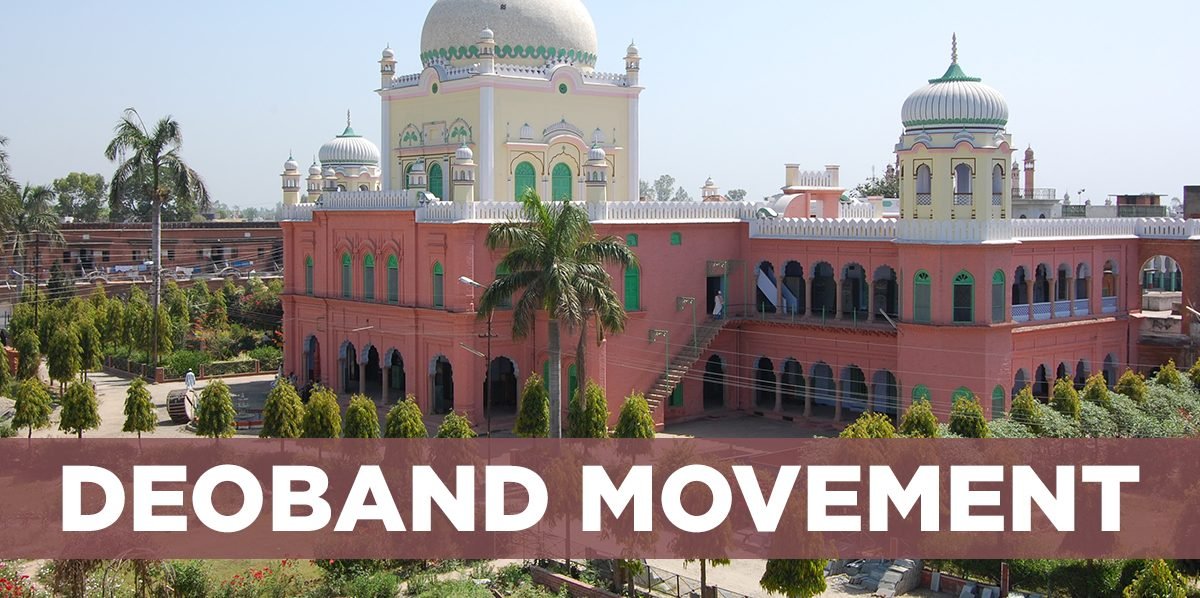
The recent visit of Afghanistan’s interim foreign minister Amir Khan Muttaqi to Darul Uloom Deoband in India illustrates this shift vividly. The visit was not just symbolic; it carried a strategic message. By visiting the historic seminary that gave birth to the Deobandi movement, Muttaqi signaled that the Taliban leadership recognizes Deoband’s global spiritual influence and that they have an alternative ideological anchor beyond Pakistan. The move also served as a subtle warning to Islamabad—that if Pakistan continues to drift from its historical alignment with Deobandi ideology or continues labeling parts of it as “Khawarij,” the Taliban can turn toward India, building religious and diplomatic bridges that bypass Pakistan altogether. This gesture underscored the fact that religious legitimacy in South Asian Islam is not confined to borders. Deobandi authority remains transnational, and attempts to control or redefine it through state rhetoric can lead to strategic isolation.
This development should concern Pakistan’s policymakers. The Deobandi ideological space has been a pillar of Pakistan’s regional leverage since the 1980s. Alienating it could diminish Pakistan’s influence not only in Afghanistan but across South Asian religious politics. If Pakistan’s state narrative continues to delegitimize sections of the Deobandi tradition, moderate clerics and seminaries may distance themselves from state institutions, while extremist groups exploit the alienation for recruitment. The long-term result could be a divided religious landscape, a weakened ideological consensus, and sustained cycles of insurgency.
To avoid this outcome, Pakistan needs to recalibrate its approach. The state must distinguish between theological condemnation and security policy. Counterterrorism should be framed in legal, ethical, and political terms, not in theological decrees that offend entire religious schools. Constructive engagement with non-violent Deobandi scholars could restore trust and allow the state to isolate militancy without attacking the broader ideology. Regulation of madrassas should focus on transparency and education reform rather than suspicion or coercion. Most importantly, Pakistan must avoid externalizing its security failures by invoking terms like “Indian proxies” without solid evidence, as such narratives fuel conspiracy thinking and deepen sectarian mistrust.
The Deobandi movement remains one of the most influential religious networks in the Muslim world. For decades, Pakistan benefitted from its alignment with Deobandi clerical authority, using it to project power and legitimacy. But this alliance depends on mutual respect for ideological boundaries. The visit of Amir Khan Muttaqi to Darul Uloom Deoband serves as a reminder that these networks transcend geography and that religious legitimacy cannot be monopolized by any single state. If Pakistan continues to portray segments of the Deobandi community as heretics or foreign agents, it risks losing not only ideological allies but also the strategic influence that once came from its unique position as the bridge between faith and power. What was once an alliance built on shared conviction may then become a source of perpetual conflict and regional instability.