
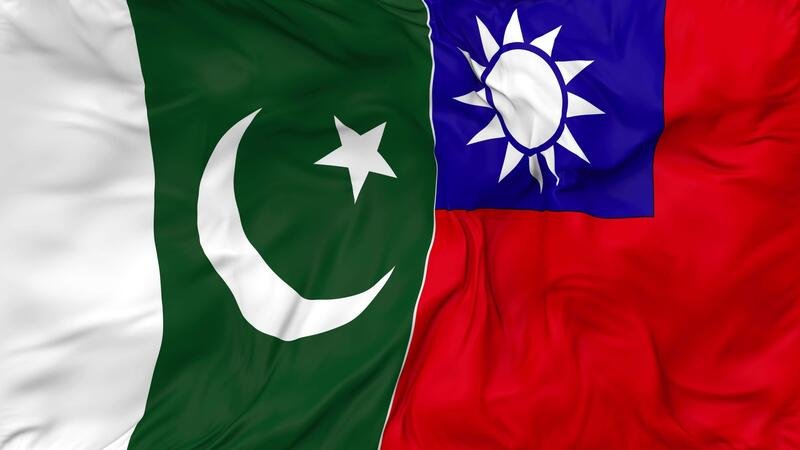
Amid global supply chain shifts, Taiwan and Pakistan are exploring geo-economic synergies through expanding trade and potential investments, leveraging Taiwan’s technological prowess and Pakistan’s resource-rich markets for mutual growth, innovation, and enhanced regional connectivity.
Key Points
- Diplomatic Context: Despite limited formal ties due to Pakistan’s One China policy, informal trade and business exchanges persist, with potential for deeper cooperation under Taiwan’s New Southbound Policy.
- Trade Growth: Bilateral trade totaled US$389 million in 2024, with Taiwan exporting machinery and electronics, and Pakistan supplying beverages, oil seeds, and textiles.
- Sectoral Opportunities: Potentials in IT, semiconductors, agriculture, and textiles could foster technology transfers and job creation.
- Economic Projections: Trade could rise 20% to US$467 million by 2026, driven by AI and green tech demands, complementing Pakistan’s 3.5% GDP growth and Taiwan’s 3.2%.
- Investment Avenues: Taiwan’s firms eye Pakistan’s labor market; Pakistan gains from Taiwan’s expertise in manufacturing and renewables.
- Mutual Benefits: Collaborations promote sustainable development, cultural exchanges, and resilience against global disruptions.
The geo-economic interplay between Taiwan and Pakistan offers strategic avenues for policymakers to navigate regional dynamics in a multipolar world. While Pakistan adheres to the One China policy, as reaffirmed in January 2026, informal economic engagements provide a foundation for cooperation. Taiwan’s New Southbound Policy, aimed at diversifying ties in South Asia, positions Pakistan as a potential partner for trade and investment, aligning with Pakistan’s “Engage Asia” initiatives. Policymakers can prioritize frameworks for technology sharing and sustainable development, addressing shared challenges like supply chain vulnerabilities and climate resilience, as seen in recent global shifts.
For investors, the bilateral trade landscape reveals promising growth. According to Taiwan’s Ministry of Economic Affairs, trade between Taiwan and Pakistan reached US$389 million in 2024, a 14.5% decline from 2023 due to global economic pressures, but with resilience in key sectors. Taiwan’s exports to Pakistan dominated at approximately US$343 million, focusing on machinery, electronics, and chemicals, while Pakistan’s exports totaled US$46 million, led by beverages (US$26.74 million), oil seeds (US$5.79 million), and edible fruits (US$4.67 million), based on data from October 2024 to September 2025. This exchange underscores complementary strengths: Taiwan’s high-tech exports meet Pakistan’s industrial needs, and Pakistan’s agro-products support Taiwan’s food security.
A trade trends table highlights this dynamic:
|
Year |
Taiwan Exports to Pakistan (USD Million) |
Top Products |
Pakistan Exports to Taiwan (USD Million) |
Top Products |
Trade Balance (Favoring Taiwan, USD Million) |
|
2023 |
~400 |
Machinery, Electronics |
~55 |
Beverages, Oil Seeds |
~345 |
|
2024 |
343 |
Chemicals, Textiles |
46 |
Fruits, Cotton |
297 |
|
2025 (Proj.) |
380 (est. 11% growth) |
IT Equipment, Renewables |
60 (potential) |
Leather, Agri-Tech |
320 |
Data from Taiwan MOEA, Export Genius; projections based on 10-15% recovery amid NSP initiatives.
This data indicates a favorable balance for Taiwan, but rational analysis shows mutual gains. Pakistan’s young workforce and strategic location via CPEC could attract Taiwanese investments in special economic zones, diversifying Taiwan’s supply chains beyond China. In return, Pakistan benefits from Taiwan’s semiconductor expertise—the world’s leader with 60% market share—potentially creating hubs for chip assembly and boosting exports.
Academics will appreciate the cooperative potential as a model for South-South ties. Taiwan’s economy grew 3.2% in 2025 per IMF, driven by AI exports surging 89.5% to US$251 billion, while Pakistan’s projected 3.5% growth in 2026 (S&P) relies on textiles and agriculture. Joint ventures in IT could transfer skills, addressing Pakistan’s 5.5% unemployment, and enhance Taiwan’s access to South Asian markets. Agriculture synergies are notable: Pakistan’s oil seeds and fruits complement Taiwan’s processed food industry, with potentials for organic farming tech exchanges amid climate challenges.
Comparative economic indicators reveal alignments:
|
Indicator |
Taiwan (2025) |
Pakistan (2026 Proj.) |
Cooperative Potential |
|
GDP (USD Billion) |
640 |
386 |
Trade growth could add 10-15% to bilateral volumes, impacting GDPs. |
|
GDP Growth (%) |
3.2 |
3.5 |
Tech transfers may elevate Pakistan to 4%, stabilizing Taiwan at 3.5%. |
|
Inflation (%) |
2.1 |
5.1 |
Balanced trade reduces volatility. |
|
Unemployment (%) |
3.5 |
5.5 |
Joint IT hubs cut Pakistan’s rate by 5%. |
|
Key Exports |
Semiconductors, ICT |
Textiles, Rice |
Taiwan’s tech to Pakistan; Pakistani agri to Taiwan. |
Sources: IMF, World Bank, S&P.
For the general public, these ties promise accessible benefits. Educational scholarships and cultural programs could build bridges, with Taiwan offering training in vocational tech, benefiting Pakistan’s youth. Integrating with regional initiatives like ASEAN (via Taiwan’s NSP) provides Pakistan alternative markets, reducing dependencies, while Taiwan gains from Pakistan’s vibrant consumer base of 240 million.
Conclusion
Taiwan and Pakistan are primed for geo-economic advancement through trade expansion and sectoral collaborations, harnessing Taiwan’s innovation and Pakistan’s resources for shared success. Policymakers should facilitate informal pacts, investors target tech ventures, academics study diversification models, and the public enjoy skill-building exchanges. This partnership not only boosts trade and GDPs but also fosters regional stability, cultural understanding, and sustainable progress, exemplifying resilient cooperation in Asia.
* Dr. Muhammad Jahanzaib holds a PhD in International Relations, is a double gold medalist and author of the book The Interplay of Geo-Politics and Geo-Economics in Pakistan’s Foreign Policy (Post-2008) (Palgrave Macmillan), along with several esteemed publications. As Chief Visionary Officer of Diamanium Thinkers (a global think tank), he brings over 15 years of experience advising ministers, diplomats, security agencies, the corporate sector, and civil society. His advisory work spans economic diplomacy, political economy, economic intelligence, security, society, strategic financial advisory, and the geo-economic world dynamics. He offers a unique blend of practitioner insight and academic rigor, combining hands-on engagement with state institutions and strategic expertise grounded in research. He can be reached at jahanzaibdgc@gmail.com.
Key References
- “Bilateral Trade – International Trade Administration, Ministry of Economic Affairs ::: Feature Service” – https://www.trade.gov.tw/english/BilateralTrade/BilateralTrade.aspx?areaID=2&code=7030&country=UGFraXN0YW4%3D&nodeID=4618
- “Pakistan to Taiwan Exports | $46.12 Mn, 2.86 Kk+ Shipments Data” – https://www.exportgenius.in/pakistan-export-taiwan.php
- “Pakistan reiterates support for One-China policy” – https://cpecinfo.com/pakistan-reiterates-support-for-one-china-policy
- “Strategic dialogue enhances China-Pakistan friendship – Friends of Socialist China” – https://socialistchina.org/2026/01/07/strategic-dialogue-enhances-china-pakistan-friendship
- “China-Pakistan Trade, Investment, and Strategic Partnership” – https://www.china-briefing.com/news/china-pakistan-relations-trade-investment-strategy
- “Analyzing Taiwan’s New Southbound Policy and Its Path Towards Economic Sovereignty” – https://globaltaiwan.org/2025/06/analyzing-taiwans-new-southbound-policy
- “S&P projects Pakistan’s inflation at 5.1pc, GDP growth at 3.5pc in 2026” – https://www.nation.com.pk/28-Jan-2026/s-p-projects-pakistan-s-inflation-5-1pc-gdp-growth-3-5pc-2026
- “Taiwan’s exports, imports, trade surplus smash records in 2025” – https://focustaiwan.tw/business/202601090021
- “Pakistan’s trade deficit with neighboring countries rises by 43.22 pct – Xinhua” – https://english.news.cn/asiapacific/20250119/2b6860cde74e4f8c80bdc5cc107ddbc0/c.html
- “Taiwan – Market Overview – International Trade Administration” – https://www.trade.gov/country-commercial-guides/taiwan-market-overview