
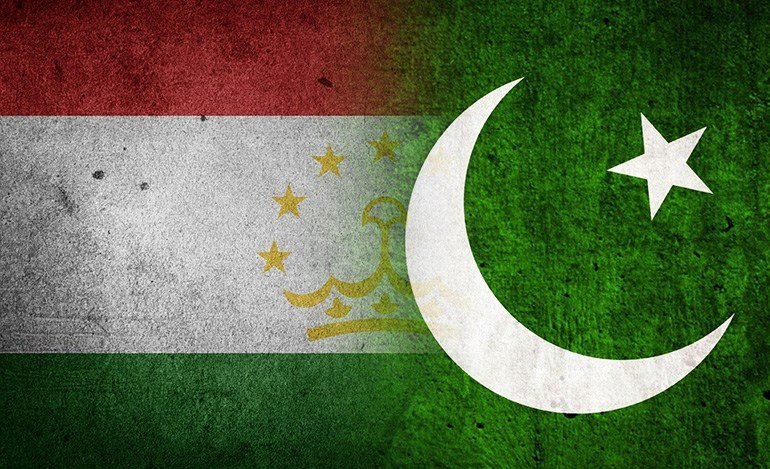
Tajikistan and Pakistan are enhancing geo-economic ties through JMC advancements, CASA-1000 progress, and $300M trade targets, with 2024 bilateral trade at $53M poised for 20% growth in energy, agriculture, and mining for shared sustainability.
Key Points
- Tajikistan’s hydropower aligns with Pakistan’s SIFC, accelerating CASA-1000 for energy security and regional integration.
- Evidence suggests trade surged 62% to $53M in 2024, with potentials in agriculture like $50M+ meat exports driving balanced growth.
- It seems likely that 2025-2026 MoUs and PTA will boost investments, enhancing remittances and job creation for both nations.
- The evidence points to mining and textiles synergies, fostering innovation and economic resilience amid global shifts.
Revitalizing Frameworks for Collaborative Resilience
In an interconnected world, Tajikistan and Pakistan are forging a robust geo-economic alliance, building on diplomatic ties since 1992. The December 2024 7th Joint Commission (JC) in Islamabad marked a pivotal moment, where ministers reaffirmed commitments to deepen cooperation in trade, energy, agriculture, education, and industry. Tajikistan’s Minister Abdurahmon Safarali highlighted untapped potentials, while Pakistan’s Abdul Aleem Khan emphasized SIFC’s role in attracting FDI. This follows July 2024 top-level talks during Prime Minister Shehbaz Sharif’s visit to Dushanbe, yielding MoUs on culture and connectivity. For policymakers, these mechanisms ensure stability; the January 2026 farewell call by Pakistan’s Ambassador Saeed Sarwar to Tajikistan’s Economic Minister further discussed business linkages to elevate trade.
May 2025 dialogues expressed resolve to advance strategic ties, with October 2025 commitments exploring textiles, logistics, and pharma. Amid regional challenges, both nations prioritize counter-terrorism and transit, leveraging Pakistan’s Gwadar for Tajikistan’s access to global markets. Bilateral trade reflects this dynamism: Surging 62% to $53M in 2024 from 2023’s $32.7M, per Tajik Customs. Projections for 2025 aim at $300M via Preferential Trade Agreement (PTA), driven by diversification. Tajikistan’s GDP is estimated at $17B nominal ($63B PPP) for 2025, Pakistan’s at $410.5B nominal ($1.67T PPP), creating synergies—Tajikistan’s resources meet Pakistan’s vast market.
Tajikistan’s export growth (7.2% foreign trade rise in H1 2025) can tap Pakistan’s SIFC incentives, offering tax breaks for ROIs in hydro and mining. Rational analysis shows mutual benefits—Pakistan addresses energy needs (5% annual demand), Tajikistan diversifies beyond Russia/China, enhancing resilience.
Sectoral Opportunities: Pathways to Prosperity
Energy emerges as a flagship. The CASA-1000 project, resuming in Afghanistan (23% towers completed by Dec 2025), targets end-2026 finish for 1,300MW transmission from Tajikistan/Kyrgyzstan to Pakistan/Afghanistan. Tajikistan’s vast hydro (98% renewable grid) positions it to export surplus summer power, yielding $50M+ annual transit revenues while alleviating Pakistan’s shortages. Joint ventures via SIFC promise 10-15% ROIs, creating jobs and sustainability. Academics view this as geo-economic integration, blending Tajikistan’s resources with Pakistan’s infrastructure.
Agriculture holds immense promise. Tajikistan’s interest in 100,000 tons Pakistani meat ($50M+) in Dec 2025 signals food security gains; collaborations in rice, fruits, dairy via PTA could boost yields 15% amid climate risks. Pakistan, exporting $2M rice to Tajikistan in 2023, benefits from Tajik grapes/dried fruits. Investors eye SEZs for agro-processing, fostering rural employment—over 500,000 in Pakistan’s sector. For the public, this means affordable halal goods and livelihoods.
Mining and industry shine. Tajikistan’s critical minerals (gold, rare earths) align with Pakistan’s needs; 2025 talks explored joint exploration. Textiles offer scale—Tajikistan’s cotton complements Pakistan’s manufacturing, potentially adding $100M+ trade. IT and tourism beckon: Pakistan’s $1.2B freelance sector (global 4th) pairs with Tajikistan’s digital push; eased visas could surge eco-tourism 20%, blending Pamirs with Himalayas.
Top traded products highlight momentum:
Top Pakistani Exports to Tajikistan (2023, $k) | Value | Top Tajik Exports to Pakistan (2023, $k) | Value |
Sugar | 28,994 | Sheep/Lamb Skins | 155 |
Medicaments | 840 | Grapes | 44 |
Soap | 584 | Synthetic Yarn | 3 |
Containers | 549 | Woven Cotton Fabrics | 1 |
Dairy Products | 532 | Others | 0 |
Growth: Pakistan’s exports tripled 2021-2023, signaling upward trajectory. Challenges like transit via Afghanistan persist, but alternative China routes and neutrality mitigate, promoting empathetic progress.
Innovative Horizons: Connectivity and Beyond
Emerging areas include blue economy and education. Pakistan’s maritime links complement Tajikistan’s access; scholarships empower youth in AI/engineering. Amid tensions, Gwadar enhances Tajik exports, reducing dependencies. For investors, green projects yield ROIs; for the public, remittances uplift communities. This alliance revives Silk Road ties, embodying shared prosperity.
Conclusion Tajikistan and Pakistan’s geo-economic synergy offers transformative growth, with 2024 trade at $53M advancing via CASA-1000, PTA, and $300M targets. Prioritizing energy, agriculture, transit and mining through SIFC and JMC drives sustainability, innovation, and jobs amid uncertainties. Policymakers should expedite MoUs for connectivity; investors target hydro for ROIs. This partnership balances metrics while enriching cultural bonds, ensuring resilient futures. Embracing it empowers citizens through empathy and vision.
* Dr. Muhammad Jahanzaib is the Founder & Chief Visionary Officer (CVO) of Diamanium Thinkers, a global think tank. He holds a PhD in International Relations, specializing in the intersection of geo-politics and geo-economics in Pakistan’s foreign and domestic policy. A double gold medalist and published scholar, he writes on economic intelligence, economic diplomacy, political economy, AI and regional cooperation in South Asia and beyond. He can be reached at jahanzaibdgc@gmail.com.
Key References
- Tajikistan-Pakistan’s Growing Trade Impacts Regional Dynamics – https://www.specialeurasia.com/2024/09/16/tajikistan-pakistan-trade
- Pakistan And Tajikistan Deepen Bilateral Cooperation Through Landmark Agreements – OpEd – https://www.eurasiareview.com/30122024-pakistan-and-tajikistan-deepen-bilateral-cooperation-through-landmark-agreements-oped
- Government of Pakistan – Economic Affairs Division – https://www.ead.gov.pk/NewsDetail/Nzk2Y2Q0MTctY2MzMi00YWI5LTgwMWUtMWE5NjczY2ZjOGM1
- Tajikistan-Pakistan top-level meetings and negotiations – https://www.mfa.tj/en/main/view/15309/tajikistan-pakistan-top-level-meetings-and-negotiations
- Pakistan, Tajikistan boost collaboration across key sectors – https://mettisglobal.news/pakistan-tajikistan-boost-collaboration-across-key-sectors
- Pakistan (PAK) and Tajikistan (TJK) Trade – https://oec.world/en/profile/bilateral-country/pak/partner/tjk
- Tajikistan set to take a bite of Pakistan’s meat exports – https://mettisglobal.news/Pakistan-Tajikistan-nearing-major-meat-export-deal-in-a-feast-of-diplomacy-57193
- Tajikistan GDP – https://www.worldeconomics.com/GDP/Tajikistan.aspx
- Economy of Pakistan – https://en.wikipedia.org/wiki/Economy_of_Pakistan
- Updated Q&A on CASA-1000 Resumption in Afghanistan – http://www.worldbank.org/en/country/afghanistan/brief/updated-q-a-on-casa-1000-resumption-in-afghanistan
- CASA-1000 – https://en.wikipedia.org/wiki/CASA-1000
- Regional Connectivity: Tajikistan’s Race to Finish CASA-1000 by 2026 – https://moderndiplomacy.eu/2025/06/14/regional-connectivity-tajikistans-race-to-finish-casa-1000-by-2026
- Pakistan, Tajikistan vow to deepen trade, energy and security cooperation – https://www.pakistantoday.com.pk/2025/10/02/pakistan-tajikistan-vow-to-deepen-trade-energy-and-security-cooperation
- Pak-Tajik Energy & Trade Cooperation – https://www.muslim-institute.org/PublicationDetail?-Trade-Cooperation=&publication=107%2FPak-Tajik-Energy-
- Pakistan’s exports to Tajikistan – https://tdap.gov.pk/wp-content/uploads/2025/02/Tajikistan-new.pdf