
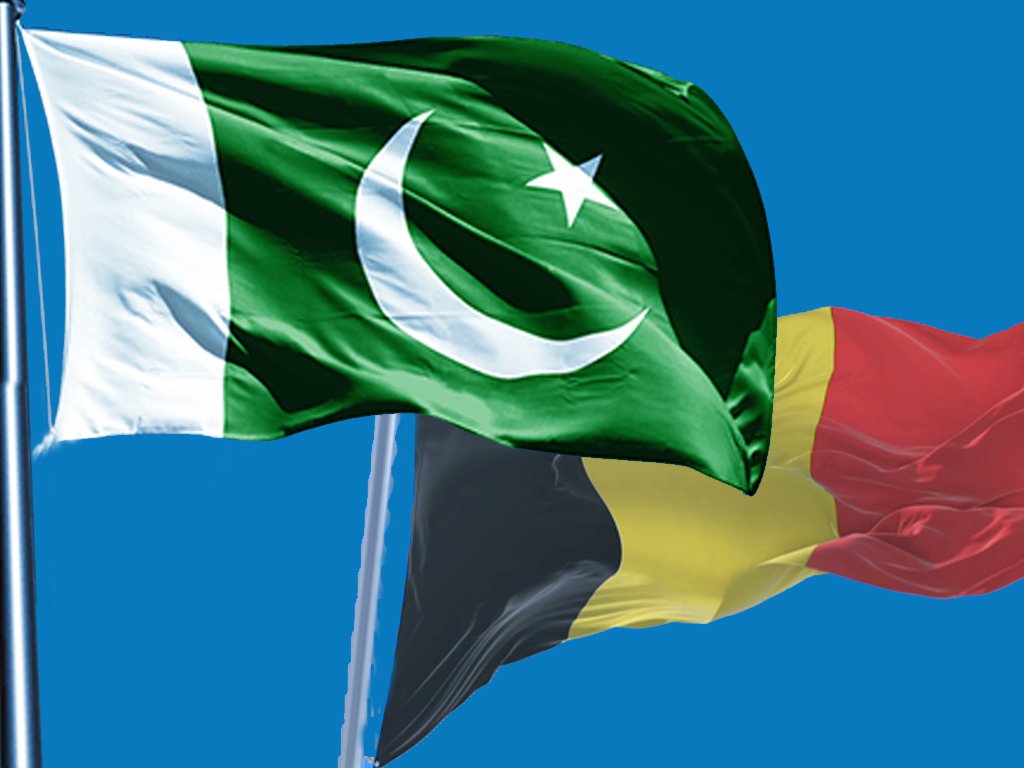
Belgium and Pakistan are fortifying geo-economic relations through trade surges, diplomatic dialogues, and investment synergies. This partnership unlocks potentials in textiles, pharmaceuticals, and renewables, delivering mutual prosperity for policymakers, investors, academics, and the public.
Key Points
- Diplomatic Momentum: EU-Pakistan Strategic Dialogue in November 2025 and Joint Commission in December 2025 highlighted GSP+ extensions and economic cooperation, with Belgium playing a key EU role.
- Trade Expansion: Bilateral trade neared $1.1 billion in 2024, with Pakistan’s exports at $696 million (textiles leading) and Belgium’s at $405 million (pharma dominant).
- Investment Opportunities: Belgian interest in Pakistan’s SEZs targets €200 million in tech, agriculture, and clean energy, promising high returns and job creation.
- Sectoral Complementarities: Pakistan’s youthful workforce and resources align with Belgium’s innovation in machinery and renewables for balanced, sustainable partnerships.
- Evergreen Foundations: Shared commitments to multilateralism and EU market access provide resilient frameworks for enduring ties amid global shifts.
- Future Projections: Trade could reach $1.5 billion by 2030 via joint ventures, enhancing resilience and inclusive growth.
In the interconnected world of geo-economics, Belgium and Pakistan are emerging as complementary partners, blending Belgium’s EU-driven innovation with Pakistan’s strategic dynamism. Policymakers can capitalize on this to shape policies that leverage Belgium’s advanced economy—marked by high exports and tech prowess—and Pakistan’s youthful, resource-rich market. Recent high-level engagements, such as the 7th EU-Pakistan Strategic Dialogue in November 2025, co-chaired by Deputy Prime Minister Ishaq Dar and EU officials, emphasized expanding trade under GSP+ and fostering cooperation in climate and security. The 15th EU-Pakistan Joint Commission in December 2025 reviewed political and economic progress, reaffirming commitments to democracy and sustainable development. A Belgian delegation’s visit to Karachi Port in December 2025 explored maritime and infrastructure ties, underscoring proactive bilateral momentum.
Contemporary trade data reveals accelerating synergy. In 2024, bilateral trade totaled approximately $1.1 billion, with Pakistan exporting $696 million to Belgium and importing $405 million. Monthly figures for September 2025 showed Pakistan exporting €16.6 million and importing €26.3 million, indicating steady flows despite global volatility. Pakistan’s exports grew 8.62% to Europe in the first ten months of FY2025, reaching $7.553 billion, bolstered by GSP+ duty-free access. From 2021 to 2022, Pakistan’s exports to Belgium rose from €459.9 million to €625 million, a trend likely continuing into 2025.
The top traded products exemplify rational cooperation:
Direction | Top Products (2024 Values in USD Millions) | Key Sectors |
Pakistan to Belgium | Apparel Knit (199.88), Textile Articles (154.62), Apparel Non-Knit (104.59) | Textiles and Apparel |
Belgium to Pakistan | Pharmaceutical Products (170.34), Iron and Steel (74.72), Machinery (33.83) | Pharmaceuticals and Machinery |
This table highlights balance: Pakistan’s labor-intensive textiles meet Belgian demands, while Belgium’s high-value pharma and machinery support Pakistan’s health and industrial sectors. Evergreen affinities, such as shared UN multilateralism, underpin these ties, ensuring stability beyond economic cycles.
For investors, potentials are lucrative. Belgium’s ambassador in November 2024 urged enhanced investments in Pakistan’s SEZs, citing opportunities in energy, infrastructure, and clean tech. A webinar by Pakistan’s Embassy in Brussels highlighted growth sectors like manufacturing, technology, agriculture, and renewables, projecting €200 million in Belgian inflows. Pakistan’s incentives, including tax holidays, align with Belgium’s expertise, promising high returns and technology transfers. Academics can analyze these through soft power lenses, exploring how GSP+ enhances human rights and sustainability dialogues. The public gains from job creation—thousands via joint ventures—and cultural exchanges, fostering global connectivity.
Rationales include the 2019 Strategic Engagement Plan, guiding EU-Pakistan ties. Challenges like regulatory alignments are manageable via ongoing consultations, as seen in April 2025 vows to strengthen relations. Overall, this alliance promotes inclusive progress, with trade poised to exceed $1.5 billion by 2030 amid global green shifts.
Conclusion
Belgium and Pakistan’s geo-economic partnership exemplifies synergistic advancement, merging Belgian expertise with Pakistani vitality. Policymakers should prioritize GSP+ extensions and SEZ collaborations; investors, seize opportunities in pharma and renewables for robust gains; academics, investigate sustainable models; and the public, benefit from jobs and cultural bonds. With 2024 trade at $1.1 billion and dialogues in 2025 fueling momentum, this alliance addresses climate and economic challenges. By deepening ties, both nations can achieve resilient, inclusive growth, setting a model for EU-Asia cooperation that endures.
* Dr. Muhammad Jahanzaib is the Founder & Chief Visionary Officer (CVO) of Diamanium Thinkers, a global think tank. He holds a PhD in International Relations, specializing in the intersection of geo-politics and geo-economics in Pakistan’s foreign and domestic policy. A double gold medalist and published scholar, he writes on economic intelligence, economic diplomacy, political economy, AI and regional cooperation in South Asia and beyond. He can be reached at jahanzaibdgc@gmail.com.
Key References
- 15th Meeting of the EU–Pakistan Joint Commission | EEAS – https://www.eeas.europa.eu/eeas/15th-meeting-eu%25E2%2580%2593pakistan-joint-commission_en
- 7th Pakistan-EU Strategic Dialogue in Brussels, Kingdom of Belgium … – https://mofa.gov.pk/news/7th-pakistan-eu-strategic-dialogue-in-brussels-kingdom-of-belgium-on-21st-november-2025
- Pakistan Joint Commission held on 17 December 2025 in Brussels. – https://www.ead.gov.pk/NewsDetail/N2JkNjc2ZTQtODRjNS00ZmMzLTlhN2EtZjAyNzIxM2YxZDEz
- In meeting with EU Council president, Dar discuss economic ties … – https://www.thenews.com.pk/latest/1359033-dar-lands-in-brussels-to-lead-pakistan-eu-strategic-dialogue
- Pakistan, EU discuss GSP+, bolstering economic cooperation – https://www.geo.tv/latest/634404-dpm-dar-reaches-brussels-for-pakistan-eu-dialogue-after-concluding-moscow-visit
- Seventh Round of the European Union-Pakistan Strategic Dialogue … – https://www.eeas.europa.eu/eeas/seventh-round-european-union-pakistan-strategic-dialogue-21-november-2025_en
- A high-level Belgian delegation, led by Ambassador Idesbald Van … – https://www.facebook.com/karachiporttrust.official/posts/a-high-level-belgian-delegation-led-by-ambassador-idesbald-van-der-gracht-visite/122207034290289985/
- Trade, investment in focus as Pakistan, EU convene Strategic … – https://www.arabnews.com/node/2623543/pakistan
- Pakistan, EU Discuss GSP+ and Strengthening Economic Ties – https://thediplomaticinsight.com/pakistan-eu-gsp-strengthening-economic-ties/
- Pakistan (PAK) and Belgium (BEL) Trade – https://oec.world/en/profile/bilateral-country/pak/partner/bel
- Belgium Exports to Pakistan – 2025 Data 2026 Forecast 1995-2024 … – https://tradingeconomics.com/belgium/exports/pakistan
- Commercial Wing Embassy of Pakistan, Brussels MARKET … – https://tdap.gov.pk/wp-content/uploads/2025/01/Market-Intelleigance-Report-Belgium.pdf
- Belgium keen to capitalise on Pakistan’s investment potential: envoy – http://invest.gov.pk/node/1244
- Embassy of Pakistan Brussels and Federation of Belgian Chambers … – https://mofa.gov.pk/press-releases/embassy-of-pakistan-brussels-and-federation-of-belgian-chambers-of-commerce-host-webinar-on-trade-and-investment-opportunities-in-pakistan?mission=Brussels%2520Belgium%2520Post
- Belgian envoy calls for enhancing investment in Pakistan – Daily Times – https://dailytimes.com.pk/1240725/belgian-envoy-calls-for-enhancing-investment-in-pakistan/
- Pakistan and Belgium deepen bilateral ties on UN General … – https://www.chaletdesroses.com/?sport-news-184565-2025-09-25-pakistan-belgium-bilateral-relations-unga-meeting
- Pakistan, Belgium reaffirm commitment to strengthen bilateral ties – https://www.app.com.pk/diplomatic-corner/pakistan-belgium-reaffirm-commitment-to-strengthen-bilateral-ties/
- Pakistan, Belgium vow to strengthen bilateral relations – https://www.radio.gov.pk/01-04-2025/pakistan-belgium-vow-to-strengthen-bilateral-relations
- Country comparison Belgium vs Pakistan 2025 – https://countryeconomy.com/countries/compare/belgium/pakistan