
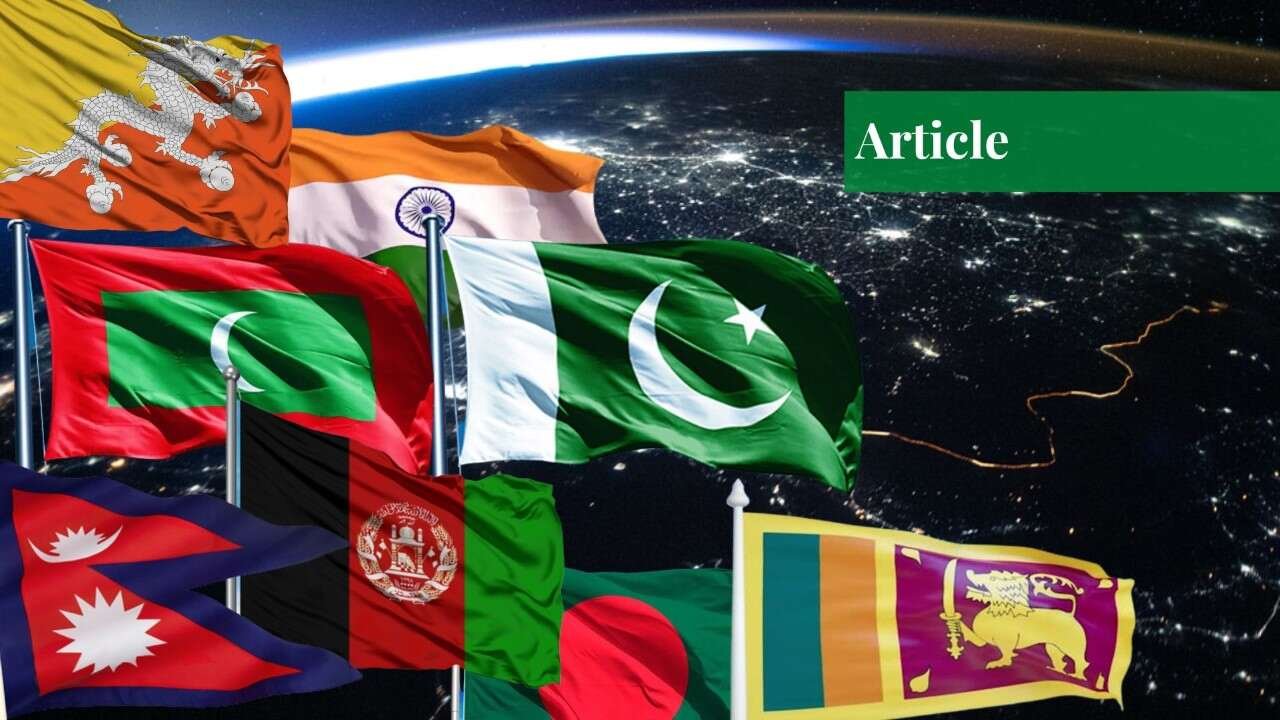
The evolving security triangle between Pakistan, Afghanistan, and India is that the historical rivalries, unresolved territorial disputes, and competing geopolitical interests among these three states continuously fuel instability and insecurity in South Asia, creating a complex web of conflict that obstructs regional peace and integration. The complex nature of the conflict in the region, amalgamated by the cross-border militancy, proxy wars, insurgencies, and great power rivalries, makes this region volatile, the tensest security formation in the region. This article is developed to investigate how these overlapping disputes interact, and how the actions of one state change the behaviors and policies of the other states, and lastly, how enmity affects the prospects for peace and stability in the region.
Key points:
- The Kashmir conflict and the Durand Line dispute are central to Pakistan-India and Pakistan-Afghanistan tensions, respectively, fueling militarization and conflict.
- India’s growing strategic engagement and soft power projection in Afghanistan is perceived by Pakistan as a threat, leading to competitive posturing and proxy confrontations.
- Cross-border militancy, proxy wars, and militant activities significantly worsen trust and cooperation among the three states.
- The involvement of regional and extra-regional powers further complicates the security dynamics, reinforcing insecurity instead of fostering cooperation.
The evolving security dynamics among Pakistan, Afghanistan, and India remain a pivotal factor shaping the broader regional stability in South Asia. These three states are entangled in a complex web of historical mistrust, enduring conflicts, and competing geopolitical and geostrategic interests. The interplay of these multifaceted disputes—most notably the Kashmir conflict between India and Pakistan, the contentious status of the Durand Line disputed by Pakistan and Afghanistan, and India’s expanded strategic engagement in Afghanistan—continues to exacerbate regional instability. This article seeks to critically analyze the interaction of these overlapping conflicts, exploring how the policies and actions of each state influence the behavior of the others, and assessing the implications of these rivalries on prospects for peace and security in the region.
The historical context of Pakistan-India antagonism originates from the Partition of 1947, which institutionalized political and communal divisions. Central to this rivalry is the protracted Kashmir dispute, which has precipitated multiple wars, sustained militarization along the Line of Control (LoC), and an overarching climate of hostility. The possession of nuclear weapons by both states introduces an elevated risk profile, rendering South Asia one of the most volatile nuclear flashpoints globally.
In parallel, the Pakistan-Afghanistan relationship has been historically marked by dispute and ambiguity, chiefly over the Durand Line, which Afghanistan has never fully recognized as a legitimate international border. During the Cold War and particularly after the Soviet invasion of Afghanistan in 1979, the relationship gained additional layers of complexity, with Pakistan’s support for the Afghan Taliban regime further complicating bilateral relations. In the post-9/11 era, cross-border militancy and terrorist activities have intensified tensions, undermining efforts at cooperation.
Conversely, India’s diplomatic and strategic footprint in Afghanistan has steadily expanded, especially after 2010. Through significant investments in infrastructure, trade, and development projects, India has projected considerable soft power in Kabul. This expansion is perceived by Pakistan as a deliberate encroachment on its strategic sphere of influence, fueling competitive posturing and suspicion. Indigenous proxy support claims, including India’s alleged backing of insurgent groups such as the Baluchistan Liberation Army (BLA) and the Tehrik-i-Taliban Pakistan (TTP), and reciprocal accusations of Pakistan sponsoring militant activities in Kashmir and other parts of India, further intensify mutual distrust.
The Pakistan-Afghanistan relationship, despite shared cultural linkages and economic interdependencies, remains fraught with mistrust, largely driven by security concerns. Pakistan’s counterterrorism operations, such as Operation Zarb-e-Azb (2014) and subsequent military strategies targeting militant safe havens, have heightened tensions with Kabul, exacerbated by fencing along the Durand Line and demands for Afghan cooperation against insurgents. The Taliban’s resurgence in Afghanistan in 2021 initially offered potential for improved bilateral relations, yet the failure to curb militant activities emanating from Afghan territory has led to renewed hostilities, including cross-border clashes and airstrikes, further destabilizing the frontier.
India’s strategic consolidation in Afghanistan, backed by diplomatic and economic engagement, remains a critical structural challenge for Pakistan’s security calculus. Islamabad views New Delhi’s presence in Kabul not only as a geopolitical threat but also as a component of a broader encirclement strategy that could open a two-front strategic pressure. This triangular security dilemma entails reciprocal perceptions of threat and insecurity, where each state’s attempt to consolidate its strategic interests inadvertently generates insecurity and counteractions by the others.
The regional dimension of this rivalry is further complicated by the involvement of extra-regional actors. China’s support for Pakistan, the strategic partnership between the United States and India, and the roles of Russia and Iran in Afghanistan inject additional complexity into the security environment, hindering prospects for cooperative regional frameworks.
The consequences of this trilateral rivalry are profound. Firstly, the persistent risk of escalation remains high due to unresolved territorial disputes, cross-border terrorism, and ongoing militarization. It results in massive violence, proxy battlegrounds, and non-state actors and external powers in the region. Secondly, regional economic integration efforts, such as connectivity projects and the China-Pakistan Economic Corridor (CPEC), face significant vulnerabilities resulting from the security environment. Thirdly, militant groups operating transnationally exacerbate instability, undermining efforts toward peace. People of Afghanistan will suffer more as the tension escalates, development and relations stall, and the state remains vulnerable to the strategic objectives of the neighboring states.
Conclusion
In sum, the Pakistan-India-Afghanistan security triangle constitutes a fundamental impediment to peace, stability, and regional integration in South Asia. Historical grievances, strategic rivalries, and the prevalence of non-state violent actors perpetuate a climate of insecurity that obstructs bilateral diplomacy, regional economic cooperation, and collective security arrangements. Addressing these challenges requires sustained diplomatic engagement, confidence-building measures, and cooperative security mechanisms that specifically target terrorism and border disputes. Without such initiatives, South Asia’s trajectory will likely remain marked by recurrent crises, enduring vulnerabilities, and constrained prospects for long-term peace and development.
Azhar Zaib Abbasi,
An MPhil scholar in international relations,
National University of Modern Languages,
Islamabad.
Email: azharzaibabbasi@gmail.com
References
- “Conflict and Cooperation in South Asia Post 9/11” (Margalla Papers, NDU)
https://margallapapers.ndu.edu.pk/site/issue/download/8/180 - F. Ghani, “India-Afghanistan Knot in South Asia” (Punjab University Indian Studies Journal)
https://pu.edu.pk/images/journal/indianStudies/PDF/10_v3_2_17.pdf - Z. Constantino, “India-Pakistan Rivalry in Afghanistan” (USIP Special Report)
https://www.usip.org/sites/default/files/2020-01/sr_462-the_india_pakistan_rivalry_in_afghanistan.pdf - “A Dangerous Triangle: India-Pakistan-Afghanistan” (IFRI)
https://www.ifri.org/en/articles-politique-etrangere/dangerous-triangle-india-pakistan-afghanistan - T. Yameen, “Afghan Peace Process and Security Implications for Pakistan” (NACTA Pakistan)
https://nacta.gov.pk/wp-content/uploads/2021/09/Afghan-Peace-Process-and-Security.pdf - Z.S. Ahmed, “Pakistan-Afghanistan Relations and the Indian Factor,” 2007 (JSTOR)
https://www.jstor.org/stable/41500069 - M. O’Hanlon, “History Does Not Condemn Afghanistan to Failure or India and Pakistan to Rivalry,” Brookings Institution
https://www.brookings.edu/articles/history-does-not-condemn-afghanistan-to-failure-or-india-and-pakistan-to-rivalry-there/ - Z.A. Wani, “Geopolitical Dynamics in the Afghanistan–India–Pakistan Triangle,” 2022 (SAGE Journals)
https://journals.sagepub.com/doi/abs/10.1177/09749284221127807 - “The Dynamics of Pakistan – Afghanistan Relations,” ISSRA Seminar Report, January 2024
https://issra.pk/pub/post-seminar-report/PSR-The-Dynamics-of-Pakistan-Afghanistan-Relations-16-17-Jan-24.pdf - M.I.D.G. Mustafa, “Geopolitical Dynamics of Afghanistan and Concerns of Regional and Global Actors,” 2020
https://pssr.org.pk/issues/v4/3/geopolitical-dynamics-of-afghanistan-and-concerns-of-regional-and-global-actors-vis-a-vis-pakist