
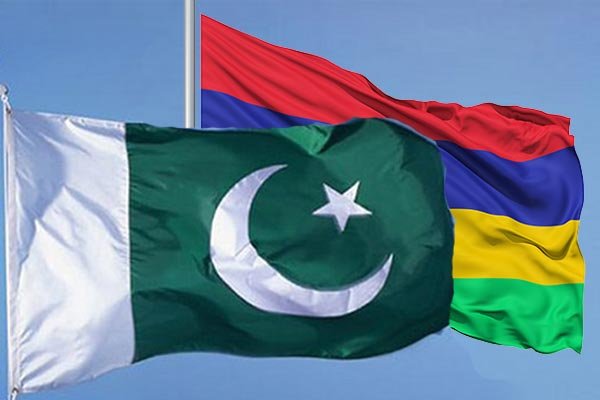
Mauritius and Pakistan are revitalizing their geo-economic alliance through trade revival, strategic investments, and sectoral synergies, fostering mutual prosperity in agriculture, tourism, and technology while bridging African and South Asian markets for sustainable growth.
Key Points
- Diplomatic Momentum: Recent high-level engagements, including Punjab Chief Minister Maryam Nawaz’s discussions with Mauritius’ High Commissioner, underscore commitments to enhance trade delegations, exhibitions, and bilateral cooperation.
- Trade Revival: Calls to reinstate the 2007 Preferential Trade Agreement aim to address low trade volumes and expand product baskets in textiles, rice, pharmaceuticals, and halal food.
- Investment Horizons: Mauritius invites Pakistani investments in its blue economy and education sectors, while Pakistan offers opportunities in agriculture, tourism, and light engineering.
- Geo-Strategic Synergies: Mauritius serves as Pakistan’s gateway to African markets via AfCFTA, SADC, and COMESA, complementing Pakistan’s CPEC for enhanced connectivity.
- Economic Indicators: Bilateral trade stands at approximately US$20-35 million annually, with potential for exponential growth through value addition and technology transfers.
- Cultural and People Ties: Shared historical bonds and initiatives like Urdu promotion strengthen people-to-people exchanges, supporting long-term collaboration.
Mauritius and Pakistan, two nations separated by vast oceans yet connected through shared aspirations for economic resilience and global integration, are poised to elevate their geo-economic partnership to new heights. This alliance, rooted in over five decades of diplomatic relations established post-Mauritius’ independence in 1968, blends contemporary diplomatic initiatives with timeless principles of mutual benefit and cooperation. As policymakers seek regional stability, investors eye untapped markets, academics analyze strategic dynamics, and the general public benefits from enhanced opportunities, this partnership exemplifies how smaller-scale bilateral ties can yield outsized geo-economic dividends.
Recent developments highlight a surge in diplomatic and economic engagements. In December 2025, Mauritius’ High Commissioner to Pakistan, Munsoo Kurrimbaccus, advocated for the revival of the 2007 Preferential Trade Agreement (PTA) during a meeting with the Lahore Chamber of Commerce and Industry (LCCI). He noted that the PTA had previously boosted trade but lapsed, leading to subdued volumes today. LCCI President Faheemur Rehman Sehgal echoed this, emphasizing long-standing relations and the need to address trade imbalances through value addition in sectors like halal food and technology. Concurrently, Punjab Chief Minister Maryam Nawaz met with the High Commissioner, committing to expand trade in rice, textiles, and pharmaceuticals while exploring agriculture, tourism, education, and light engineering. These talks included agreements on reciprocal trade delegations and exhibitions, signaling a proactive approach to overcoming barriers like the absence of direct flights.
Earlier in 2024, assessments of bilateral dynamics revealed steady progress, with Pakistan supporting Mauritius on international issues like the Chagos Archipelago dispute at the UN. Celebrations of Mauritius’ 56th independence anniversary in Islamabad underscored cultural affinities, including Urdu language promotion and people-to-people exchanges. On the X platform, posts from the Institute of Peace and Diplomatic Studies and Pakistan’s High Commission in Mauritius detailed interactive sessions on collaboration in trade, education, and tourism. President Asif Ali Zardari’s reception of Mauritius’ envoy further reinforced commitments to climate resilience, technology, and defense cooperation.
Contemporary data underscores the current state and untapped potential. Bilateral trade hovered around US$20.56 million in 2020, rising to approximately US$19.75 million in Pakistan’s exports to Mauritius in 2024, primarily in textiles, rice, and pharmaceuticals. Mauritius’ exports to Pakistan, valued at US$1.6 million in 2022, include scrap iron and steel. Projections for 2025 suggest modest growth, aligned with Pakistan’s economic stabilization post-2023 recovery and Mauritius’ resilient post-pandemic rebound.
Economic Indicator | Mauritius (2025 Projection) | Pakistan (2025 Projection) |
GDP (US$ Billion) | 15.41 – 16 | 357 |
GDP Growth Rate (%) | 3.2 | 2.7 |
Total Exports (US$ Billion) | 2.76 (2023 base) | 35.9 (2023 base) |
Inflation Rate (%) | 3.9 | 4.5 |
Key Trade Partners | EU, India, South Africa | China, US, UAE |
This table, drawn from IMF and World Bank projections, illustrates complementary strengths: Mauritius’ stable, service-oriented economy (tourism and finance contributing ~70% of GDP) pairs well with Pakistan’s manufacturing base. Within the OIC framework, Pakistan ranks high in remittances (US$34.9 billion in 2024) and intra-OIC imports (27.7% share), offering Mauritius avenues for expanded halal trade.
Geo-economic potentials extend beyond bilateral trade to strategic synergies. Mauritius, with its 2 million square kilometers of exclusive economic zone, invites collaboration in the blue economy i.e. fisheries, maritime trade, and renewable energy aligning with Pakistan’s coastal assets and CPEC initiatives. As a member of the African Union, SADC, COMESA, and AfCFTA, Mauritius positions itself as Pakistan’s “continental gateway” to Africa, supporting Islamabad’s Engage Africa Policy to double trade with the continent by 2025. In return, Pakistan’s strategic South Asian location offers Mauritius access to Central Asian markets via CPEC, fostering connectivity in a multipolar world.
Investment opportunities abound, with Mauritius’ residence-by-investment program attracting Pakistani capital into real estate and education. Punjab’s vast potential in tourism and agriculture has drawn Mauritius’ interest, with commitments for technology transfers in sugarcane cultivation and youth development. A rational cooperative analysis reveals evergreen benefits: diversified markets reduce dependency on traditional partners, while cultural ties those are rooted in shared Indian Ocean heritage and enhance trust.
Potential Sectors for Cooperation | Mauritius’ Strengths | Pakistan’s Strengths | Mutual Benefits |
Agriculture & Halal Food | Sugarcane expertise, value addition | Rice, textiles integration | Technical collaboration, export growth |
Tourism & Education | Island appeal, international campuses | Cultural sites, skilled workforce | Joint ventures, student exchanges |
Technology & Blue Economy | Financial hub, maritime zone | CPEC infrastructure, IT exports | Investment flows, sustainable projects |
Pharmaceuticals & Light Engineering | Liberal trade policies | Manufacturing base | Supply chain synergies, job creation |
This table highlights actionable areas, where combined efforts could triple trade volumes within a decade, promoting inclusive growth.
Conclusion
In an era of shifting global dynamics, the Mauritius-Pakistan partnership stands as a beacon of cooperative geo-economics, blending recent diplomatic strides with enduring strategic potentials. By reviving the PTA, fostering investments in agriculture, tourism, and technology, and leveraging Mauritius’ African gateways alongside Pakistan’s Asian corridors, both nations can achieve sustainable prosperity. This alliance not only addresses trade imbalances but also builds resilience against external shocks, benefiting policymakers through stability, investors via opportunities, academics with rich case studies, and the public through enhanced livelihoods. With commitment to direct connectivity and people exchanges, this ocean-bridging collaboration leads to a brighter, interconnected future.
* Dr. Muhammad Jahanzaib is the Founder & Chief Visionary Officer (CVO) of Diamanium Thinkers, a global think tank. He holds a PhD in International Relations, specializing in the intersection of geo-politics and geo-economics in Pakistan’s foreign and domestic policy. A double gold medalist and published scholar, he writes on economic intelligence, economic diplomacy, political economy, AI and regional cooperation in South Asia and beyond. He can be reached at jahanzaibdgc@gmail.com.
Key Citations:
- Mauritius calls for revival of trade pact | The Express Tribune – https://tribune.com.pk/story/2582756/mauritius-calls-for-revival-of-trade-pact
- CM Maryam boosts ties with Mauritius, signals new trade and investment momentum | Pakistan Today – https://www.pakistantoday.com.pk/2025/12/21/cm-maryam-boosts-ties-with-mauritius-signals-new-trade-and-investment-momentum/
- Assessing The Dynamics Of Pakistan-Mauritius Bilateral Relations – https://www.elaanresearch.com/news/international-relations/pakistan-mauritius-bilateral-relations
- Continental Gateways: The Future of Pak – Mauritius Relations – https://www.africa-press.net/mauritius/all-news/continental-gateways-the-future-of-pak-mauritius-relations-2
- Pakistan Exports to Mauritius – 2025 Data 2026 Forecast 2009-2024 … – https://tradingeconomics.com/pakistan/exports/mauritius
- Trade & Investment – Ministry of Foreign Affairs – https://mofa.gov.pk/port-louis-trade-investment
- Punjab offers vast investment potential, CM tells Mauritius envoy – https://dailytimes.com.pk/1422046/punjab-offers-vast-investment-potential-cm-tells-mauritius-envoy/
- Mauritius Residence by Investment | Henley & Partners – https://www.henleyglobal.com/residence-investment/mauritius
- oecd economic outlook, volume 2025 issue 1 – Mauritius (EN) – https://www.oecd.org/content/dam/oecd/en/publications/reports/2025/06/oecd-economic-outlook-volume-2025-issue-1-country-notes_ec6bdb1f/mauritius_d9d7fd0a/001dfd24-en.pdf
- Pakistan and the IMF – https://www.imf.org/en/countries/pak
- OIC economic outlook 2025 | comcec – https://www.comcec.org/wp-content/uploads/2025/10/ingilizce-3.pdf
- Institute of Peace and Diplomatic Studies – @IPDS_Pakistan – https://x.com/IPDS_Pakistan/status/1998766739879034924
- SUNO FM RADIO – @SUNOFM894 – https://x.com/SUNOFM894/status/1990502469257080888