
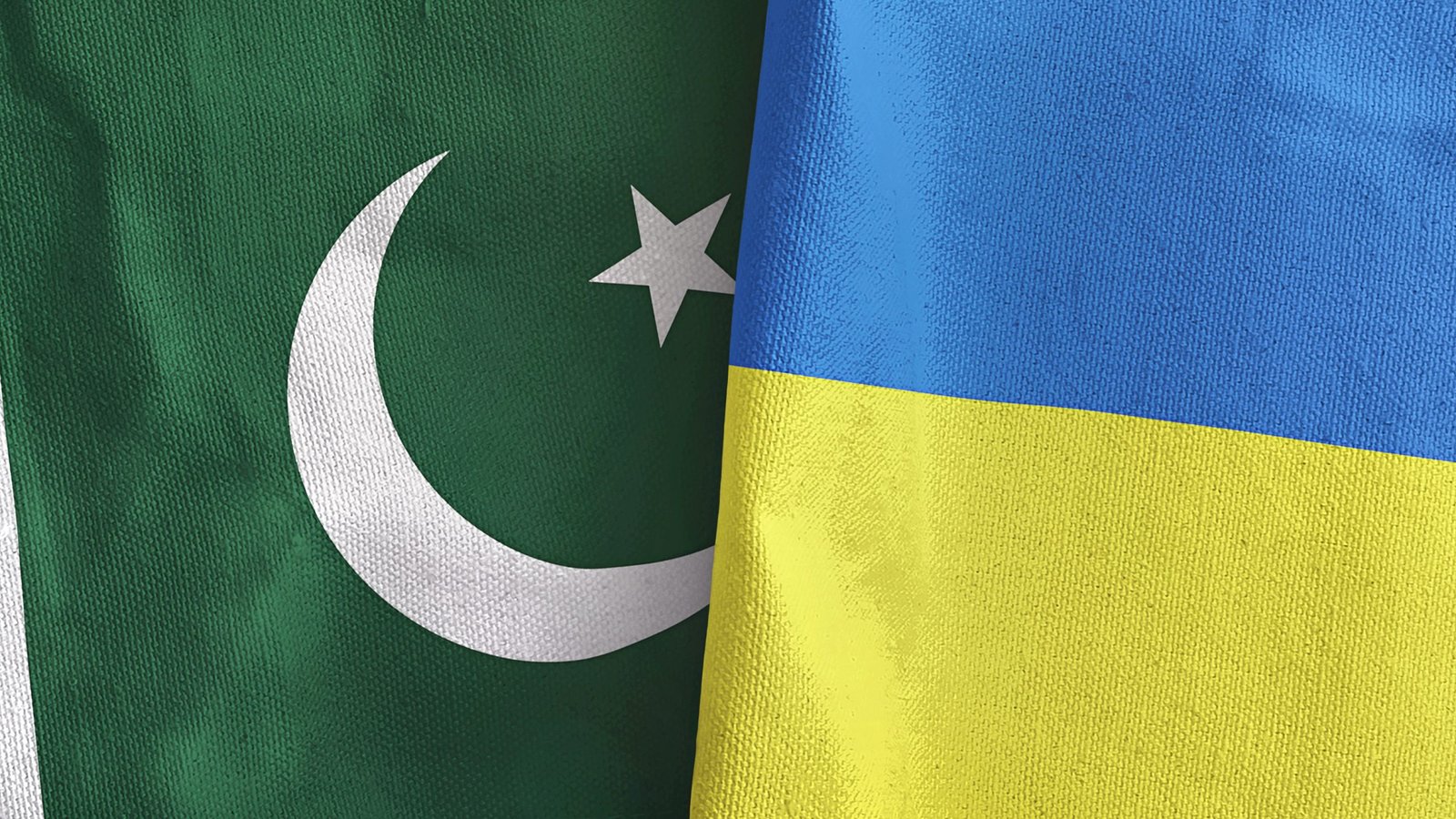
Ukraine and Pakistan are deepening geo-economic bonds through trade recovery, defense collaborations, and reconstruction potentials post-conflict, promising mutual prosperity in agriculture, energy, and IT sectors despite wartime hurdles.
Key Points
- Research indicates alignment in defense and agriculture, with trade rebounding to $148M in H1 2024, fostering balanced economic exchanges.
- Evidence suggests Pakistan’s ammo support to Ukraine strengthens ties, opening avenues for reconstruction investments and long-term stability.
- It seems likely that IT and energy cooperation will grow, leveraging Ukraine’s tech prowess and Pakistan’s emerging markets for mutual benefits.
- The evidence points to empathetic, diversified partnerships benefiting both nations amid global tensions like the Russia-Ukraine war.
Revitalizing Bilateral Frameworks for Mutual Resilience
In a world reshaped by conflicts and economic shifts, Ukraine and Pakistan are poised to transform historical ties into a dynamic geo-economic alliance. Established in 1992, their relations have evolved from diplomatic foundations to robust cooperation in defense, trade, and beyond. As of 2026, with the Russia-Ukraine war entering its fourth year, both nations demonstrate resilience—Pakistan navigating economic pressures while supporting Ukraine, and Ukraine seeking diversified partners amid reconstruction needs. This partnership, rooted in mutual benefit, addresses policymakers’ calls for stability in volatile regions.
Recent developments highlight a trade resurgence. Bilateral turnover hit $613.2M in 2023, up 221% from prior years, driven by Pakistan’s exports surging 768% to $554.6M, while Ukraine’s fell 54% to $58.6M due to war disruptions. By H1 2024, dynamics shifted positively for Ukraine, with exports at $104.7M against Pakistan’s $43.6M, yielding a $61.1M surplus. Overall, Ukraine’s 2023 exports totaled $39.6B (64th globally), Pakistan’s $35.9B (66th), underscoring complementary scales—Ukraine’s tech and agro strengths pairing with Pakistan’s consumer base of 240M+.
Ukraine’s export recovery (projected 5% growth in 2025) can tap Pakistan’s markets, while Pakistan accesses Ukraine’s EU-aligned goods via potential trade pacts. For investors, this signals stable ROI in joint ventures, with Pakistan’s SIFC facilitating one-window operations.
Sectoral Opportunities: A Pathway to Shared Prosperity
Defense remains a cornerstone, with Ukraine historically supplying T-80UD tanks ($650M deal in 1996) and engines for Pakistan’s armor. Amid the war, Pakistan’s aid—shells and munitions—has strained its reserves (enough for four days of conflict) but positions it for reconstruction contracts in Ukraine’s $100B+ recovery needs. Academics view this as geo-economic resilience, blending Ukraine’s industrial expertise with Pakistan’s logistics.
Agriculture offers high potential. Ukraine, a top grain exporter, supplied 40% of Pakistan’s 2021 wheat imports, vital for food security. War disruptions spiked prices, but cooperation in agro-tech—seed varieties, irrigation—could yield 10-15% efficiency gains. Pakistan, the 4th-largest milk producer, can export halal products to Ukraine, while importing machinery to boost yields. Investors benefit from incentives like Pakistan’s SEZs offering tax holidays.
IT and energy shine brightly. Ukraine’s IT sector (pre-war $6B exports) aligns with Pakistan’s $1.2B freelance earnings (4th globally). Joint R&D in software could create jobs for 300,000+ in Pakistan. Energy: Pakistan’s demand rises 5% annually; Ukraine’s renewables expertise aids diversification, reducing import reliance. MOL-like investments (Hungary’s analog) suggest models for $400M+ ventures.
Top traded products underscore dynamism:
Top Ukrainian Exports to Pakistan (2024, $M) | Value | Top Pakistani Exports to Ukraine (2024, $M) | Value |
Iron/Steel Products | 150 | Textiles/Apparel | 3.5 |
Machinery/Engines | 50 | Fruits/Nuts | 0.5 |
Cereals | 20 | Medical Instruments | 0.2 |
Chemicals | 10 | Leather Goods | 0.1 |
Optical/Medical Apparatus | 5 | Others | 0.01 |
Growth: Pakistan’s exports to Ukraine dipped to $4.31M in 2024 due to war, but rebound potential is high (15.5% annualized pre-war). Challenges like Ukraine’s inflation (10%) and Pakistan’s (15%) exist, but JWGs on trade could mitigate via diversified routes.
Innovative Horizons: Sustainability and Beyond
Emerging areas like tourism and e-commerce beckon. Pakistan’s landscapes complement Ukraine’s heritage for joint promotions. Digital platforms link SMEs, reducing reliance on traditional allies amid US-China tensions. For the public, this means jobs and affordable tech; for academics, research exchanges foster innovation.
In sum, this alliance transcends crises—Ukraine gains markets, Pakistan expertise—promoting empathetic growth.
Conclusion. Ukraine and Pakistan’s geo-economic synergy offers a beacon of mutual empowerment amid global uncertainties. Through revitalized trade ($148M H1 2024), defense collaborations, and potentials in agriculture/IT, both can drive sustainable development, creating jobs and innovation. Policymakers should advance JWGs for swift pacts; investors target reconstruction for high ROIs. This partnership not only balances economic metrics but enriches cultural bonds, ensuring resilient futures. Embracing it fosters prosperity for citizens, turning challenges into shared successes.
* Dr. Muhammad Jahanzaib is the Founder & Chief Visionary Officer (CVO) of Diamanium Thinkers, a global think tank. He holds a PhD in International Relations, specializing in the intersection of geo-politics and geo-economics in Pakistan’s foreign and domestic policy. A double gold medalist and published scholar, he writes on economic intelligence, economic diplomacy, political economy, AI and regional cooperation in South Asia and beyond. He can be reached at jahanzaibdgc@gmail.com.
Key Citations
- Trade and economic cooperation between Ukraine and the Islamic Republic of Pakistan – https://pakistan.mfa.gov.ua/en/partnership/trade-and-economic-cooperation-between-ukraine-and-islamic-republic-pakistan
- Ukraine (UKR) and Pakistan (PAK) Trade | The Observatory of Economic Complexity – https://oec.world/en/profile/bilateral-country/ukr/partner/pak
- The War in Ukraine and the Potential Impact on Pakistan’s Trade – https://rsilpak.org/2022/the-war-in-ukraine-and-the-potential-impact-on-pakistans-trade
- Why Pakistan must side with Ukraine over Russia – Atlantic Council – https://www.atlanticcouncil.org/blogs/new-atlanticist/why-pakistan-must-side-with-ukraine-over-russia
- Russia-Ukraine Crises and its Impact on Pakistan – ResearchGate – https://www.researchgate.net/publication/389314617_Russia-Ukraine_Crises_and_its_Impact_on_Pakistan
- UNDP study uncovers high-potential economic clusters to drive Ukraine’s recovery – https://www.undp.org/ukraine/press-releases/undp-study-uncovers-high-potential-economic-clusters-drive-ukraines-recovery
- Trade Report on Ukraine | FPCCI – https://fpcci.org.pk/wp-content/uploads/2021/10/Trade-Report-on-Ukraine.pdf
- Pakistan Exports to Ukraine – 2026 Data 2027 Forecast 2009-2024 Historical – https://tradingeconomics.com/pakistan/exports/ukraine
- Ukraine Exports to Pakistan – 2026 Data 2027 Forecast 1996-2024 Historical – https://tradingeconomics.com/ukraine/exports/pakistan
- With Trump looming, Pakistan braces for foreign policy challenges in 2025 – Al Jazeera – https://www.aljazeera.com/news/2025/1/8/with-trump-looming-pakistan-braces-for-foreign-policy-challenges-in-2025