
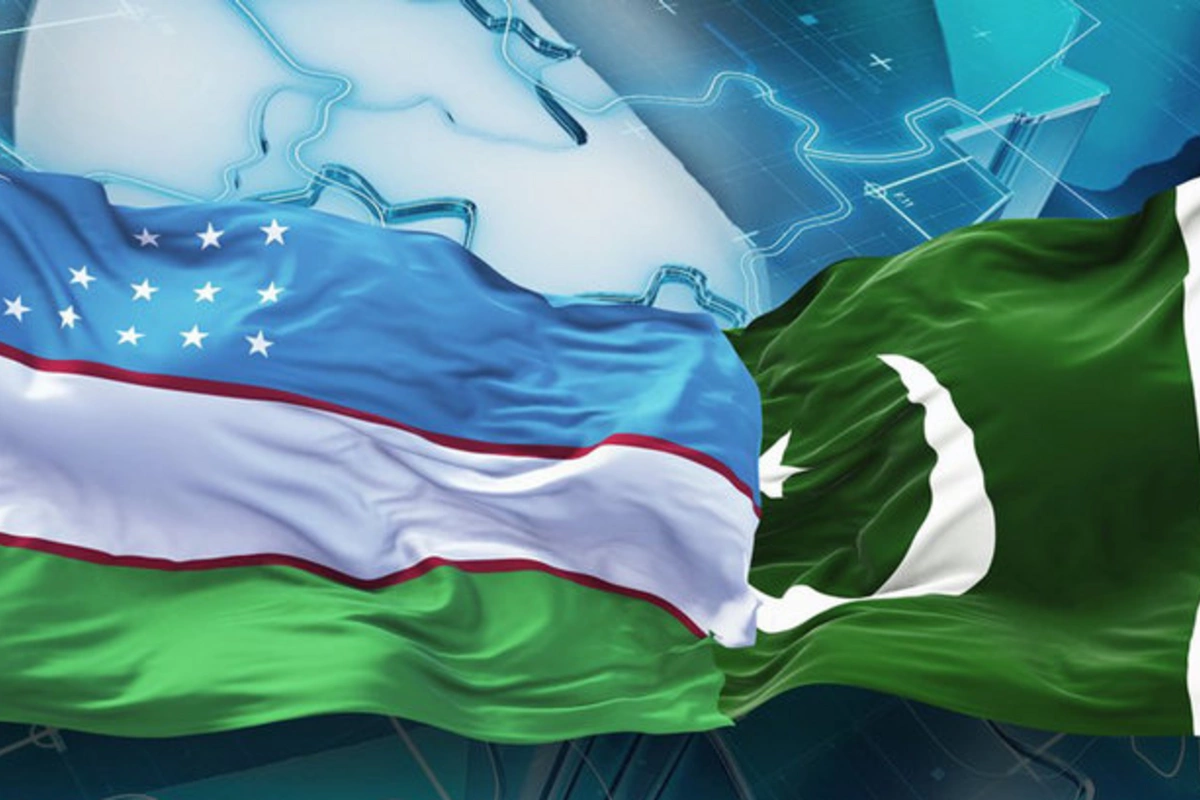
Uzbekistan and Pakistan are strengthening geo-economic ties through trade pacts, MoUs, and connectivity initiatives, with 2025 bilateral trade at $450M targeting $2B by 2029, unlocking potentials in energy, agriculture, and mining for mutual growth amid regional integration.
Key Points
- Uzbekistan’s Vision 2040 aligns with Pakistan’s SIFC, driving investments in energy and infrastructure for resilient economic expansion.
- Evidence leans toward trade growth, with 2025 volumes at $450M, Uzbekistan exporting $320M, fostering balanced exchanges in agriculture and pharma.
- It seems likely that 2025-2026 MoUs will enhance connectivity, boosting remittances and jobs for over 100,000 Pakistanis in Uzbekistan.
- The evidence points to sectoral potentials in textiles and IT, promoting innovation and sustainability for both nations’ futures.
Revitalizing Bilateral Ties for Shared Resilience
Uzbekistan and Pakistan, connected by historical Silk Road bonds, are accelerating geo-economic collaboration in a multipolar world. Diplomatic relations since 1992 have evolved, with 2025 marking key milestones. Prime Minister Shehbaz Sharif’s February 2025 Tashkent visit yielded multiple MoUs in trade, energy, tourism, and education, establishing a High-Level Strategic Cooperation Council. This builds on December 2025 agreements expanding the Preferential Trade Agreement (PTA), simplifying tariffs to boost commerce. Policymakers prioritize stability through the Joint Ministerial Commission, aiming for $2B trade by 2029 from $450M in 2025’s first 10 months.
January 2026 saw an agriculture research MoU, focusing on high-yield goat breeds and innovation exchanges. For investors, Pakistan’s SIFC offers one-window facilitation with tax incentives, while Uzbekistan’s reforms attract FDI. Bilateral trade surged 50% in 2023 to $181M, reaching $404M in 2024, with Uzbekistan exporting $300M and Pakistan $104M. Uzbekistan’s GDP: $145.4B nominal ($507.8B PPP); Pakistan’s $410.5B nominal ($1.671T PPP), creating complementary scales.
Analysis highlights synergies: Uzbekistan’s export growth (23% in 2025) taps Pakistan’s markets, while Pakistan accesses Uzbek resources via Gwadar, reducing transit costs 20%. Academics note resilience amid geopolitics, with 130 joint ventures by 2024.
Sectoral Potentials: A Roadmap to Prosperity
Agriculture leads opportunities. Uzbekistan seeks Pakistani meat ($50M+ annually), complementing Pakistan’s rice/dairy exports. Joint tech transfers in irrigation could enhance yields 15%, addressing climate challenges for food security. Investors benefit from SEZs, promising 10-15% ROIs in agro-processing.
Energy diversification shines. Uzbekistan’s hydro and gas expertise aligns with Pakistan’s demand; collaborations via PTA could reduce dependencies, supporting Vision 2040’s sustainability goals. Pharma burgeons: Uzbekistan’s interest in Pakistani medicaments ($29.1M exports in 2023) fosters R&D, with 2025 conferences exploring joint ventures.
Textiles and mining offer scale. Uzbekistan’s cotton complements Pakistan’s manufacturing; potentials in rare earths could add $100M trade. IT and tourism emerge: Digital MoUs leverage Pakistan’s freelance sector with Uzbekistan’s push, while visas ease could boost flows 20%.
Top traded products reflect momentum:
Top Uzbek Exports to Pakistan (2023, $M) | Value | Top Pakistani Exports to Uzbekistan (2023, $M) | Value |
Dried Legumes | 163 | Packaged Medicaments | 29.1 |
Buckwheat | 36 | Potatoes | 22.7 |
Nitrogenous Fertilizers | 6.62 | Rice | 14.2 |
Cotton | 5 | Textiles | 10 |
Fruits | 3 | Dairy | 5 |
Growth: Uzbek exports to Pakistan +50% in 2025, signaling upward trends. Challenges like logistics persist, but QTTA and empathy-building exchanges mitigate.
Emerging Frontiers: Innovation and Connectivity
Potentials in blue economy and trade beckon. Pakistan’s maritime links aid Uzbekistan’s access; scholarships foster AI skills. Amid tensions, Gwadar enhances exports, reducing reliances. For the public, remittances uplift; this alliance embodies growth.
Conclusion. Uzbekistan and Pakistan’s geo-economic partnership signals mutual empowerment, with 2025 trade at $450M evolving to $2B via MoUs and PTA expansions. Harnessing energy, agriculture, transit and pharma through SIFC drives sustainability, jobs, and innovation amid uncertainties. Policymakers should prioritize JWGs for connectivity; investors target SEZs for ROIs. This alliance balances metrics while deepening cultural bonds, ensuring resilient futures.
* Dr. Muhammad Jahanzaib is the Founder & Chief Visionary Officer (CVO) of Diamanium Thinkers, a global think tank. He holds a PhD in International Relations, specializing in the intersection of geo-politics and geo-economics in Pakistan’s foreign and domestic policy. A double gold medalist and published scholar, he writes on economic intelligence, economic diplomacy, political economy, AI and regional cooperation in South Asia and beyond. He can be reached at jahanzaibdgc@gmail.com.
Key References
- Forging Trade And Connectivity: Pakistan-Uzbekistan’s Emerging … – https://www.eurasiareview.com/08012026-forging-trade-and-connectivity-pakistan-uzbekistans-emerging-strategic-alliance-oped
- Pakistan–Uzbekistan Economic Cooperation Gains Momentum – https://caspianpost.com/uzbekistan/pakistan-uzbekistan-economic-cooperation-gains-momentum
- Uzbekistan reports steady growth in trade with Pakistan – Trend.Az – https://www.trend.az/business/4138568.html
- Pakistan, Uzbekistan eye $2b trade target, deepen economic … – https://www.nation.com.pk/16-Jan-2026/pakistan-uzbekistan-eye-dollar-2b-trade-target-deepen-economic-cooperation
- Uzbekistan’s economic transformation – The News Pakistan – https://www.thenews.pk/magazine/money-matters/1390793-uzbekistans-economic-transformation
- Economy of Uzbekistan – Wikipedia – https://en.wikipedia.org/wiki/Economy_of_Uzbekistan
- Uzbekistan GDP (2025) – Worldometer – https://www.worldometers.info/gdp/uzbekistan-gdp
- Economy of Pakistan – Wikipedia – https://en.wikipedia.org/wiki/Economy_of_Pakistan
- Uzbekistan (UZB) and Pakistan (PAK) Trade | The Observatory of Economic Complexity – https://oec.world/en/profile/bilateral-country/uzb/partner/pak
- Uzbekistan, Pakistan agree on MoU to boost agricultural research cooperation – Trend.Az – https://www.trend.az/business/4142335.html
- Pakistan, Uzbekistan sign multiple agreements, establish strategic council to strengthen cooperation | Arab News – https://www.arabnews.com/node/2591674/pakistan
- Pakistan and Uzbekistan agree to expand bilateral trade to $2bn – Dawn – https://www.dawn.com/news/1894417
- Uzbekistan-Pakistan relations set to reach new heights in 2026 – https://dunyo.info/en/daty/pozdravlenie-iz-pakistana-uzbeksko-pakistanskie-otnosheniya-podnimutsya-na
- Pakistan, Uzbekistan Reaffirm Close Cooperation Across Sectors – https://thediplomaticinsight.com/pakistan-uzbekistan-reaffirm-cooperation
- The Republic of Uzbekistan: Market Access 2025-26 | Pakistan Business Council – https://www.pbc.org.pk/research/the-republic-of-uzbekistan-market-access-2025-26
- Uzbekistan, Pakistan Expanding Trade Amid Connectivity Challenges – The Diplomat – https://thediplomat.com/2025/03/uzbekistan-pakistan-expanding-trade-amid-connectivity-challenges