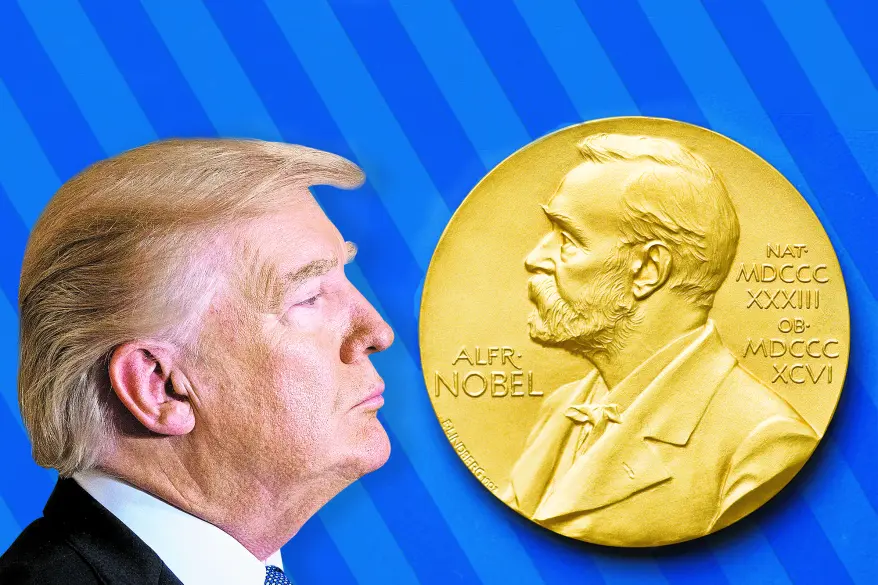
When we study international relations, it becomes clear that personality can shape foreign policy in profound ways. Donald J Trump is a prime example of this phenomenon. His second term in the White House has once again demonstrated how his personal traits, especially his constant need for recognition, are tightly bound to his foreign policy actions. For Trump symbolic prizes and public validation are not peripheral but central to his sense of success. The Nobel Peace Prize has been a recurring theme in his rhetoric, and his actions abroad reflect a continuing pursuit of dramatic gestures that would elevate him into history. From a psychological standpoint this is consistent with leaders who display high narcissism, high extraversion, and low agreeableness. They crave attention, are extremely sensitive to perceived slights, and sometimes take risks that others would avoid.
The first days of Trump’s second presidency illustrated this tendency clearly. On January 20, 2025, his very first act was to pull the United States out of the Paris climate agreement. The move was not just policy but performance. It projected defiance against what he views as constraining international structures, allowing him to present himself as a decisive leader unwilling to bow to global norms. Psychologists note that leaders high in narcissism often equate unilateralism with strength, and withdrawal from climate commitments fit perfectly into this pattern. It was less about the environment and more about symbolic dominance.
Iran quickly became another theater of attention. Trump relaunched the maximum pressure campaign targeting Iranian oil exports and followed it with letters to Ayatollah Khamenei offering either a stricter nuclear deal or the threat of military force. Soon afterward the Pentagon deployed B-2 stealth bombers to Diego Garcia in the Indian Ocean. The action drew headlines across the world, raising fears of imminent confrontation. From the perspective of political psychology this was classic escalation in search of recognition. A leader denied symbolic validation such as the Nobel often seeks to reassert dominance by staging bold confrontations. Trump’s Iran policy combined sanction pressure, diplomatic showmanship, and military signaling in ways designed to grab attention both at home and abroad.
In early 2025 Trump floated an extraordinary idea regarding the Gaza Strip. He suggested the United States could take over Gaza and relocate Palestinians to other countries such as Libya or Sudan, later framing Gaza as a “freedom zone.” The plan was unrealistic, widely criticized, and geopolitically destabilizing, yet it fulfilled his need to dominate the news cycle. Here again the logic was not policy coherence but psychological reward. Studies of narcissistic leaders show they frequently propose dramatic solutions when they feel their achievements are underappreciated. Trump’s Gaza idea mirrors this empirical pattern: the more unlikely the plan, the more attention it draws.
The same trend was visible in his revival of territorial expansion rhetoric. He mused about annexing Canada, seizing the Panama Canal, invading Venezuela, and even renaming the Gulf of Mexico the “Gulf of America.” Such talk may seem like bluster, but for a leader who values spectacle it plays a crucial role. It fuels an image of grandeur, establishes a narrative of historic legacy, and ensures media coverage. History shows narcissistic leaders often rely on theatrical expansionist language to build an aura of greatness, even if practical follow-through is lacking.
Economics too became an arena for this politics of recognition. Trump imposed tariffs on India in response to its energy ties with Russia, threatened Mexico and Canada with broad duties, and considered a sweeping ten percent universal tariff along with a sixty percent tariff on Chinese imports. Analysts note these moves alienated allies, strained trade relations, and risked global economic instability. Yet they also positioned Trump as a leader who defied the rules of globalization. In psychological terms tariffs became a tool of performance politics, offering visible proof to supporters that he was tough, transactional, and willing to put “America First.” Attention, rather than economic rationality, was the underlying logic.
Europe witnessed another revealing episode in August 2025 when Trump met Vladimir Putin in Alaska but declined to invite Ukrainian President Volodymyr Zelenskyy. This move was interpreted by many European leaders as undercutting NATO unity and rewarding Russia. Commentators described the event as chaotic, unstructured, and deferential to Putin. From a psychological perspective it was consistent with Trump’s strategy of staging unpredictable summits to demonstrate his personal centrality. Denied the Nobel, he appeared eager to showcase himself as the sole deal-maker capable of shifting world order, even at the expense of established alliances.
Meanwhile Trump began claiming credit for ending or brokering ceasefires in multiple conflicts including India-Pakistan, Armenia-Azerbaijan, Democratic Republic of Congo-Rwanda, Israel-Iran, Cambodia-Thailand, and others. He asserted he had resolved six to seven wars within months. Fact checkers found the reality more ambiguous, with many of these conflicts still unsettled or only temporarily paused. Yet the narrative served his purpose. In psychology this is described as impression management: constructing a self-image of greatness regardless of facts. Trump framed himself as peacemaker in chief, a role that dovetailed with his continuing desire for Nobel recognition. Whether or not the claims were accurate mattered less than their potential to amplify his image.
* Dr. Sajid Iqbal is a distinguished expert in international relations and can be contacted via email at sajidiqbal@numl.edu.pk.