
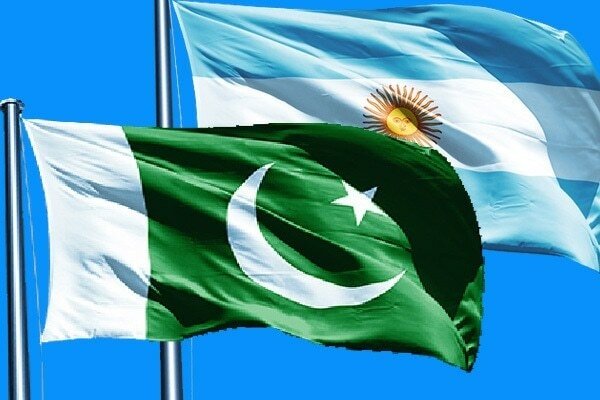
In a multipolar world, Argentina and Pakistan are forging stronger geo-economic ties via 2025 trade delegations and MoUs, harnessing agricultural, textile, and tech synergies to boost mutual exports, investments, and resilience for shared prosperity and regional influence.
Key Points
- Diplomatic Boost: The November 2025 MoU between Sialkot Chamber and Argentine Chamber for Asia-Pacific enhances business linkages, following a Pakistani delegation securing $8M export orders and $10M prospects in textiles and leather.
- Trade Dynamics: Bilateral trade hit $329.75M in 2024, with Argentina exporting $287.83M (soybeans, animal feed) to Pakistan, up 15% annually; Pakistan’s $41.92M exports (textiles, instruments) show 10% growth potential.
- Investment Prospects: Opportunities in joint agro-processing, pharmaceuticals, and renewables; Argentina’s lithium expertise complements Pakistan’s IT and labor, supported by MERCOSUR framework ratified in 2024.
- Sectoral Alignment: Agriculture and energy collaborations could address food security and climate challenges, with projected GDP growths of 4.5% (Argentina) and 3% (Pakistan) in 2025 fostering stability.
- Resilient Futures: Amid global uncertainties, South-South ties via BRICS aspirations and trade diversification promise job creation, with remittances and surpluses bolstering both economies.
Amid shifting global alliances, the geo-economic partnership between Argentina and Pakistan stands as a model of South-South collaboration, ripe with opportunities for sustainable growth. Policymakers can prioritize frameworks like the 2024 MERCOSUR-Pakistan trade agreement to streamline tariffs and foster joint commissions. Investors eye lucrative sectors blending Argentina’s resource wealth with Pakistan’s manufacturing prowess, while academics explore rational models of balanced trade amid climate vulnerabilities. The general public benefits from affordable imports, employment in ventures and cultural ties.
Recent engagements signal momentum. In November 2025, a TDAP-led Pakistani delegation of 13 firms visited Argentina, conducting over 250 B2B meetings and 30 industrial visits, yielding $8M confirmed export orders in apparel, workwear, home textiles, leather goods, and sportswear. An additional $10M in prospects is under negotiation, underscoring immediate gains. A pivotal MoU signed on November 14, 2025 between the Sialkot Chamber of Commerce and Industry (SCCI) and the Argentine Chamber of Commerce for Asia and Pacific aims to improve market access, share economic intelligence and build institutional links. This builds on 75 years of diplomatic relations, with embassy efforts in Buenos Aires emphasizing trade diversification beyond traditional partners.
Economically, both nations demonstrate recovery. Argentina’s GDP grew 4.5% in 2025, driven by exports surging 9.3% YoY in October, amid fiscal surpluses and inflation easing to 25.3% projected for 2026. Trade balances improved, with a $2.5B surplus in November 2025, fueled by primary exports. Pakistan’s economy expanded 3% in FY2025-26, supported by industrial rebound (4.77% growth) and services (2.91%), with inflation at moderate levels and remittances bolstering a $1.9B current account surplus. Despite floods impacting agriculture, reconstruction efforts project 3.4% growth in FY2026-27, per World Bank.
Bilateral trade, though modest, is expanding. In 2024, Argentina exported $287.83M to Pakistan, primarily soybeans ($150M), animal feed ($80M), and corn ($30M), reflecting a 15% annual rise. Monthly data shows November 2025 exports at $62.8M, up 34.3% YoY. Pakistan exported $41.92M to Argentina, led by textiles ($20M), surgical instruments ($10M), and apparel ($5M), with 10% growth. Total trade reached $329.75M, up from $280M in 2023, highlighting untapped potential under the MERCOSUR framework, which Pakistan ratified in September 2024 for preferential access.
|
Bilateral Trade Overview (2024-2025) |
Argentina to Pakistan |
Pakistan to Argentina |
|
Total Value (2024) |
$287.83M |
$41.92M |
|
Annual Growth Rate (2023-2024) |
15% |
10% |
|
Key Products |
Soybeans, Animal Feed, Corn |
Textiles, Surgical Instruments, Apparel |
|
Monthly Value (Nov 2025) |
$62.8M (34.3% YoY) |
$4.91M (-37.8% YoY) |
Investments offer win-win avenues. Argentina’s lithium reserves (21M tons) and renewable energy push (20% target by 2025) align with Pakistan’s green tech needs, potentially via joint solar or biofuel projects. Pakistan’s cost-effective pharmaceuticals and IT services could modernize Argentine sectors, while agro-tech collaborations in soybean processing address Pakistan’s import dependency ($5.2B annually). Defense ties, inspired by Brazil-Pakistan MoUs, could extend to Argentina for technology transfers. Analysis indicates navigating geopolitical shifts—Argentina’s G20 role complements Pakistan’s multi-alignment—could counter vulnerabilities, with both ranking high in climate risks.
Potentials extend to emerging domains. BRICS aspirations (Pakistan applied in 2026; Argentina supportive despite opt-out) could amplify market access, fostering AI and industrialization synergies. Joint ventures in textiles promise employment for Pakistan’s youth and supply chain resilience for Argentina. For the public, benefits include affordable Argentine edibles and Pakistani goods, enhancing livelihoods amid Argentina’s poverty drop to 38.9% and Pakistan’s stable reserves ($16.64B).
Challenges like deficits and distances require logistics enhancements, yet the optimistic outlook prevails: revitalized commissions and exchanges can drive inclusive development, positioning both as Global South leaders.
|
Economic Indicators Comparison (2025-2026 Projections) |
Argentina |
Pakistan |
|
GDP Growth (2025) |
4.5% |
3.0% |
|
GDP Growth (2026) |
4.0% |
3.4% |
|
Inflation (Recent) |
44.5% |
Moderate |
|
Trade Balance (Recent) |
+$11B |
Surplus |
|
Key Sectors for Cooperation |
Agriculture, Renewables |
Textiles, IT |
Conclusion
Argentina and Pakistan’s geo-economic bond, energized by the 2025 MoU and delegation successes, unlocks transformative potentials in agriculture, textiles, and energy. Policymakers can harness MERCOSUR for resilient policies; investors capitalize on joint ventures in lithium and IT; academics analyze South-South models; and the public gains from jobs, affordability, and exchanges. This partnership not only elevates bilateral trade and innovation but also fortifies Global South stability against volatilities, charting a course for enduring prosperity through dedicated collaboration.
* Dr. Muhammad Jahanzaib is the Founder & Chief Visionary Officer (CVO) of Diamanium Thinkers, a global think tank. He holds a PhD in International Relations, specializing in the intersection of geo-politics and geo-economics in Pakistan’s foreign and domestic policy. A double gold medalist and published scholar, he writes on economic intelligence, economic diplomacy, political economy, AI and regional cooperation in South Asia and beyond. He can be reached at jahanzaibdgc@gmail.com.
Key References
- “Argentina (ARG) and Pakistan (PAK) Trade” – https://oec.world/en/profile/bilateral-country/arg/partner/pak
- “Pakistan (PAK) and Argentina (ARG) Trade” – https://oec.world/en/profile/bilateral-country/pak/partner/arg
- “Pak-Argentina engagements result in confirmed export orders of $8m” – https://www.nation.com.pk/17-Nov-2025/pak-argentina-engagements-result-confirmed-export-orders-dollar-8m
- “With the efforts of the Embassy of Pakistan, Buenos Aires…” – https://mofa.gov.pk/gallery/with-the-efforts-of-the-embassy-of-pakistan-buenos-aires-the-sialkot-chamber-of-commerce-industry-and-the-argentina-chamber-of-commerce-and-industry-for-asia-pacific-signed-an-mou-in-buenos-aires-on-14-november-2025-this-important-step-opens-new-doors-for-cooperation-deeper-business-linkages-and-the-growth-of-bilateral-trade-between-pakistan-and-argentina-looking-forward-to-seeing-the-opportunities-this-partnership-will-create-for-our-business-communities?mission=buenos-aires
- “Latin America: An Untapped Market for Pakistan” – https://www.issra.pk/insight/2025/Latin-America-An-Untapped-Market-for-Pakistan/insight.html
- “Argentina Exports to Pakistan” – https://tradingeconomics.com/argentina/exports/pakistan
- “Pakistan Exports to Argentina” – https://tradingeconomics.com/pakistan/exports/argentina
- “Argentina GDP Annual Growth Rate” – https://tradingeconomics.com/argentina/gdp-growth-annual
- “PAKISTAN: Sustained Reforms Needed for Inclusive Growth…” – https://www.worldbank.org/en/news/press-release/2025/10/27/-pakistan-sustained-reforms-needed-for-inclusive-growth-economic-stability-and-flood-recovery
- “From Crisis to Reforms in Argentina: Learning for Pakistan” – https://pide.org.pk/research/from-crisis-to-reforms-in-argentina-learning-for-pakistan