
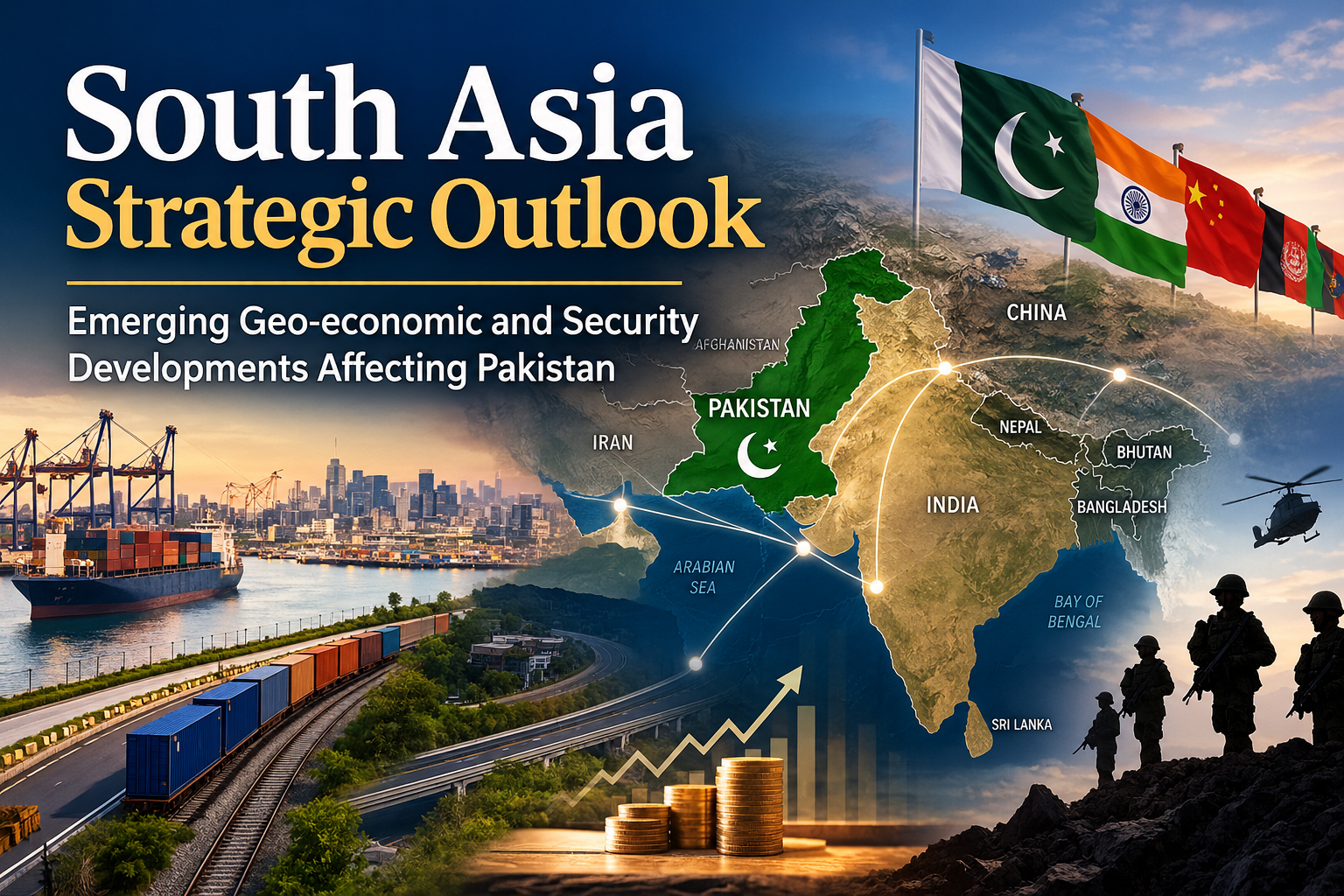
 Pakistan is managing a hostile western border, a frozen eastern front, and a Gulf war that threatens its energy supply and finances, all at once. We assess that the most likely path over the next six to twelve months is continued managed instability. Escalation is more likely to come from militant violence and the Iran war.
Executive Summary: Key Judgments
- Afghanistan spillover is the most immediate security threat: After months of Pakistani air strikes in Afghanistan, and a fragile ceasefire, a militant attack on a police complex in Kohat on 18 September resulted in the death of at least 31 people, according to reports. The likelihood of continued high level of militant violence in Khyber Pakhtunkhwa (KP) and Pakistan’s further cross-border strikes in the coming half year remains high. Confidence: high.
- Pakistan’s role as a US–Iran mediator is a diplomatic gain with real economic exposure: Islamabad hosted the April talks, helped to broker the June memorandum but the MoU is in hot waters and Hormuz is still disrupted. It is probable that the Strait will remain in the dice of shut and open with frequent intervals while a sustained disruption of the Strait will continue to place pressure on Pakistan’s energy import bill, inflation and reserves. Confidence: medium.
- Water has joined terrorism as a trigger for an India–Pakistan crisis: At the end of August, the Permanent Court of Arbitration ruled the IWT as valid, to which India objected. If there is a war fought over water in either country, it will not happen within a year, but it is possible if there is a mass-casualty attack in one of them, and the rhetoric about water would raise the stakes. Confidence: medium.
- Pakistan’s economic recovery is real but threatened: In May, the IMF lowered its growth and increased its inflation estimates for FY27, due to the war in the Middle East. The level of foreign reserves has increased but still inadequate. Confidence: medium.
- China is politically supportive but commercially cautious: CPEC 2.0 is essentially on paper, but the Chinese nationals’ security concerns and the budget constraints of Pakistan are hampering the fresh investments. In Afghanistan, China has a vested interest in stability as it seeks to mediate. China has a direct interest in stability in Afghanistan as it is trying to mediate in the country. Confidence: medium.
- Pakistan is hedging across the US, China, and the Gulf, and its commitments are growing: The Makkah Joint Defence Agreement of 7 August introduces obligations to which there is no clear machinery of implementation. The primary danger is entanglement in the event of a widening of the Gulf war. Confidence: medium.
1. Introduction and Scope
This note assesses developments affecting Pakistan’s security and economic resilience from roughly October 2025 to 21 September 2026. It covers Afghanistan and internal security, India–Pakistan relations, the Gulf war and its energy effects, China and CPEC, and Pakistan’s alignments. It looks ahead six to twelve months.
The note does not cover Pakistan’s domestic party politics, relations with Bangladesh or Central Asia, or US–India relations in detail. It is an analytical strategic intelligence note and does not include policy recommendations. The assessment relies on open sources only.
2. Strategic Context
At present, there are three structural features that give form to the picture. Firstly, Pakistan has been dealing with militancy along its western border since the Taliban took over power in Afghanistan in 2021 and considers the militancy as an external problem and treats it as Afghanistan related. Kabul isn’t accepting this notion. Second, India and Pakistan have not held any formal talks since the confrontation between the two countries of 7-10 May 2025. Thirdly, Pakistan is reliant on foreign energy sources and foreign capital, thus making its security decisions largely dependent on its economic situation.
3. Main Analysis
3.1 Afghanistan spillover and internal security
What reporting indicates: UN experts state that Pakistan attacked militant camps on 21st-22nd February 2026, the Taliban responded with an attack on 26th February and Pakistan launched a broader offensive on 27th February. The operation in Pakistan is being reported as ‘Ghazab Lil Haq’. In early April, China held talks in Urumqi. Two days later on 27 April, both sides were again alleging cross-border attacks. According to Kabul and the UN, civilian deaths include 289 killed or injured in Pakistani strikes, as reported by UN figures in March, and dozens more in June in an additional round of strikes.
On 8 August, Interior Minister Mohsin Naqvi reportedly announced that the border crossings and transit routes will resume services, but so far no confirmation has been received from the Pakistani authorities and only migrant returns are being moved through three crossings, based on the same report. A suicide car bombing and gun attack on the Old Police Lines complex in Kohat on 18 September killed at least 31 people, including 16 police officers, and injured over 100 people. Six soldiers had been killed in Hangu on 20 Sep by fire exchange of militants.
Driver: Pakistan wants tangible action against the militants by the Taliban. Kabul claims it has no jurisdiction over them and the border is tough to maintain. The militants are linked with but not a part of the Afghan Taliban, the latter of which restricts Kabul’s actions. Deportations of Afghans and border closures add friction. Militants seem to have targeted police and counter-terrorism units in KP.
Implications. The war affects Pakistan’s trade volume with Afghanistan, which in 2022-23 was estimated to be worth USD 1.8 billion, and damages the economy of KP. Airstrikes allegedly kill civilians and incur UN criticism and loss of diplomatic credibility for Pakistan.
Indicators: Monitor increase in frequency and severity of attacks linked to militants in KP and Balochistan; if the Urumqi track or similar track resumes; and if there is any verifiable step taken by the Taliban against the militant leaders.
3.2 India–Pakistan: water as the new flashpoint
What reporting indicates: India suspended the IWT in the aftermath of the Indus Water dispute between the two and, in June, stated it will remain suspended until Pakistan tackles cross-border terrorism. Water is the issue of national security and may trigger a war, the Defence Minister Khawaja Asif said in June, while current developments don’t warrant military action. Water was a red line on 14 August as stated by Prime Minister Shehbaz Sharif. The Permanent Court of Arbitration in the end of August, unanimously, decided that the treaty would continue to be in full force and that India would not be able to unilaterally suspend it.
Drivers: The Indus system is crucial for Pakistan: CSIS estimates that 90 per cent of Pakistanis reside in the basin, and that more than 90 per cent of its crops are irrigated from it and most of its hydropower comes from it. India attaches an anti-terror dimension to the treaty and seeks leverage, but does not call it off. In the short term, there is little cost for India to ignore the ruling.
Implications: Pakistan has a legal and diplomatic basis, which, however, the award cannot be enforced. The primary risk is a sudden crisis in Kashmir or elsewhere which is caused by a terror attack and adds water to the already burning issues. There are operational (medium confidence) and political/legal (high confidence) limitations to near-term physical change to river flows in India.
Indicators: Keep an eye on the Indian announcements on hydropower projects (on western rivers), changes to any hydrological data-sharing, incidents at the LoC, and whether either side resumes crisis communications.
3.3 The Gulf war, Hormuz, and Pakistan’s economy
What reporting indicates: On 28 February 2026, the US-ISRAEL war on Iran started. Iran cut off shipping through the Strait of Hormuz and in March, the International Energy Agency’s head reported that the interruptions were more than the combination of the oil crises of 1973 and 1979. During April, Pakistan facilitated a two-week ceasefire and facilitated talks held in Islamabad between US Vice President JD Vance and Iran’s parliamentary speaker. A Memorandum of Understanding (MoU) was signed on 17 June, but in July tension in the Harmoz arose with a new round of US air raids. On 17 August the 60-day deadline for a final deal was exceeded. Iran’s security chief on 19 September said that consultations with Pakistan and Qatar were ongoing and that Tehran was waiting to hear back from the United States. Later, President Trump stated that he had a big decision to make with regards to resuming large-scale attacks.
In May the IMF has completed its third review of the programme in Pakistan. It lowered expected growth for FY27 to 3.5 per cent from 4.1 per cent, raised inflation estimate to 8.4 per cent and lowered the reserves projection to $20.9 billion, calling the war as the biggest external shock since FY22-23. It also stated that the level of reserves is still inadequate.
Drivers: Pakistan imports much of its energy through or near the Gulf. It also has ties with Iran, Saudi Arabia, and Washington, which made it an acceptable mediator to all sides. Doha and Muscat are also active, so Pakistan’s role is important but not exclusive.
Implications: Success would raise Pakistan’s standing with Washington, the Gulf, and Beijing, which issued a joint five-point initiative on the war with Islamabad in the spring. Failure, or a return to large-scale US strikes, would raise fuel prices, put pressure on the rupee and reserves, and test Pakistan’s balance between Tehran and Riyadh. One IISS analysis reports that Pakistan allowed Iran to reroute some trade over land corridors during the US blockade, if accurate it could create friction with Washington.
Indicators: Watch Brent prices and Pakistan’s fuel import bill, SBP reserve levels, any US decision to resume strikes, and whether Iran and Oman finalise a shipping arrangement for Hormuz.
3.4 China and CPEC
What reporting indicates: The CPEC Secretariat reported on 31 August the 92nd progress review under the 2025–2029 action plan, and Chinese delegations visited Islamabad in August to discuss CPEC 2.0 business and industrial cooperation. Earlier in 2026, Pakistan announced a special police unit to protect Chinese nationals. Reports in 2025 said China had stepped back from financing the ML-1 railway, with the Asian Development Bank (ADB) considered as an alternative. Pakistani commentators describe Gwadar as slow to develop.
Drivers: Attacks on Chinese nationals, mostly in Balochistan, and Pakistan’s arrears to Chinese power producers make Beijing cautious. At the same time, China values Pakistan as a diplomatic partner and as a route that reduces its exposure to other maritime chokepoints. Hormuz disruption may increase the strategic appeal of overland and Gwadar routes.
Implications: China will keep the political relationship strong but commit new capital slowly and in areas where Pakistan can guarantee security and payment. China’s mediation between Islamabad and Kabul suggests it sees Afghan instability as a direct threat to CPEC.
Indicators: Watch new Chinese financing announcements, attacks on Chinese personnel, progress on ML-1 and Gwadar, and Chinese statements on the Pakistan–Afghanistan track.
3.5 Alignments and great-power hedging
What reporting indicates: On 17 September 2025, Pakistan and Saudi Arabia inked a Strategic Mutual Defence Agreement. According to The International Institute for Strategic Studies (IISS), on 7 August 2026, Pakistan, Saudi Arabia and Türkiye signed a Joint Defence Agreement in Makkah, which commits parties to consider an attack on one as an attack on all. IISS also reports that Pakistan deployed about 8,000 troops, fighter jets, and air-defence systems to Saudi Arabia in April.
Drivers: Gulf states doubt US security guarantees, and Pakistan gains financing and diplomatic weight. Pakistan also keeps working relationships with both Washington and Beijing.
Implications: The pacts raise Pakistan’s profile but widen its obligations. If Iran attacks Saudi Arabia again, Islamabad will face pressure to act, while also keeping its mediation role and its border with Iran calm.
Indicator: Watch further Pakistani deployments to the Gulf, any joint command arrangements under the Makkah pact, and Iranian reactions.
4. Outlook and Alternative Scenarios
Most likely trajectory (six to twelve months): managed instability: Militant attacks continue in KP and Balochistan, cross-border incidents with Afghanistan recur, India–Pakistan relations stay frozen without open conflict, and the Iran war remains unresolved but mediated. We assess this as the most likely path. Confidence: medium.
Key variables and wildcards: a mass-casualty attack attributed to cross-border networks; a US decision to resume large-scale strikes on Iran; a terrorist attack in Kashmir or an Indian city; the durability of IMF programme discipline; and the security of Chinese personnel.
| Scenario | Description | Likelihood | Indicators to watch |
| A. Managed instability | Continued violence, limited talks, no settlement on any front | Most likely | Steady attack tempo; intermittent border closures; mediators still engaged |
| B. Selective de-escalation | A Hormuz arrangement and a working Kabul channel ease pressure | Possible | Reopened trade crossings; resumed US–Iran talks; falling oil prices |
| C. Multi-front stress | US strikes resume, a major attack triggers an India crisis | Consequential | Trump decision to resume strikes; Kashmir attack; reserve drawdown |
5. Implications for Pakistan
Security: Pressure points include the western border and KP inland. Strikes bring costs and there doesn’t seem to be a clear end state and the militant attack indicates militants can plan for complex attacks on hardened targets.
Economy: Pakistan’s positive macroeconomic situation is reliant on the IMF programme and oil prices. If it is a long-term crisis in the Strait of Hormuz, this would impact on growth, increase inflation and leave fewer reserves, while border closures would limit trade and increase prices.
Diplomacy: Pakistan’s diplomacy has increased in strength both as a mediator and as a defence partner, compared to a year ago. That weight is subjected to events that it cannot control, such as a U.S. judgment call on Iran.The expectations of internal stability are eroded by the repeated attacks on police and civilians which weaken institutions. Social pressure from deportations of Afghans and economic hardships.
Second and third order effects:
A US–Iran standoff would lead to higher fuel costs, higher transport costs and food costs and thus to higher pressure on the fiscal targets of the IMF programme. If the major attack occurs in KP, it could spark more strikes in Afghanistan and drive the Kabul government towards other regional partners as the trade routes may be shut. A crisis between the two countries in the midst of deployment to the Gulf will divert military resources and may challenge the ability of the Chinese and the Gulf countries to mediate between the two. Pressure on more than one front could lessen with the successful implementation of a Hormuz arrangement, a verified Taliban step on the militants, or a revived China–Pakistan–Afghanistan channel.
* Dr. Muhammad Jahanzaib holds a PhD in International Relations, is a double gold medalist and author of the book The Interplay of Geo-Politics and Geo-Economics in Pakistan’s Foreign Policy (Post-2008) (Palgrave Macmillan, 2026), along with several esteemed publications. As Chief Visionary Officer of Diamanium Thinkers (a global think tank), he brings over 15 years of experience advising ministries, diplomats, security agencies, the corporate sector, and civil society. His advisory work spans economic diplomacy, political economy, economic intelligence, strategic financial advisory, security, society and the geo-economic world dynamics. He offers a unique blend of practitioner insight and academic rigor, combining hands-on engagement with state institutions and strategic expertise grounded in research. He can be reached at jahanzaibdgc@gmail.com.
** Sheikh Eilaf Tariq is a Research Intern at Diamanium Thinkers, working on Strategic Studies, Security and Geopolitics with a focus on South Asia and the Middle East. His research interests centre on conflict transformation and international relations.
6. Sources
This note uses open sources, prioritising official releases and specialist research institutions. Sources are listed below. Key claims were checked against at least one other outlet where possible.
- AFP via Malay Mail, “At least 31 dead as militants attack Pakistan police HQ in Kohat,” 19 September 2026
- OHCHR, UN experts on the Afghan–Pakistani border, March 2026
- KabulNow, “Pakistan to Reopen Border Crossings and Transit Routes with Afghanistan,” 9 August 2026
- Al Jazeera, “Pakistan wins Indus waters battle at The Hague,” 1 September 2026
- CNBC, “Indus water treaty becomes latest India-Pakistan flashpoint,” 22 June 2026
- ISAS, “The Indus Waters Treaty: India-Pakistan Tensions Persist,” August 2026
- Al Jazeera, “US-Iran talks in deadlock,” 13 August 2026
- RFE/RL, Iran live blog, 19 September 2026
- ProPakistani, “IMF Predicts Higher Inflation and Slower GDP Growth for Pakistan,” 11 May 2026
- RFE/RL, “Pakistan Creates Special Security Unit To Protect Chinese Citizens,” January 2026