
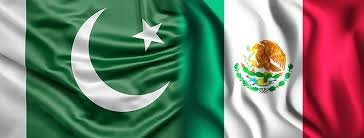
Mexico and Pakistan are enhancing geo-economic ties through 2025 bilateral consultations and trade growth, tapping synergies in textiles, pharmaceuticals, agriculture, and energy to foster mutual investments, job creation, and sustainable prosperity for both economies.
Key Points
- For Policymakers: Strengthen frameworks like the 2025 Bilateral Political Consultations to align tariffs, leverage USMCA and CPEC for regional access, and prioritize joint policies in energy and agriculture, ensuring balanced trade and geopolitical stability.
- For Investors: Harness Mexico’s $36.9 billion FDI inflows in 2024 and Pakistan’s SEZs with tax incentives, targeting high-potential sectors like pharmaceuticals and textiles for resilient returns amid projected GDP growth.
- For Academics: Study trade surges from $272 million in 2022 to over $380 million in 2024, analyzing imbalances and cooperative models in South-South dynamics to inform research on emerging market integration.
- For the General Public: Gain from affordable exports like Pakistani medical instruments for Mexicans and Mexican cotton for Pakistanis, boosting livelihoods through jobs in agro-processing and cultural exchanges.
Mexico and Pakistan, as influential emerging markets, are strategically advancing their geo-economic collaboration to leverage complementary strengths. Mexico’s GDP stands at approximately $1.8 trillion in 2025 with 0.7% growth, driven by manufacturing and energy, while Pakistan’s $372 billion economy projects 3.2% growth in 2026, fueled by textiles and agriculture. Recent milestones, such as the 7th Round of Bilateral Political Consultations in Mexico City in 2025, build on the 6th round in 2023, emphasizing trade, investment, and technology transfer. These dialogues underscore a commitment to geo-economics, with Pakistan focusing on peace, development, and connectivity. Blending current data with rational analysis, this partnership promotes mutual benefits for policymakers crafting enabling environments, investors pursuing opportunities, academics exploring trends, and the public enjoying enhanced access to goods.
Trade volumes highlight growing engagement, though imbalances persist. In 2024, bilateral trade exceeded $380 million, up from $272 million in 2022. Pakistan’s exports to Mexico reached $317 million, while Mexico’s exports to Pakistan were around $70 million in FY 2024-25. This reflects an 8.4% increase in Pakistan’s exports from November 2023 to 2024. Key exchanges include Pakistani medical instruments ($59.2 million) and textiles to Mexico, and Mexican cotton ($29.9 million) and zinc to Pakistan. Rational cooperation can address the deficit through diversified ventures, such as using Mexican cotton in Pakistani textile processing for re-export.
The table below summarizes trade trends:
|
Year |
Total Bilateral Trade (US$ million) |
Pakistan Exports to Mexico (US$ million) |
Mexico Exports to Pakistan (US$ million) |
Trade Balance (Favoring Pakistan, US$ million) |
|
2022 |
272 |
220 |
52 |
168 |
|
2023 |
~310 |
250 |
60 |
190 |
|
2024 |
387 |
317 |
70 |
247 |
|
2025 (Partial, Nov) |
~30.5 |
27 |
3.5 |
23.5 |
Product synergies drive potentials. Pakistan’s $36 billion textile sector can integrate Mexican cotton, creating value chains for apparel exports to North America via USMCA. In pharmaceuticals, Pakistan’s generics ($218 million exports globally in 2019, growing) align with Mexico’s healthcare demands, with joint R&D reducing costs. Agriculture offers tech transfer: Mexico’s advanced irrigation can boost Pakistan’s yields in rice and cotton, while Pakistan’s agro-tech supports Mexico’s berry and avocado industries. Energy collaboration is promising; Mexico’s oil production under Plan México can meet Pakistan’s import needs, with joint renewables in solar and wind via Pakistan’s incentives.
The following table outlines key sectors:
|
Sector |
Mexico’s Strengths |
Pakistan’s Strengths |
Cooperative Potentials |
Estimated Benefits |
|
Textiles |
Cotton production, labor |
Manufacturing, $36B exports |
Integrated supply chains, USMCA access |
15-20% export growth, 10,000+ jobs |
|
Pharmaceuticals |
Market demand, incentives |
Generics, surgical goods |
R&D hubs, local production |
$200M+ FDI, affordable generics |
|
Agriculture |
Avocados, berries, tech |
Rice, cotton, agro-processing |
Tech transfer, joint ventures |
Enhanced yields, food security |
|
Energy |
Oil/gas, renewables |
SEZs, engineering |
Supply deals, green projects |
Reduced imports, sustainable energy |
For policymakers, these align with AfCFTA-like frameworks, using Mexico as a Latin American gateway. Investors benefit from Mexico’s $1.5 billion tax deductions under Plan México and Pakistan’s increasing GDP target by 2028. Academics can examine how ties mitigate risks like U.S. tariffs. The public gains affordable goods, skills, and stability, despite challenges like the Mexican ban on Pakistani rice (ongoing resolution). This alliance exemplifies South-South cooperation, turning potentials into prosperity.
Conclusion
Mexico and Pakistan’s geo-economic ties, advanced by 2025 consultations and trade rising to $387 million in 2024, unlock synergies in textiles, pharmaceuticals, agriculture, and energy. This fosters investments, innovation, and balanced growth amid Mexico’s 1.7% and Pakistan’s 3.2% GDP projections for 2027. Policymakers should deepen agreements, investors capitalize on incentives, academics analyze trends, and the public enjoy benefits. Bridging Latin America and South Asia, both nations model resilient partnerships for inclusive development and shared success.
* Dr. Muhammad Jahanzaib holds a PhD in International Relations, is a double gold medalist and author of the book The Interplay of Geo-Politics and Geo-Economics in Pakistan’s Foreign Policy (Post-2008) (Palgrave Macmillan), along with several esteemed publications. As Chief Visionary Officer of Diamanium Thinkers (a global think tank), he brings over 15 years of experience advising ministers, diplomats, security agencies, the corporate sector, and civil society. His advisory work spans economic diplomacy, political economy, economic intelligence, security, society, strategic financial advisory, and the geo-economic world dynamics. He offers a unique blend of practitioner insight and academic rigor, combining hands-on engagement with state institutions and strategic expertise grounded in research. He can be reached at jahanzaibdgc@gmail.com.
Key References
- Pakistan and Mexico held the 7th Round of Bilateral Political Consultations in Mexico City – https://www.instagram.com/p/DJFjm7vAs-M?hl=en
- Pak, Mexico 6th BPC review bilateral ties, multilateral developments – https://www.app.com.pk/national/pak-mexico-6th-bpc-review-bilateral-ties-multilateral-developments
- Sixth Round of Bilateral Political Consultations between Pakistan and Mexico – https://mofa.gov.pk/sixth-round-of-bilateral-political-consultations-between-pakistan-and-mexico
- Mexico (MEX) and Pakistan (PAK) Trade – https://oec.world/en/profile/bilateral-country/mex/partner/pak
- Pakistan (PAK) and Mexico (MEX) Trade – https://oec.world/en/profile/bilateral-country/pak/partner/mex
- Mexico Imports from Pakistan – https://tradingeconomics.com/mexico/imports/pakistan
- YEAR BOOK 2024-25 | Ministry of Commerce – https://www.commerce.gov.pk/wp-content/uploads/2025/11/Year-Book-2024-25.pdf
- Pakistan: Foreign trade, investments, migration and remittances | Data México – https://www.economia.gob.mx/datamexico/en/profile/country/pakistan
- 2025 Investment Climate Statements: Pakistan – https://www.state.gov/reports/2025-investment-climate-statements/pakistan
- 2025 Investment Climate Statements: Mexico – https://www.state.gov/reports/2025-investment-climate-statements/mexico