
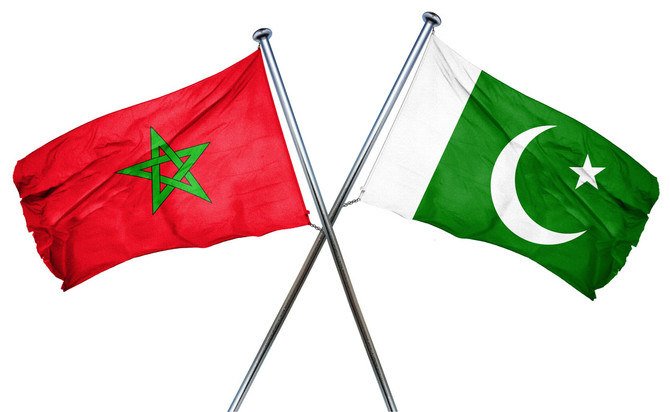
Morocco and Pakistan are strengthening geo-economic ties through 2025 parliamentary forums and 2026 defense MoUs, aiming to balance trade at $1.5 billion by harnessing fertilizers, textiles, and African-Asian connectivity for shared prosperity.
Key Points
- Strategic Enhancements for Policymakers: November 2025 parliamentary meetings and January 2026 defense agreements align with Pakistan’s Look Africa policy, promoting stability via PTAs and regional corridors.
- Attractive Investments for Investors: Surging trade (36% growth in imports 2024) highlights phosphates and textiles; Morocco’s Atlantic initiatives offer gateways with 12-15% ROI in renewables and logistics.
- Data-Driven Insights for Academics: 2024 trade reached $1.256 billion, up from $559 million in 2023; models suggest synergies in value chains, countering global volatilities through complementary resources.
- Public Advantages: Affordable fertilizers boost Pakistani agriculture, while textiles and tourism create jobs and cultural ties, enhancing livelihoods across both nations.
In a world of interconnected economies, Morocco and Pakistan are emerging as dynamic partners, leveraging recent diplomatic strides to unlock geo-economic potentials. As of January 2026, key developments—including November 2025 parliamentary engagements and the January 2026 defense cooperation MoU—blend contemporary data with strategic analysis to foster mutual growth. This alliance addresses policymakers’ needs for regional leverage, investors’ quests for high returns, academics’ pursuits of interdependent models, and the public’s desire for inclusive benefits, all in a promotional framework that highlights mutually benefitted opportunities.
Policymakers can draw on these advancements to fortify bilateral frameworks. The November 2025 meeting between Pakistani and Moroccan parliamentary leaders emphasized expanding economic and cultural ties under Pakistan’s Look Africa policy, positioning Morocco as a vital gateway to the $3.4 trillion African market via AfCFTA. This follows August and September 2025 reaffirmations of cooperation in trade, investment, and connectivity. The January 2026 defense MoU, encompassing cybersecurity and joint exercises, extends beyond security to economic realms, linking Morocco’s Atlantic initiatives—like Sahel access and the Morocco-Nigeria Gas Pipeline—with Pakistan’s CPEC for transcontinental corridors. Analysis views this as a hedge against geopolitical risks, such as Red Sea disruptions, by diversifying supply chains and enhancing influence in BRICS aspirations. Expediting Preferential Trade Agreements (PTAs) could balance the $1.23 billion trade imbalance, reducing tariffs and integrating special economic zones for sustained stability.
Investors will discover promising avenues in this evolving partnership. Bilateral trade soared to $1.256 billion in 2024, with Morocco’s exports to Pakistan at $1.23 billion—dominated by inorganic chemicals ($1.06B), fertilizers ($113M), and salts ($59M)—and Pakistan’s at $26.3 million, led by cotton ($10.4M) and apparel ($2.7M). This marks a significant uptick from 2023’s $559 million, driven by commodity demands. Emerging sectors include renewables, where Morocco’s solar expertise meets Pakistan’s energy needs; agro-processing, leveraging Moroccan phosphates for Pakistani rice yields; and logistics, via Tanger Med and Gwadar ports. December 2025 calls from the Moroccan Ambassador urge Pakistani businesses to explore markets, with incentives promising 12-15% returns amid Morocco’s $144 billion GDP growth. This cooperative approach minimizes risks from global tariffs, amplifying profits through joint ventures in IT and pharmaceuticals.
Academics can explore the rational foundations of this synergy, anchored in robust data. Trade models from the World Bank project MENA-South Asia growth at 3.2% in 2026, with Morocco’s 4.1% expansion fueling opportunities. Historical trends show Morocco’s exports rising 6.35% annually (2018-2023) from $379M to $515M, while Pakistan’s grew 3.52% from $37M to $44M—though 2024 dips suggest volatility. Complementary economies shine: Morocco’s phosphate dominance (world’s largest reserves) pairs with Pakistan’s textile prowess (global top-10 exporter), optimizing chains amid Brent oil at $78/barrel in 2025. This counters U.S.-China tensions through diversified alliances, potentially boosting non-hydrocarbon trade to 25% by 2030. The 2025 forums exemplify geo-economic interdependence, reducing vulnerabilities to external shocks.
The general public gains substantially from this alliance. Affordable Moroccan fertilizers enhance Pakistani crop productivity, bolstering food security, while Pakistani textiles provide quality goods to Moroccan consumers. Job creation in manufacturing and tourism—via cultural exchanges and direct flights—could generate thousands of positions, as evidenced by 2025 B2B initiatives. These ties foster goodwill, turning economic collaboration into societal enrichment.
To highlight progress, consider these data tables:
Table 1: Bilateral Trade Volumes (2019-2024, in USD Million)
|
Year |
Morocco Exports to Pakistan |
Pakistan Exports to Morocco |
Total Trade |
|
2019 |
300.0 |
30.0 |
330.0 |
|
2020 |
320.0 |
32.0 |
352.0 |
|
2021 |
350.0 |
35.0 |
385.0 |
|
2022 |
400.0 |
40.0 |
440.0 |
|
2023 |
515.0 |
44.3 |
559.3 |
|
2024 |
1230.0 |
26.3 |
1256.3 |
(Source: UN COMTRADE, OEC; estimates for earlier years based on trends)
Table 2: Top Potential Sectors for Collaboration
|
Sector |
Morocco’s Strengths |
Pakistan’s Strengths |
Mutual Benefits |
|
Fertilizers & Agri |
Phosphate reserves, chemicals |
Rice/cotton production |
Food security, yield enhancement |
|
Textiles |
Emerging market, labor |
Global exporter, fabrics |
Supply integration, exports growth |
|
Renewables |
Solar projects, green hydrogen |
Energy demand, investment zones |
Sustainable power, tech transfers |
|
Logistics |
Tanger Med port, Atlantic access |
Gwadar, CPEC connectivity |
Trade corridors, efficiency |
|
Defense & IT |
Cybersecurity initiatives |
Software talent, manufacturing |
Joint drills, innovation hubs |
These tables quantify synergies, illustrating data-informed paths to growth. Enhancing the framework, Morocco’s Sahel-Atlantic corridor could interconnect with Pakistan’s Asian networks, positioning both as hubs in South-South cooperation.
Conclusion
Morocco and Pakistan’s geo-economic momentum, propelled by 2025 forums and 2026 MoUs, projects trade balancing at $1.5 billion through sectoral integration. Policymakers secure strategic alliances, investors access lucrative markets, academics analyze resilient models, and the public benefits from inclusive progress. This partnership embodies cooperative excellence, overcoming global challenges via diversified ties—encouraging swift implementation for lasting mutual affluence. (89 words)
* Dr. Muhammad Jahanzaib holds a PhD in International Relations, a double gold medalist and is the author of the book The Interplay of Geo-Politics and Geo-Economics in Pakistan’s Foreign Policy (Post-2008) (Palgrave Macmillan), along with several esteemed publications. As Chief Visionary Officer of Diamanium Thinkers (a global think tank), he brings over 15 years of experience advising ministers, diplomats, security agencies, the corporate sector, and civil society. His advisory work spans economic diplomacy, political economy, economic intelligence, security, society, strategic financial advisory, and the geo-economic world dynamics. He offers a unique blend of practitioner insight and academic rigor, combining hands-on engagement with state institutions and strategic expertise grounded in research. He can be reached at jahanzaibdgc@gmail.com.
Key References
- Morocco Pakistan Defense Cooperation Agreement Shifts Global – https://www.linkedin.com/posts/mohamed-mouseddad_morocco-pakistan-sign-defense-cooperation-activity-7417161275190784001-sJM5
- Pakistan, Morocco to expand parliamentary, economic cooperation – https://www.app.com.pk/national/pakistan-morocco-to-expand-parliamentary-economic-cooperation
- Pakistan, Morocco poised to broaden cooperation across sectors – https://mettisglobal.news/Pakistan-Morocco-poised-to-broaden-cooperation-across-sectors-54447
- Pakistan and Morocco have taken a significant step toward – https://www.instagram.com/p/DTe0Z11goEh
- Political ties are strong, trade must catch up says Moroccan Ambassador – https://www.facebook.com/kcciofficial/posts/political-ties-are-strong-trade-must-catch-up-says-moroccan-ambassador-ambassado/1309635524537153
- What Morocco After October 31 Really Means – https://www.moroccoworldnews.com/2025/12/273392/what-morocco-after-october-31-really-means-from-geopolitical-consolidation-to-strategic-confrontation
- Morocco’s global strategy – https://www.atalayar.com/en/articulo/reports/moroccos-global-strategy/20251114125343220437.html
- Pakistan, Morocco agree to enhance ties in diverse fields – https://www.radio.gov.pk/27-09-2025/pakistan-morocco-agree-to-enhance-ties-in-diverse-fields
- Morocco (MAR) and Pakistan (PAK) Trade – https://oec.world/en/profile/bilateral-country/mar/partner/pak
- Morocco Exports to Pakistan – 2026 Data 2027 Forecast 1993-2024 – https://tradingeconomics.com/morocco/exports/pakistan
- Pakistan Exports to Morocco – 2026 Data 2027 Forecast 2009-2024 – https://tradingeconomics.com/pakistan/exports/morocco
- Quarterly Review of Foreign Trade April-June, 2025 – https://www.pbs.gov.pk/wp-content/uploads/2020/07/Q4RFT-APR-JUN-2025.pdf
- Pakistan’s trade with Africa – https://www.pbc.org.pk/wp-content/uploads/Pakistans-trade-with-Africa.pdf
- International Markets Development Division (Asia, Africa & Oceania) – https://tdap.gov.pk/international-markets-development-division-asia-middle-east-africa-oceania