
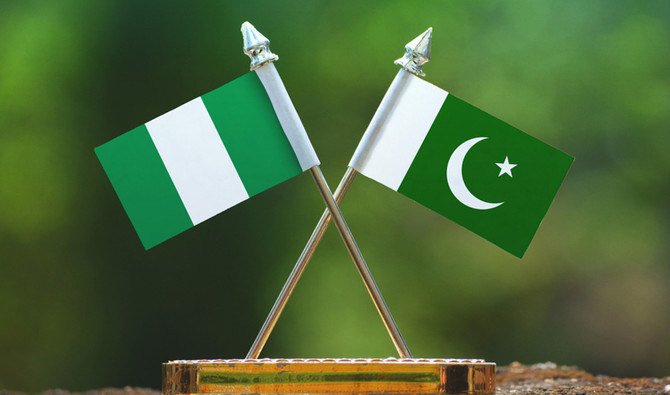
Nigeria and Pakistan are accelerating geo-economic ties via 2025 agreements on trade pacts and visa easing, emphasizing energy, agriculture, textiles, IT, pharmaceuticals, and halal sectors. This collaboration unlocks mutual potentials for sustainable growth, investment, and regional influence amid global shifts.
Key Points
- Recent Bilateral Agreements: In November 2025, both nations committed to fast-tracking a Bilateral Trade Agreement (BTA) and simplifying visas for business and tourism, fostering deeper economic integration.
- Trade Growth Trends: Nigeria’s exports to Pakistan reached $467 million in 2024, dominated by petroleum gas and soybeans, while Pakistan’s exports to Nigeria (est) $40 million, highlighting imbalanced yet expanding flows.
- Sectoral Potentials: Opportunities abound in energy (Nigeria’s LNG for Pakistan’s needs), agriculture (joint agro-processing), textiles (Pakistan’s expertise complementing Nigeria’s cotton), IT (shared youthful tech talent), pharmaceuticals (local manufacturing synergies), and halal trade (leveraging large Muslim populations).
- Economic Indicators: Nigeria’s GDP grew 3.84% in 2024, projected at 4.1% for 2025; Pakistan’s at 2.5% in 2024, expected 2.7% in 2025, with combined potentials targeting $1-3 billion bilateral trade.
- Investment Incentives: Both offer tax holidays, duty exemptions, and SEZs, attracting cross-investments in renewables, manufacturing, and education.
- Challenges and Mitigations: Addressing infrastructure gaps and security through joint initiatives like tech exchanges and multilateral support ensures resilient partnerships.
Nigeria-Pakistan Trade Overview (2023-2024)
|
Year |
Nigeria Exports to Pakistan (USD Million) |
Main Products |
Pakistan Exports to Nigeria (USD Million) |
Main Products |
|
2023 |
349 |
Petroleum Gas (202), Soybeans (70.5) |
39.8 |
Packaged Medicaments, Synthetic Fabrics |
|
2024 |
467 |
Mineral Fuels (360), Oil Seeds (95) |
~40 (est.) |
Pharmaceuticals, Textiles |
(Data from OEC and UN COMTRADE; estimates for 2024 based on trends.)
As emerging powerhouses in Africa and South Asia, Nigeria and Pakistan stand at a pivotal juncture in 2026, leveraging recent geo-economic developments to build a partnership that benefits policymakers, investors, academics, and the general public. For policymakers, this alliance offers a blueprint for strategic diplomacy, aligning with Nigeria’s Vision 2050 and Pakistan’s CPEC long-term plans to synchronize development strategies and enhance regional stability. The November 2025 meeting between Pakistan’s Commerce Coordinator Rana Ihsaan Afzal Khan and Nigeria’s Foreign Minister Yusuf Maitama Tuggar marked a milestone, committing to fast-track the Nigeria-Pakistan Bilateral Trade Agreement (BTA). This pact, with technical teams resolving issues swiftly, aims to elevate trade to $1 billion in five years, potentially scaling to $3 billion as envisioned by Nigerian officials. Eased visa procedures for businesspersons and tourists will facilitate people-to-people ties, reducing barriers that have historically limited exchanges.
Investors will find fertile ground in this evolving relationship. Nigeria’s vast consumer market of over 220 million and Pakistan’s 250 million-strong population create synergies for cross-border ventures. Trade data underscores this potential: In 2024, Nigeria exported $467 million to Pakistan, primarily mineral fuels ($360 million) and oil seeds ($95 million). Though imbalanced—Nigeria’s exports surged due to petroleum gas—growth rates indicate untapped avenues. Pakistan’s “Engage Africa Policy” since 2021 has boosted ties, with Africa as its third-largest trading partner. Joint ventures in Special Economic Zones (SEZs) could amplify this; Pakistan’s nine CPEC-linked SEZs offer 10-year tax exemptions and duty-free imports, mirroring Nigeria’s EPZs with similar incentives. For instance, Pakistani investors could tap Nigeria’s Dangote Refinery’s naira-for-crude deals, while Nigerian firms explore Pakistan’s Gwadar Free Zone for halal exports.
Academics and researchers can delve into the rational cooperative analysis underpinning this partnership. Both nations share demographic dividends—youthful populations driving innovation—yet face similar challenges like energy shortages and skill gaps. Nigeria’s power grid meets only 19.5% of demand, costing 5-7% of GDP annually, while Pakistan’s natural gas supplies 30% of its energy mix but relies on imports. Cooperative potentials in renewables are evident: Nigeria’s solar incentives (zero duties on panels) align with Pakistan’s exemptions on renewable equipment. A joint SEZ for solar farms could generate $4-8.5 billion in investments by 2030, creating up to 365,000 jobs across both countries. In pharmaceuticals, Nigeria’s sector doubled from 2018-2024, with 186 firms, but relies on imports; Pakistan’s expertise in medicaments could foster local production under Nigeria’s PVAC initiative, targeting $1.6 billion in new investments and 44,000 jobs. Education exchanges, including scholarships under Pakistan’s Technical Assistance Programme, could build human capital, with joint degrees in tech and R&D fostering innovation districts.
For the general public, this geo-economic thrust promises tangible benefits like job creation and affordable goods. Agriculture, a priority sector, holds immense promise: Pakistan’s rice and wheat exports complement Nigeria’s soybeans and cotton, enabling agro-processing JVs to boost food security. Halal trade, serving large Muslim communities, could expand via ECOWAS and SAARC integrations. Amid global uncertainties, this South-South cooperation promotes inclusive multilateralism, leveraging the Belt and Road Initiative (BRI) for trilateral China-Nigeria-Pakistan projects in poverty alleviation and digital economy. Counterarguments, such as security risks in Nigeria’s Niger Delta or Pakistan’s political instability, are mitigated through defence pacts like intelligence sharing and military training—Nigeria has inducted Pakistani JF-17 jets, strengthening ties.
Economic Indicators Comparison (2024-2025 Projections)
|
Indicator |
Nigeria (2024) |
Nigeria (2025 Proj.) |
Pakistan (2024) |
Pakistan (2025 Proj.) |
|
GDP (USD Billion) |
252 |
334 |
373 |
411 |
|
GDP Growth (%) |
3.84 |
4.1 |
2.5 |
2.7 |
|
Per Capita GDP (USD) |
1,135 |
1,460 |
1,581 |
1,707 |
|
Inflation (%) |
34.8 |
~25 (est.) |
23.4 |
~15 (est.) |
(Data from IMF, World Bank; projections reflect stabilization reforms.)
These figures highlight complementary strengths: Nigeria’s oil-driven recovery (production at 1.55 mbpd in 2024) pairs with Pakistan’s manufacturing prowess (textiles at 25% of industrial output). Analysis suggests hedging risks through diversified investments—e.g., Pakistan’s IT sector (exports up 70% in three years) aiding Nigeria’s Startup Act for digital growth. By 2030, joint efforts could add 3-4% to combined GDP growth, per IMF models, emphasizing sustainable, high-quality development. In essence, this alliance is not merely transactional but transformative, promoting win-win outcomes in a multipolar world.
Conclusion
Nigeria and Pakistan’s geo-economic partnership represents a new era of shared prosperity, blending recent developments like the 2025 BTA with vast potentials in key sectors. For policymakers, it strengthens diplomatic leverage; investors gain access to emerging markets; academics uncover innovative models; and the public enjoys enhanced livelihoods. By prioritizing cooperation over competition, both nations can navigate global challenges, fostering inclusive growth, job creation, and regional harmony. This forward-looking alliance, grounded in mutual respect, positions them as beacons for South-South collaboration, unlocking billions in trade and investment by 2030.
* Dr. Muhammad Jahanzaib is the Founder & Chief Visionary Officer (CVO) of Diamanium Thinkers, a global think tank. He holds a PhD in International Relations, specializing in the intersection of geo-politics and geo-economics in Pakistan’s foreign and domestic policy. A double gold medalist and published scholar, he writes on economic intelligence, economic diplomacy, political economy, AI and regional cooperation in South Asia and beyond. He can be reached at jahanzaibdgc@gmail.com.
Key References
- Pakistan, Nigeria Forge Economic Partnership – https://thedailycpec.com/pakistan-nigeria-forge-economic-partnership
- Nigeria, Pakistan agree to fast-track bilateral trade pact, simplify visa procedures – https://www.arabnews.com/node/2624294/pakistan
- Scaling-up Nigeria/Pakistan Bilateral Relations – https://nannews.ng/2025/05/17/scaling-up-nigeria-pakistan-bilateral-relations
- Pakistan (PAK) and Nigeria (NGA) Trade – https://oec.world/en/profile/bilateral-country/pak/partner/nga
- Nigeria Exports to Pakistan – https://tradingeconomics.com/nigeria/exports/pakistan
- Pakistan Imports from Nigeria – https://tradingeconomics.com/pakistan/imports/nigeria
- Fostering Comprehensive Pakistan-Nigeria Cooperation – https://nips.nust.edu.pk/storage/2020/07/NIPS-NIIA-Roundtable-Report-Fostering-Comprehensive-Pakistan-Nigeria-Cooperation.pdf
- Nigeria Country Private Sector Diagnostic Summary – https://www.ifc.org/content/dam/ifc/doc/2025/nigeria-country-private-sector-diagnostic-summary-en.pdf
- Investment Guide Pakistan – https://invest.gov.pk/sites/default/files/inline-files/Investment%20Guide%20.pdf
- 2025 Investment Climate Statements: Nigeria – https://www.state.gov/reports/2025-investment-climate-statements/nigeria
- World Economic Outlook (October 2025) – Real GDP growth – https://www.imf.org/external/datamapper/NGDP_RPCH@WEO/NGA?year=2024
- Country comparison Nigeria vs Pakistan 2026 – https://countryeconomy.com/countries/compare/nigeria/pakistan