
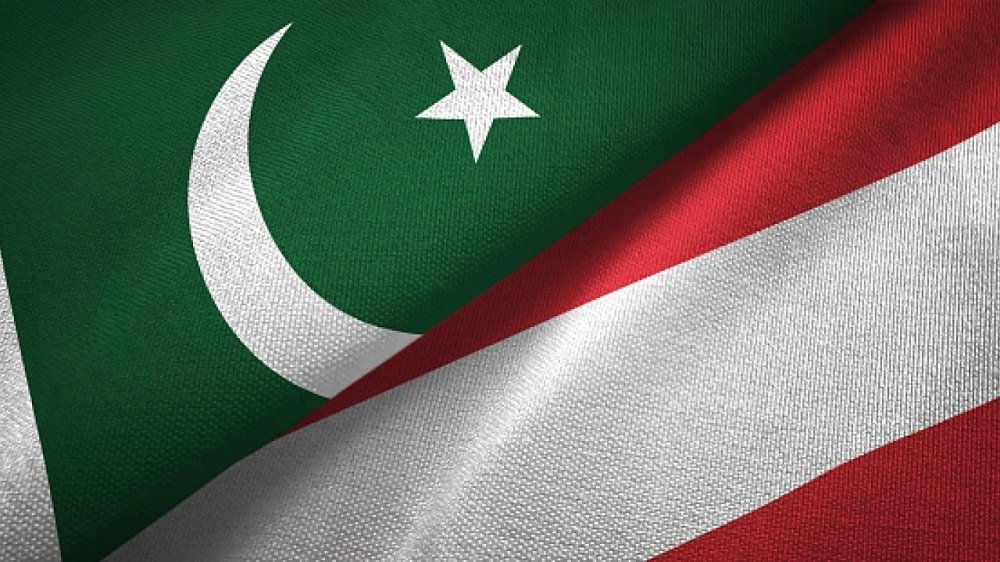
Austria and Pakistan are amplifying geo-economic ties through surging trade, strategic investments, and sectoral synergies. This partnership fosters mutual growth in energy, IT, and tourism, benefiting both countries amid global transitions.
Key Points
- Diplomatic Advancements: September 2025 PM Shehbaz Sharif-Austrian Chancellor meeting emphasized trade, tourism, climate, and education; November 2025 President Zardari urged IT investments.
- Trade Expansion: Bilateral trade reached €408.5 million in 2024, with Pakistan’s exports at €315.5 million (+33%); first half 2025 saw €224 million total, driven by GSP+ duty-free access.
- Investment Momentum: OMV’s $2.5 billion in oil & gas; potentials for €200 million in renewables and tourism; 10 Austrian firms with branches in Pakistan.
- Sectoral Synergies: Complementary potentials in hydropower, environmental tech, textiles machinery, and IT promise high returns and sustainable cooperation.
- Evergreen Foundations: 1950s diplomatic relations and agreements on investment protection underpin enduring resilience.
- Future Projections: Trade could exceed €600 million by 2030 via JWGs and green initiatives.
Austria and Pakistan stand poised to harness their complementary strengths for shared prosperity. Policymakers can leverage this alliance to craft frameworks that integrate Austria’s EU-driven innovation in machinery and renewables with Pakistan’s abundant resources and strategic CPEC connectivity. Recent high-level engagements amplify this momentum: In September 2025, Prime Minister Shehbaz Sharif and the Austrian Chancellor discussed expanding cooperation in trade, tourism, renewable energy, and climate resilience, reaffirming commitments to deepen ties. November 2025 saw President Asif Ali Zardari urging Austrian investments in Pakistan’s IT sector, highlighting a talent pool for collaboration. These build on discussions focusing on strengthening economic relations and investment flows, rooted in over 70 years of friendly diplomacy bound by mutual respect.
Contemporary data underscores accelerating trade. Bilateral volumes hit €408.5 million in 2024, with Austria importing €315.5 million from Pakistan (+33%) and exporting €93 million (+24%). The first half of 2025 continued this upward trajectory, with imports at €173 million (+14%) and exports at €51 million (+10%). Pakistan’s GSP+ status, granting duty-free EU market access, has been pivotal, elevating textiles and agricultural products as key drivers. This imbalance highlights untapped potentials, as Pakistan’s exports grew 31.5% in 2024, crossing €40 million monthly for the first time in six years.
To illustrate sectoral synergies, consider the top traded products:
Direction | Top Products (2024 Values in EUR Millions est.) | Key Sectors |
Pakistan to Austria | Ready-made garments (100+), Clothing accessories (80+), Leather goods (50+) | Textiles and Apparel |
Austria to Pakistan | Synthetic staple fibres (20+), Machinery (15+), Electrical equipment (10+) | Machinery and Synthetics |
This table reveals a balanced ecosystem: Pakistan’s labor-intensive exports meet Austrian demands, while Austrian high-value inputs bolster Pakistan’s industries. Evergreen elements, such as the 1994 Joint Working Group on Trade and Economic Cooperation, provide stability, with meetings every three to four years fostering enduring partnerships immune to short-term volatility.
Investment horizons shine brightly for investors. Austria’s OMV has invested $2.5 billion in Pakistan’s oil and gas sector, exemplifying confidence. Tourism investments, like Malam Jabba Resorts, highlight potentials in hospitality. In November 2025, Sindh’s Chief Minister invited Austrian investors to renewable energy projects, aligning with Austria’s environmental tech expertise in waste management and recycling. Estimates suggest €200 million in fresh inflows via Special Economic Zones (SEZs), offering tax holidays for ventures in hydropower, agri-tech, and IT. Czech-style investments (adaptable here) in data centers underscore digital potentials, with Pakistan’s reforms attracting European capital.
Sectoral complementarities offer a rational cooperative blueprint. In energy, Austria’s hydropower prowess aligns with Pakistan’s untapped 60,000 MW potential, addressing climate challenges amid shared EU-Pakistan green dialogues. Agriculture synergies emerge, with Austrian dairy and food items complementing Pakistan’s fruits and cereals for value-added processing. IT and pharmaceuticals hold promise: Pakistan’s talent pool can partner with Austrian firms for outsourcing, while pharma exports benefit from GSP+. Tourism, emphasized in 2025 meetings, can link Alpine expertise with Himalayan destinations, creating jobs and cultural bridges.
Academics will find fertile ground in analyzing soft power dynamics. Shared histories of resilience and UN contributions foster interdisciplinary studies on sustainable development. The general public gains from enhanced connectivity: Labor mobility discussions in 2025 aim to export skilled workers, boosting remittances, while student exchanges under education pacts build human capital.
Challenges like financing are addressable, ensuring inclusive progress. Overall, this geo-economic axis promotes resilience, with trade poised to exceed €600 million by 2030.
Conclusion
Austria and Pakistan’s geo-economic partnership exemplifies win-win collaboration. Policymakers should advance JWGs for energy and IT pacts; investors, target SEZs for renewables and tourism; academics, study green models; and the public, benefit from jobs and cultural exchanges. With 2024 trade at €408.5 million and investments like OMV’s $2.5 billion, this alliance drives sustainability amid global shifts. By nurturing bonds, both nations can overcome challenges, fostering inclusive growth.
* Dr. Muhammad Jahanzaib is the Founder & Chief Visionary Officer (CVO) of Diamanium Thinkers, a global think tank. He holds a PhD in International Relations, specializing in the intersection of geo-politics and geo-economics in Pakistan’s foreign and domestic policy. A double gold medalist and published scholar, he writes on economic intelligence, economic diplomacy, political economy, AI and regional cooperation in South Asia and beyond. He can be reached at jahanzaibdgc@gmail.com.
Key References
- Pakistan seeks stronger trade, tourism cooperation with Austria: PM … – https://www.brecorder.com/news/40384165/pakistan-seeks-stronger-trade-tourism-cooperation-with-austria-pm-shehbaz
- Shehbaz, Austrian chancellor discuss expanding cooperation in … – https://profit.pakistantoday.com.pk/2025/09/23/shehbaz-austrian-chancellor-discuss-expanding-cooperation-in-trade-tourism-climate-and-education/
- Pakistan, Austria discuss strengthening economic ties, enhancing … – https://www.nation.com.pk/02-Feb-2025/pakistan-austria-discuss-strengthening-economic-ties-enhancing-trade-investment-cooperation
- Austria–Pakistan relations – Wikipedia – https://en.wikipedia.org/wiki/Austria%25E2%2580%2593Pakistan_relations
- Pakistan’s exports to Austria increased by 31.5% in year 2024 – https://www.thenewslark.com/archives/11795
- Austria Exports to Pakistan – 2025 Data 2026 Forecast 1994-2024 … – https://tradingeconomics.com/austria/exports/pakistan
- Austria Imports from Pakistan – 2025 Data 2026 Forecast 1994-2024 … – https://tradingeconomics.com/austria/imports/pakistan
- Pakistan Imports from Austria – 2025 Data 2026 Forecast 2009-2024 … – https://tradingeconomics.com/pakistan/imports/austria
- Vienna Economic Cooperation, Trade & Investment – https://mofa.gov.pk/vienna-economic-cooperation-trade-investment
- Economy – BMEIA – Außenministerium Österreich – https://www.bmeia.gv.at/en/austrian-embassy-islamabad/bilateral-relations/islamic-republic-of-pakistan/economy
- Country comparison Austria vs Pakistan 2025 – https://countryeconomy.com/countries/compare/austria/pakistan