
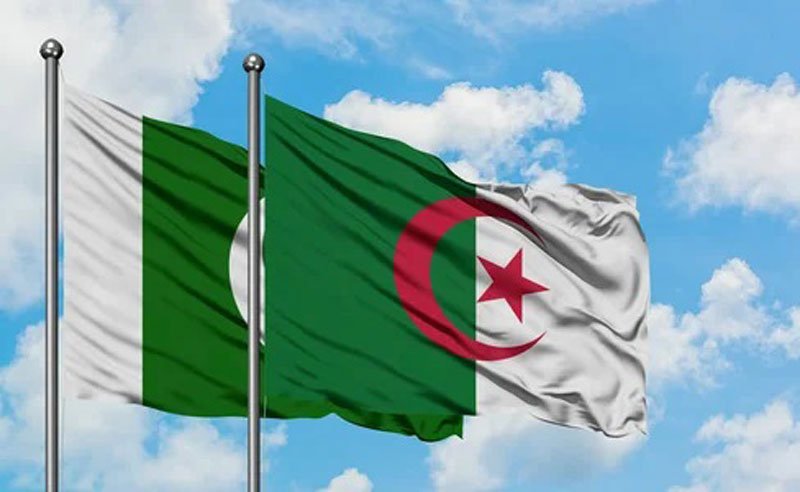
Algeria and Pakistan are forging stronger geo-economic bonds through energy investments and trade forums in 2025, targeting a trade surge to $100 million by leveraging energy, agriculture, and African market access for mutual prosperity in a connected world.
Key Points
- Strategic Frameworks for Policymakers: 2025 invitations to energy projects and trade fairs align with Pakistan’s Engage Africa policy and Algeria’s diversification, enhancing regional connectivity and stability.
- Lucrative Ventures for Investors: Opportunities in Algeria’s $40 billion energy sector and mining promise high returns, complemented by Pakistan’s textile and IT expertise for joint initiatives.
- Research Avenues for Academics: Data reveals trade growth from $28.1 million in 2023 to $43.6 million in 2024, with analytical models projecting synergies in supply chains amid global shifts.
- Everyday Gains for the General Public: Affordable imports, job creation in agriculture and manufacturing, and cultural exchanges boost livelihoods, fostering goodwill between nations.
In the evolving landscape of global economics, Algeria and Pakistan are emerging as pivotal partners, blending historical ties with forward-thinking collaboration. Policymakers can capitalize on revived mechanisms to bolster bilateral relations. In August 2025, Algeria invited Pakistan to invest in its $40 billion energy expansion, focusing on oil, gas, and renewables. This aligns with Pakistan’s energy import needs and Algeria’s diversification from hydrocarbons, which constitute 95% of its exports. The September 2025 INTRA-AFRICA Trade Fair in Algiers marked a milestone, where Pakistani delegates explored gateways to Africa’s $3.4 trillion market via Algeria’s AfCFTA membership. Rational cooperative analysis underscores this as a counter to geopolitical volatilities, such as Red Sea disruptions, by diversifying routes through CPEC extensions and Algerian ports. Both nations’ BRICS aspirations further amplify influence, with Algeria’s $270 billion GDP in 2024 (projected to $400 billion by 2027) complementing Pakistan’s strategic location. By expediting the 2022 Joint Business Council, policymakers can facilitate FTAs, reducing tariffs and boosting connectivity for long-term stability.
Investors stand to gain from this promotional synergy, with sectors ripe for cross-border ventures. Bilateral trade climbed to $43.6 million in 2024, up from $28.1 million in 2023, driven by Pakistan’s exports of machinery ($7.49 million) and medical instruments. Algeria’s contributions include calcium phosphates ($10.1 million in 2023, rising in 2024), essential for Pakistan’s agriculture. Untapped potentials, per OEC estimates, include Pakistan exporting more rice and textiles (potential $50 million surge) while Algeria supplies fertilizers and cement. The Gara Djebilet iron ore project, slated for 2026 exploitation, invites Pakistani mining investments, promising 10-15% ROI amid Algeria’s $61 billion investment influx in 2025. Renewable energy collaborations, like solar tech transfers, address Pakistan’s deficits and Algeria’s green hydrogen goals for Europe. With fast-track visas for Pakistani entrepreneurs, this framework minimizes risks and maximizes returns through shared innovation in IT and health startups.
For academics, the partnership offers a fertile ground for rational analysis backed by empirical data. Trade models, such as those from the World Bank, project MENAAP GDP growth at 2.8% in 2025 and 3.3% in 2026, with Algeria’s 3.8% expansion fueling opportunities. Historical trends show Pakistan’s exports to Algeria stabilizing at around $17-22 million annually post-2018 declines, while Algeria’s exports dropped from $56.3 million in 2018 due to global shifts but rebounded in 2024. Complementary economies—Algeria’s resource wealth (iron, phosphates) pairing with Pakistan’s manufacturing prowess—could integrate value chains, reducing vulnerabilities to oil price fluctuations (Brent averaged $80/barrel in 2025). Scholars can examine how this counters external pressures, like U.S.-China trade tensions, through diversified alliances. November 2025 reaffirmations of economic cooperation exemplify geo-economic interdependence, potentially elevating non-hydrocarbon trade to 30% of bilateral flows by 2030.
The general public will experience direct benefits from this beneficial alliance. Affordable Algerian fertilizers enhance Pakistani farming yields, supporting food security for millions, while Pakistani rice and garments enrich Algerian markets. Job creation surges in joint agriculture projects, with thousands of positions in manufacturing and tourism. Cultural exchanges, via increased flights and events, promote understanding, turning economic ties into people-to-people bonds.
To visualize progress, consider these data tables:
Table 1: Bilateral Trade Volumes (2019-2025, in USD Million)
|
Year |
Pakistan Exports to Algeria |
Algeria Exports to Pakistan |
Total Trade |
|
2019 |
18.2 |
45.0 |
63.2 |
|
2020 |
16.5 |
30.1 |
46.6 |
|
2021 |
15.8 |
25.4 |
41.2 |
|
2022 |
17.0 |
15.2 |
32.2 |
|
2023 |
17.2 |
10.9 |
28.1 |
|
2024 |
22.6 |
21.0 |
43.6 |
|
2025 (Proj.) |
30.0 |
25.0 |
55.0 |
(Source: OEC, Trading Economics, UN COMTRADE; projections based on 2025 growth trends from agreements)
Table 2: Top Potential Sectors for Collaboration
|
Sector |
Algeria’s Strengths |
Pakistan’s Strengths |
Mutual Benefits |
|
Energy |
Oil/gas reserves, $40B investments |
Investment capital, tech needs |
Energy security, joint projects |
|
Mining |
Gara Djebilet iron ore, phosphates |
Processing expertise, labor |
Resource exports, industrial growth |
|
Agriculture |
Fertilizers, land resources |
Rice/textiles production |
Food security, value-added chains |
|
IT & Innovation |
Emerging startups, infrastructure |
Software talent, ecosystems |
Tech transfers, startup hubs |
|
Manufacturing |
Diversification push |
Textiles, surgical goods |
Market access, job creation |
These tables demonstrate quantifiable advancements, illustrating how data-informed cooperation can drive exponential growth. Enhancing appeal, initiatives like the SouthH2 Corridor (joined by Algeria in 2025) could link with Pakistan’s renewable ambitions, positioning both as green energy leaders in Asia-Africa corridors.
Conclusion
Algeria and Pakistan’s geo-economic momentum, fueled by 2025 energy invitations and trade surges, carries an era of shared success with projected trade doubling to $100 million. Policymakers secure strategic depth, investors unlock high-yield sectors, academics gain analytical richness, and the public reaps livelihood enhancements. This alliance exemplifies beneficial cooperation, navigating global challenges through diversified partnerships—calling for sustained action to realize enduring prosperity for both nations.
* Dr. Muhammad Jahanzaib is the Founder & Chief Visionary Officer (CVO) of Diamanium Thinkers, a global think tank. He holds a PhD in International Relations, specializing in the intersection of geo-politics and geo-economics in Pakistan’s foreign and domestic policy. A double gold medalist and published scholar, he writes on economic intelligence, economic diplomacy, political economy, AI and regional cooperation in South Asia and beyond. He can be reached at jahanzaibdgc@gmail.com.
Key References
- Pakistan and Algeria to Strengthen Trade Ties in Energy and Africa Partnerships – https://mediaonlinetoday.com/pakistan-and-algeria-to-strengthen-trade-ties-in-energy-and-africa-partnerships
- Pakistan, Algeria Eye Crucial Energy Partnerships – https://thediplomaticinsight.com/pak-algeria-eye-energy-partnerships
- Algeria, Pakistan reaffirms historic friendship, economic cooperation – https://www.app.com.pk/national/algeria-pakistan-reaffirms-historic-friendship-economic-cooperation
- Pakistan invited to invest in Algeria’s $40 billion energy push – https://mettisglobal.news/Pakistan-invited-to-invest-in-Algerias-40-Billion-energy-push-54181
- Algeria Marks National Day, Praises Pakistan’s Historic Support – https://thediplomaticinsight.com/algeria-marks-national-day-praises
- Africa – Ministry of Foreign Affairs – https://mofa.gov.pk/africa
- Pakistan, Algeria pledge to boost economic ties with increased trade – https://mettisglobal.news/pakistan-algeria-pledge-to-boost-economic-ties-with-increased-trade
- Middle East, North Africa, Afghanistan & Pakistan | World Bank Group – https://www.worldbank.org/ext/en/region/mena
- Ascendance of Algeria — Pakistan strategic ties – https://pakobserver.net/ascendance-of-algeria-pakistan-strategic-ties
- Algeria in 2025: A Sovereign Power Consolidating Reform, Defending Justice, and Driving Africa’s Future – https://al24news.dz/en/algeria-in-2025-a-sovereign-power-consolidating-reform-defending-justice-and-driving-africas-future
- Algeria: Country File, Economic Risk Analysis | Coface – https://www.coface.com/news-economy-and-insights/business-risk-dashboard/country-risk-files/algeria
- Pakistan (PAK) and Algeria (DZA) Trade – https://oec.world/en/profile/bilateral-country/pak/partner/dza
- Pakistan Exports to Algeria – 2026 Data 2027 Forecast 2009-2024 – https://tradingeconomics.com/pakistan/exports/algeria
- Pakistan Imports from Algeria – 2026 Data 2027 Forecast 2009-2024 – https://tradingeconomics.com/pakistan/imports/algeria