
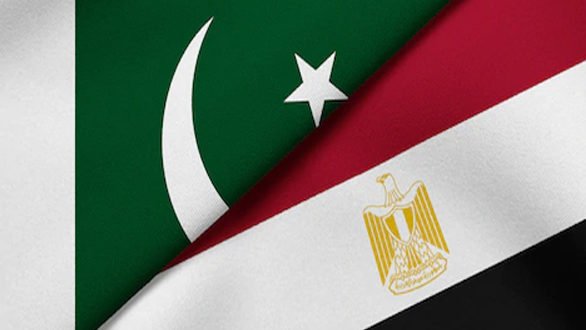
Egypt and Pakistan are revitalizing geo-economic ties through 2025 agreements on trade, defense, and port linkages, focusing on agriculture, pharmaceuticals, textiles, IT, and logistics. This synergy taps complementary strengths for sustainable growth, investment, and regional stability in a shifting global landscape.
Key Points
- Recent Bilateral Agreements: November 2025 visit by Egyptian FM led to commitments for Pakistan-Egypt Business Council and Forum, plus sharing 250 Pakistani firms for trade facilitation.
- Trade Growth Trends: Bilateral trade reached $217 million in 2024, with Egypt exporting $104 million (mainly chemicals, pharmaceuticals) and Pakistan $106 million (textiles, rice), up 15% from 2023.
- Sectoral Potentials: Opportunities in defense co-production (armored vehicles, avionics), agriculture (joint processing), pharmaceuticals (generics manufacturing), IT (tech exchanges), and logistics (Gwadar-Suez linkage for $500M annual trade boost).
- Economic Indicators: Egypt’s GDP grew 3.5% in Q1 FY2024/25, projected 4.4% for 2025; Pakistan’s at 3.0% in FY2025, expected 3.2% in 2026, with combined trade targeting $500-800 million by 2030.
- Investment Incentives: Egypt’s free zones offer tax exemptions; Pakistan’s SIFC provides streamlined approvals, attracting JVs in renewables and mining.
- Challenges and Mitigations: Visa barriers and imbalances addressed via eased procedures and diversified sectors; security through defense pacts ensures stable cooperation.
Body
In 2026, Egypt and Pakistan are charting a dynamic geo-economic course, leveraging 2025 breakthroughs to foster a partnership that empowers policymakers, investors, academics, and the general public. For policymakers, this alliance embodies strategic foresight, aligning Egypt’s Vision 2030 with Pakistan’s National Development Framework to enhance regional connectivity and security. The November 2025 visit by Egyptian Foreign Minister Badr Abdelatty to Islamabad culminated in pivotal agreements, including the establishment of the Pakistan-Egypt Business Council and Business Forum, set for Q2 2026. These platforms will expedite trade via shared lists of 250 Pakistani firms, streamlining visas and reducing bureaucratic hurdles. Moreover, Egypt’s proposal to link Gwadar Port with the Suez Canal and Suez Canal Economic Zone (SCZone) promises seamless logistics, potentially adding $500 million to annual trade by facilitating faster routes for Asian-African commerce.
Egypt-Pakistan Trade Overview (2023-2024)
|
Year |
Egypt Exports to Pakistan (USD Million) |
Main Products |
Pakistan Exports to Egypt (USD Million) |
Main Products |
|
2023 |
89 |
Chemicals (40), Pharmaceuticals (25) |
92 |
Textiles (50), Rice (30) |
|
2024 |
104 |
Plastics (35), Machinery (28) |
106 |
Cereals (45), Apparel (35) |
(Data from Trading Economics and Arab Finance; 2024 shows balanced growth amid agreements.)
Investors are presented with a gateway to prosperity through this evolving bond. With combined populations exceeding 350 million, the markets offer scale and diversity. Bilateral trade hit $217 million in 2024, per Arab Finance reports, marking a 15% rise from 2023, driven by Egypt’s $104 million exports (chemicals, plastics) and Pakistan’s $106 million (textiles, cereals). Though modest, this balance signals untapped potential; unrealized exports could reach $300 million, according to sector analyses. Pakistan’s Special Investment Facilitation Council (SIFC) offers one-window approvals and tax holidays, mirroring Egypt’s incentives in free zones like SCZone, where duties are waived for exports. Joint ventures in pharmaceuticals stand out: Egypt’s robust sector (valued at $5 billion) can collaborate with Pakistan’s generics expertise to produce affordable drugs, targeting Africa’s $20 billion import market and generating 20,000 jobs.
Academics will appreciate the rational underpinnings of this cooperation, rooted in shared challenges and strengths. Both nations grapple with energy needs—Egypt’s natural gas exports could meet Pakistan’s 30% import reliance—while youthful demographics (median ages under 25) fuel innovation. Defense ties, deepened in October 2025 Cairo meetings, explore co-production in armored vehicles and avionics via Egypt’s Arab Organization for Industrialization and Pakistan’s Heavy Industries Taxila. This could yield $200 million in exports, bolstering self-reliance. In IT, exchanges under Pakistan’s Digital Pakistan initiative align with Egypt’s Digital Transformation Strategy, fostering hubs for AI and fintech. Agriculture synergies are compelling: Pakistan’s rice and cotton complement Egypt’s fruits and wheat, enabling agro-processing JVs to enhance food security amid climate risks. Projections suggest 10-15% sectoral growth through tech transfers.
The general public reaps direct rewards from this promotional alliance, including job creation and affordable essentials. Linking Gwadar to Suez could cut shipping times by 20%, lowering costs for consumers and boosting halal trade for Muslim-majority populations. Cultural exchanges, including health collaborations like Egypt’s Hepatitis C support to Pakistan, promote well-being. Amid global tensions, this South-South partnership mitigates risks; defense pacts address security, while economic diversification hedges inflation (Egypt 10%, Pakistan 15% projected 2025).
Economic Indicators Comparison (2024-2025 Projections)
|
Indicator |
Egypt (2024) |
Egypt (2025 Proj.) |
Pakistan (2024) |
Pakistan (2025 Proj.) |
|
GDP (USD Billion) |
398 |
420 |
373 |
411 |
|
GDP Growth (%) |
2.4 |
4.4 |
2.5 |
3.0 |
|
Per Capita GDP (USD) |
3,725 |
3,900 |
1,581 |
1,707 |
|
Inflation (%) |
25.7 |
15.0 |
23.4 |
15.0 |
(Data from IMF, World Bank; projections account for reforms and flood impacts.)
These metrics underscore complementarities: Egypt’s infrastructure (Suez hub) pairs with Pakistan’s CPEC corridors, enabling $1 billion trade ambitions. By prioritizing mutual benefits over competition, this partnership exemplifies resilient, inclusive development.
Conclusion
Egypt and Pakistan’s geo-economic revival, sparked by 2025 pacts and port synergies, unlocks transformative potentials in defense, trade, and innovation. Policymakers secure strategic depth; investors tap lucrative ventures; academics gain analytical insights; and citizens benefit from jobs and affordability. Navigating challenges through collaboration will elevate bilateral trade to $800 million by 2030, promoting stability, growth, and prosperity. This alliance, built on shared vision, positions both as pillars of South-South progress in an interconnected world.
* Dr. Muhammad Jahanzaib is the Founder & Chief Visionary Officer (CVO) of Diamanium Thinkers, a global think tank. He holds a PhD in International Relations, specializing in the intersection of geo-politics and geo-economics in Pakistan’s foreign and domestic policy. A double gold medalist and published scholar, he writes on economic intelligence, economic diplomacy, political economy, AI and regional cooperation in South Asia and beyond. He can be reached at jahanzaibdgc@gmail.com.
Key References
- Pakistan, Egypt move to boost trade with 250-firm white list – https://www.geo.tv/latest/636516-pakistan-to-share-egypt-lst-of-250-firms-to-boost-trade-ties-dar
- Pakistan and Egypt Renew Cooperation After Years of Stagnation – https://www.gktoday.in/pakistan-and-egypt-renew-cooperation-after-years-of-stagnation
- Pakistan, Egypt agree to bolster economic, defence ties, coordinate on Gaza peace efforts – https://tribune.com.pk/story/2579959/pakistan-egypt-close-ranks-on-trade-defence-and-gaza
- Pakistan welcomes Egypt proposal to link Gwadar Port to Suez Canal and SCZone – https://english.ahram.org.eg/NewsContentP/1/558250/Egypt/Pakistan-welcomes-Egypt-proposal-to-link-Gwadar-Po.aspx
- Egypt, Pakistan push for 2026 roadmap to deepen strategic cooperation – https://www.trtworld.com/article/f143b354c01b
- Egypt eyes trade, security ties boost with Pakistan – https://www.dawn.com/news/1958452
- Egypt and Pakistan Deepen Defence Cooperation in Cairo Meetings – https://www.africansecurityanalysis.com/reports/egypt-and-pakistan-deepen-defence-cooperation-in-cairo-meetings
- SNG: Egypt-Pakistan bilateral trade hits $217mln in 2024 – https://www.tradingview.com/news/reuters.com,2025-09-25:newsml_Zaw8y02dC:0-sng-egypt-pakistan-bilateral-trade-hits-217mln-in-2024
- Egypt Exports to Pakistan – https://tradingeconomics.com/egypt/exports/pakistan
- Pakistan Exports to Egypt – https://tradingeconomics.com/pakistan/exports/egypt
- Egypt (EGY) and Pakistan (PAK) Trade – https://oec.world/en/profile/bilateral-country/egy/partner/pak
- Pakistan (PAK) and Egypt (EGY) Trade – https://oec.world/en/profile/bilateral-country/pak/partner/egy
- PR No. 22 Pakistan, Egypt Agree to Strengthen Economic Partnership – https://pid.gov.pk/site/press_detail/31197
- Egypt, Pakistan discuss proposed joint action plan – https://www.egypttoday.com/Article/1/143786/Egypt-Pakistan-discuss-proposed-joint-action-plan-between-Egyptian-Investment
- Egypt, Pakistan push wider defense, economic cooperation – https://www.arabnews.com/node/2624561/pakistan
- Pakistan, Egypt agree to boost economic, defence ties – https://m.economictimes.com/news/defence/pakistan-egypt-agree-to-boost-economic-defence-ties/articleshow/125673851.cms
- Visit of the Foreign Minister of the Arab Republic of Egypt to Pakistan – https://mofa.gov.pk/press-releases/visit-of-the-foreign-minister-of-the-arab-republic-of-egypt-to-pakistan29-30-november-2025
- Pakistan, Egypt agree to strengthen economic ties – https://tribune.com.pk/story/2580244/pakistan-egypt-agree-to-strengthen-economic-ties
- Pakistan to share 250-business whitelist with Egypt to boost trade – https://profit.pakistantoday.com.pk/2025/11/30/pakistan-to-share-250-business-whitelist-with-egypt-to-boost-trade
- Egypt’s GDP recorded a growth of around 5% during Q4 of FY 24/2025 – https://moic.gov.eg/news/2491
- EGYPT’S GDP GROWTH RATE DURING Q1 OF FY 2024/2025 – https://mped.gov.eg/adminpanel/sharedFiles/[GDP_Note_Q1_24-25]_English_version_-_Dec_2024_Final_455.pdf
- Egypt GDP: $3.037 trillion – https://www.worldeconomics.com/GDP/Egypt.aspx
- Egypt Full Year GDP Growth – https://tradingeconomics.com/egypt/full-year-gdp-growth
- Pakistan GDP 2025 – https://www.worldeconomics.com/GrossDomesticProduct/Current-GDP/Pakistan.aspx
- IMF lowers Pakistan’s growth outlook – https://www.brecorder.com/news/40403067
- PAKISTAN: Sustained Reforms Needed for Inclusive Growth – https://www.worldbank.org/en/news/press-release/2025/10/27/-pakistan-sustained-reforms-needed-for-inclusive-growth-economic-stability-and-flood-recovery
- Pakistan GDP Annual Growth Rate – https://tradingeconomics.com/pakistan/gdp-growth-annual
- GDP by Country (2025) – https://www.worldometers.info/gdp/gdp-by-country