
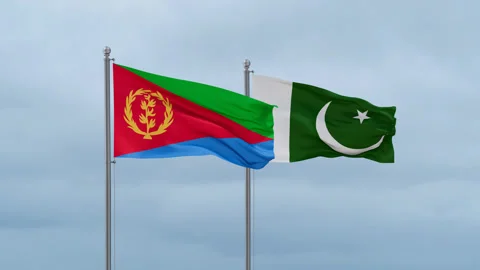
Eritrea and Pakistan are revitalizing geo-economic ties through parliamentary dialogues and trade growth, unlocking potentials in mining, textiles, and agriculture for mutual prosperity and strategic connectivity in a multipolar world.
Key Points
- Policy Alignment: Recent parliamentary friendship group meetings emphasize bilateral agreements, fostering trade policies and investment frameworks to drive sustainable development.
- Trade Momentum: Pakistan’s exports to Eritrea reached $358,270 in 2024, with potentials for expansion in chemicals, machinery, and textiles amid Eritrea’s industrial needs.
- Investment Opportunities: Eritrea’s mining sector and Pakistan’s manufacturing expertise offer joint ventures, supported by incentives like business license resumptions and economic zones.
- Sectoral Synergies: Complementary resources—Eritrea’s minerals and fisheries with Pakistan’s agro-tech and pharmaceuticals—promise collaborative growth in value chains.
- Strategic Potentials: Leveraging Eritrea’s Red Sea ports and Pakistan’s CPEC for enhanced regional trade routes, mitigating geopolitical risks through cooperation.
Eritrea and Pakistan emerge as pivotal partners, bridging the Horn of Africa and South Asia. Policymakers in both nations are prioritizing this alliance to diversify economic portfolios and enhance resilience against external pressures. The establishment of the Pakistan-Ethiopia-Eritrea Parliamentary Friendship Group (PFG) in recent months marks a significant milestone, with its inaugural meeting focusing on strengthening bilateral relations, trade, and economic cooperation. This initiative underscores the commitment to oversight and expansion of ties, highlighting vast prospects in textiles, agro-based industries, and livestock joint ventures. Such diplomatic engagements pave the way for high-level agreements, potentially including free trade pacts and double taxation avoidance treaties, to facilitate seamless collaboration.
Recent data illustrates a foundation ripe for growth. Pakistan’s exports to Eritrea stood at $358,270 in 2024, primarily comprising chemicals, machinery, and electronics, reflecting Eritrea’s burgeoning industrial and technological demands. While imports from Eritrea remain modest, the trajectory suggests upward momentum, especially as Eritrea resumes issuing business licenses for small-scale enterprises after a four-year pause in August 2024. This policy shift signals an opening for Foreign Direct Investment (FDI), where Pakistan’s robust manufacturing sector can inject capital and expertise. Investors will find compelling incentives in Eritrea’s untapped resources, with the government negotiating profitable ventures directly, often yielding high returns in mining and infrastructure.
|
Bilateral Trade Overview (2024) |
Pakistan to Eritrea |
Eritrea to Pakistan |
|
Total Value (USD) |
358,270 |
Minimal |
|
Top Products |
Chemicals, Machinery, Electronics |
N/A (Potential in Minerals) |
|
Growth Potential |
Increasing due to industrial needs |
Expansion via agro-mineral exports |
Eritrea’s economic landscape, with a real GDP growth of 2.9% in 2023 driven by mining, complements Pakistan’s strengths. Eritrea boasts significant deposits of gold, copper, zinc, and potash, sectors where Pakistani firms can provide processing technology and market access. Conversely, Pakistan’s expertise in rice production and textiles—accounting for substantial industrial output—can address Eritrea’s food security and apparel needs. Analysis reveals synergies: joint ventures could establish value-added processing plants in Eritrea, exporting refined minerals to Pakistan’s markets, while Pakistani pharmaceuticals support Eritrea’s health sector. This partnership aligns with Pakistan’s “Look Africa” policy, aiming to boost trade with African nations through initiatives like the Gwadar Port, which could integrate with Eritrea’s strategic Red Sea ports of Massawa and Assab for efficient maritime routes.
Academics analyzing these dynamics note the geo-strategic advantages. Eritrea’s position along vital shipping lanes enhances connectivity to the Middle East and Europe, while Pakistan’s China-Pakistan Economic Corridor (CPEC) offers gateways to Central Asia. In a multipolar world, this alliance buffers against fragmentation, promoting non-aligned cooperation. Economic indicators further support optimism: Pakistan’s GDP of approximately $373 billion dwarfs Eritrea’s $2.1 billion, providing scale for technology transfers, yet Eritrea’s 2.9% growth rate indicates dynamism. Both nations face challenges like debt burdens—Eritrea at around 176% of GDP and Pakistan at 70%—but collaborative strategies in sustainable mining and agriculture can alleviate these through shared R&D and skill development programs.
|
Economic Indicators Comparison (2024-2025 Estimates) |
Eritrea |
Pakistan |
|
GDP (USD Billion) |
2.1 |
373 |
|
GDP Growth (%) |
2.9 |
2.5 |
|
GDP per Capita (USD) |
643 |
1,581 |
|
Unemployment Rate (%) |
6.5 |
6.5 |
|
Public Debt (% of GDP) |
176 |
70 |
|
Major Exports |
Minerals (Gold, Copper) |
Textiles, Rice |
For the general public, this burgeoning relationship promises tangible benefits: job creation through cross-border enterprises, affordable goods like Eritrean seafood enhancing Pakistani diets, and cultural exchanges fostering tourism. Eritrea’s pristine coastlines and historical sites could attract Pakistani visitors, while Pakistan’s vibrant markets offer opportunities for Eritrean artisans. Environmentally, joint initiatives in green mining and climate-resilient agriculture ensure sustainable benefits, preserving biodiversity and supporting communities.
Promoting this partnership, policymakers should expedite MOUs on trade facilitation, drawing from successful models like Pakistan’s engagements with other African states. Investors are encouraged to explore Eritrea’s FDI-friendly negotiations, despite hurdles like economic freedom constraints, as recent reforms indicate progress. Academics can contribute through studies on supply chain integrations, emphasizing rational gains from complementary economies. Ultimately, this geo-economic synergy not only boosts bilateral prosperity but positions both nations as bridges in Afro-Asian connectivity, harnessing potentials for a shared future of innovation and growth.
Conclusion
Eritrea and Pakistan’s geo-economic collaboration, highlighted by the PFG meetings and trade upticks, holds a potential era of mutual advancement. By leveraging mining, agriculture, and strategic ports, both countries can achieve economic resilience, employment surges, and cultural ties. Policymakers must champion agreements, investors capitalize on incentives, academics offer analytical depth, and the public reap the rewards. This alliance exemplifies equitable cooperation, enhancing regional stability and prosperity in an interconnected global arena.
* Dr. Muhammad Jahanzaib holds a PhD in International Relations, is a double gold medalist and author of the book The Interplay of Geo-Politics and Geo-Economics in Pakistan’s Foreign Policy (Post-2008) (Palgrave Macmillan), along with several esteemed publications. As Chief Visionary Officer of Diamanium Thinkers (a global think tank), he brings over 15 years of experience advising ministers, diplomats, security agencies, the corporate sector, and civil society. His advisory work spans economic diplomacy, political economy, economic intelligence, security, society, strategic financial advisory, and the geo-economic world dynamics. He offers a unique blend of practitioner insight and academic rigor, combining hands-on engagement with state institutions and strategic expertise grounded in research. He can be reached at jahanzaibdgc@gmail.com.
Key References
- Pakistan Exports to Eritrea – 2026 Data 2027 Forecast 2009-2024 Historical – https://tradingeconomics.com/pakistan/exports/eritrea
- Eritrea Economic Outlook – African Development Bank Group – https://www.afdb.org/en/countries/east-africa/eritrea/eritrea-economic-outlook
- 2025 Investment Climate Statements: Eritrea – State Department – https://www.state.gov/reports/2025-investment-climate-statements/eritrea
- Pakistan (PAK) and Eritrea (ERI) Trade – The Observatory of Economic Complexity (OEC) – https://oec.world/en/profile/bilateral-country/pak/partner/eri
- ETHIOPIA+ ERITREA PARLIAMENTARY FRIENDSHIP GROUP (PFG) HOLDS ITS FIRST MEETING – Facebook – https://www.facebook.com/NationalAssemblyOfPakistan/posts/the-pakistan-ethiopia-eritrea-parliamentary-friendship-group-pfg-holds-its-first/951083530395461
- Pak-Eritrea cooperation in economic field stressed – Business Recorder – https://www.brecorder.com/news/3529960/pak-eritrea-cooperation-in-economic-field-stressed-20080709766249
- Eritrea – Index of Economic Freedom – The Heritage Foundation – https://www.heritage.org/index/pages/country-pages/eritrea
- Freight Shipping from Pakistan to Eritrea – FWFreight – https://fwfreight.com/freight-shipping/from-pakistan-to-eritrea
- Country comparison Eritrea vs Pakistan 2026 – https://countryeconomy.com/countries/compare/eritrea/pakistan
The Horn Of Africa States: Investment Potential In The Region In 2026 – OpEd – https://www.eurasiareview.com/14012026-the-horn-of-africa-states-investment-potential-in-the-region-in-2026-oped